
 E-Paper



Will the Israel-Hamas conflict result in a prolonged war?
Hamas is trying to project the Israeli offensive against it as a religious war. It wants to draw in the entire Islamic world into the conflict.

 Prefer HTon Google


The Israel-Hamas conflict has entered the 24th day with the Israeli forces advancing on sides of Gaza. According to reports, the death toll among Palestinians has crossed 8,300 while 1,400 people have died on the Israeli side. More than 1.4 million people in Gaza have fled their homes.
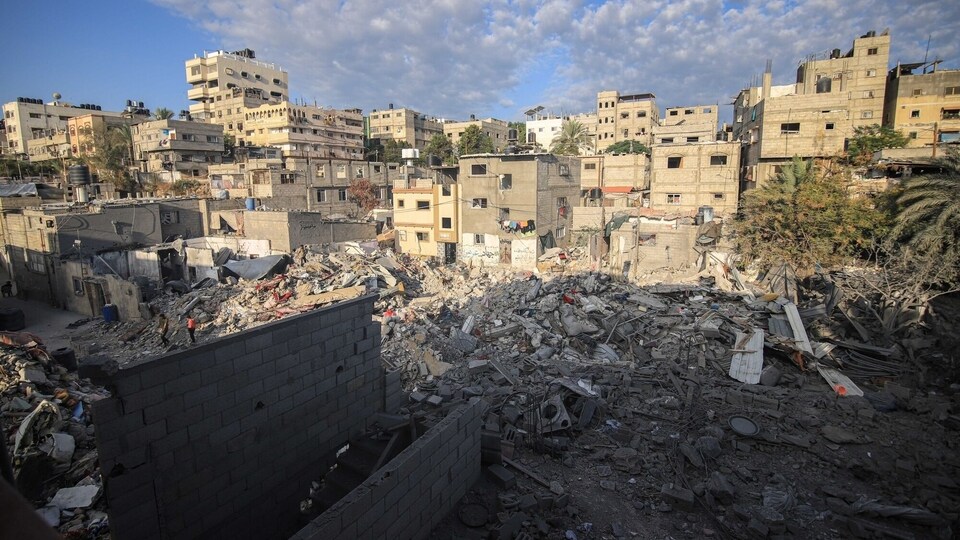
Israel has already declared that it will not stop at anything short of complete obliteration of Hamas. It has suffered the worst terror attack ever known which was barbaric and medieval in nature. Unless it destroys the terrorist group, Israel will always be under threat with Hamas sitting in Gaza.
Hamas, which carried out the October 7 attacks on Israel, is trying to project the Israeli offensive as a religious war. It wants to draw in the entire Islamic world and beyond, which includes the Left liberals and everyone to say that it is a war against Islam. Hamas will try to bring in more regional players like Iran, Qatar, Syria, Iraq, Lebanon and Hezbollah into the conflict to save its own skin.
Besides these two, there are democratic countries like US and India who are saying that this terror attack needs to be retailated to, but the Palestinian people need to be saved. A huge Catch 22 situation is building up because Israel cannot get out of Gaza until Hamas is eliminated. But Hamas will ensure that there is a collateral damage of Palestinian people. The conflict will draw in other Middle East players and the conflagration will spread.
ALSO READ: Understanding Iran's game: Wants to destroy Israel, considers US ‘Big Satan’
‘Israel has no option other than a long war’
Israel has no other option but to go for a long war, as said by its prime minister Benjamin Netanyahu. The global community including the West, India and the other major players are afraid that it may be a prolonged war. A long conflict is not in the interest of the global community.
As mentioned above, the conflict is going to suck in other Middle East players and would end up creating a bigger Middle East war. While Iran is threatening, Hezbollah and Syria have launched attacks. Hamas leader Ismail Haniya is based in Qatar while another leader Khaled Mashal is givign speeches including in Kerala. Hamas is trying to conjure up an image that the entire Islamic world is being threatened by Israel.
‘What are the ramifications for the world?’
As far as the US is concerned, there are reports about the Democratic party exerting pressure on President Joe Biden and raising issue of humanitarian disaster in Gaza. In France, President Macron was supporting an anti-ISIS alliance against the Hamas. He voted on the resolution in favour of humanitarian aid. If this war prolongs, it is going to have more serious impact.
If Middle East powers like Iran, Qatar, UAE, Saudi Arabia, Turkey try to put more pressure, the oil prices will go up. In case, Iran or other country tries to use missiles against Israel, the war will open up. It will not only result in humanitarian disaster but more collateral damage. Thirdly, the Indian, European and American diaspora in Middle Eastern countries will be under threat. It is going to be a humanitarian disaster. It is being created to tell Israel to keep the operation short, incisive and limited to Hamas.
ALSO READ: Hurdles in Israeli ground offensive against Hamas terrorists in Gaza
What will be the ramifications for India?
India has made its points very clear: It is against terrorism but it is for Palestinian people. India will continue to follow this dual policy, which means it will support two-state solution but wants to take action against terrorism. India is already engaging other players in the Middle East to ensure humanitarian aid. Prime Minister Narendra Modi has already had a conversation with the Egyptian president and other players in the game. External affairs minister Jaishankar is talking to Oman, UAE and other players so that there is a voice of moderation in the region.


