
 E-Paper



Understanding Iran's game: Wants to destroy Israel, considers US ‘Big Satan’
American F-16 jets strike Iranian proxies in Syria in retaliation for attacks on US bases.

 Prefer HTon Google


American F-16 fighter jets launched airstrikes in Syria early Friday targeting storage and weapons facilities linked to Iranian proxies. The Pentagon said the strikes were in retaliation for a slew of drone and missile attacks against US bases and personnel in the region. The retaliation was essentially to tell Iran to back off from supporting the militias and cease its aggressive behaviour in the region.
However, the question that looms is whether Iran will heed this message or continue to play a dangerous game of escalation. The stakes are high, and the consequences of the latter scenario could be catastrophic, leading to a wider conflagration across the Middle East.
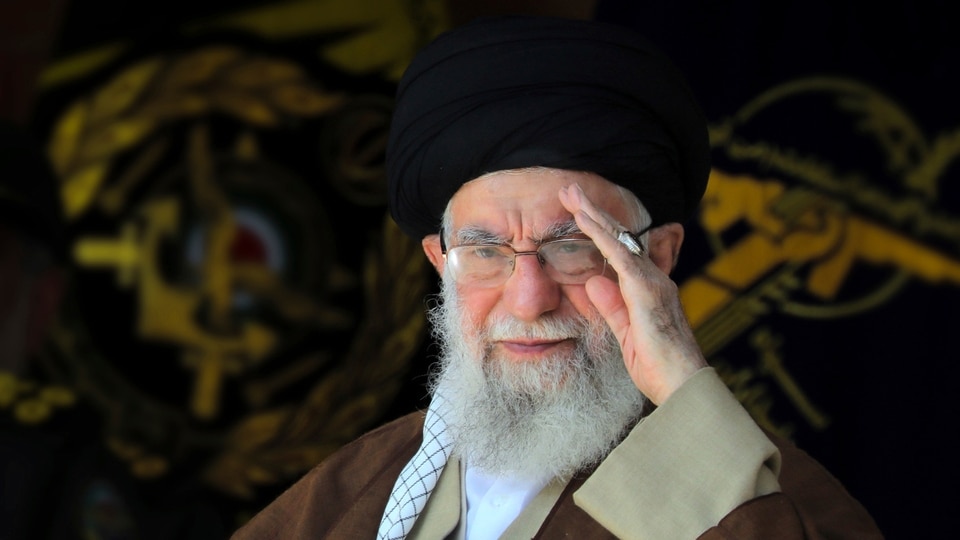
Understanding Ayatollah Khamenei's Game
Ayatollah Khamenei, the Supreme Leader of Iran, has denied direct involvement in the October 7 attack in Israel by Hamas. However, he simultaneously praised the same terror outfit for its surprise assault. This apparent contradiction raises questions about Iran's true intentions and the intricate web it weaves in the region.
Iran's openly stated goal is to destroy Israel, but the broader game is its perception of the United States as the "Great Satan." Iran's strategy involves orchestrating various terrorist groups in the Middle East, with multifaceted objectives. Firstly, it seeks to dominate the Islamic world in the region, asserting its influence over other nations. Simultaneously, it aims to strike at the credibility of the United States, a long-standing adversary in Iranian foreign policy.
Preventing an Israeli Offensive
Iran also endeavors to ensure that no land offensive by Israel takes place in Gaza, for fear that it could result in the destruction of Hamas. To achieve this, Iran is using the 224 hostages held by Hamas as a key leverage point in its geopolitical game. This is undoubtedly a retaliation for the killing of Iranian Revolutionary Guard commander Qasim Suleimani and Iranian nuclear scientists between 2017 and 2020, incidents that Iran is keen to avenge.
Iran's strategic aims include preserving the military capabilities of groups like Hamas and Hezbollah. By doing so, it keeps Israel on tenterhooks, ensuring that the threat of conflict is ever-present. The use of these proxy groups allows Iran to maintain plausible deniability while still exerting significant influence in the region.
In pursuit of its own political interests and machinations, Iran has disrupted the prospects for peace in the Middle East. It has effectively weaponized Hamas as a principal terror group against Israel, pushing the region further into a cycle of violence and instability.
The consequences of this situation are far-reaching. If a full-fledged offensive occurs, Iran may use its other assets to target American interests throughout the Middle East. The ultimate aim could be to trigger a horizontal conflagration that engulfs the entire region in chaos.


