
 E-Paper



With CPEC in mind, China wants Pakistan to pitch Baloch outfit as terror group in UN
Islamabad does not want to move UNSC 1267 committee on getting BLA declared as global terrorist organisation as it feels that this will internationalise Balochistan’s separatist movement.

 Prefer HTon Google


With China-Pakistan Economic Corridor at the heart of President Xi Jinping’s plan to consolidate economic relations with Africa and Middle-East via Gwadar, Beijing wants Islamabad to move the UN Security Council’s 1267 Al Qaida, Taliban and affiliates committee to brand Balochistan Liberation Army (BLA) a global terrorist organisation. The BLA is engaged in a struggle for self-determination for ethnic Baloch people and has been declared a terrorist organization by Pakistan, UK and US.
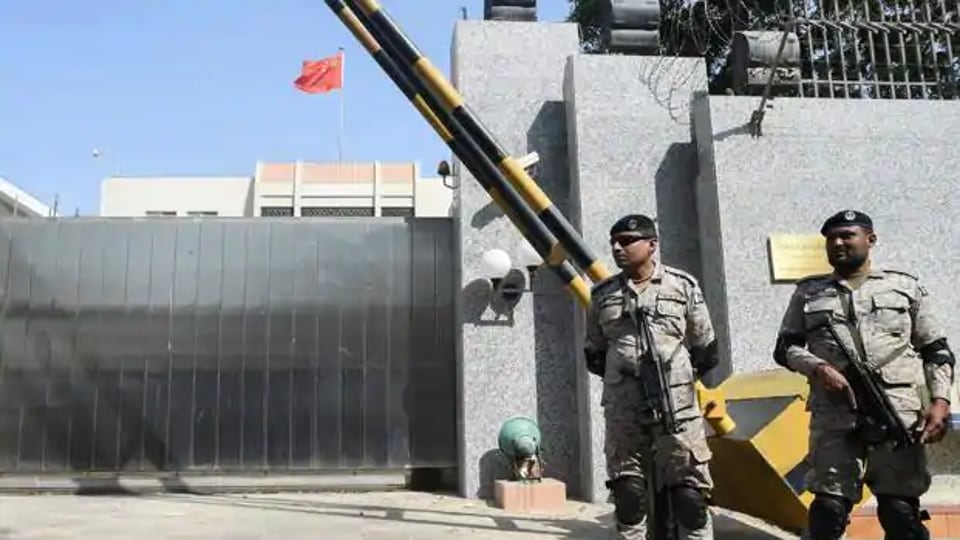
While Beijing has assured Pakistan of full backing to get the BLA declared as global terrorist organisation by the UNSC, Islamabad has developed cold feet as it feels that the matter should be handled internally and any move to UN will only internationalise the Baloch issue.
According to intelligence inputs based on diplomatic interlocution between the two iron brothers, while China has thanked Pakistan for supporting the Xi Jinping regime on South China Sea and Hong Kong, it has assured Islamabad full coordination and support over the Kashmir issue to Islamabad. It is understood that both sides have decided to counter what they call is India’s growing threat.
Beijing and Islamabad are currently engaged to sort out serious financial crisis faced by Pakistan while simultaneously considering Imran Khan government’s request for raising the Kashmir issue at the forthcoming UNGA session next month. When Pakistani interlocutors raised the issue of BLA and East Turkestan Islamic Movement (a Uighur militant group active in Xinjiang and Wakhan corridor), the Chinese diplomats wanted Islamabad to get BLA sanctioned through UNSC 1267 committee. While Islamabad did not want to internationalize the issue by going to UN, it has conveyed to Beijing that suppression of BLA is top focus of the Imran Khan government.
The Chinese are putting pressure on the Imran Khan government as the BLA are totally opposed to the CPEC corridor and the use of Gwadar port for the People’s Liberation Army (PLA) navy and merchant ships. The BLA in the past two years have not only attacked the Chinese consulate in Karachi but also the Karachi Stock Exchange as well as a luxury hotel in Gwadar in a bid to hit at the Chinese developers of the port.
The CPEC port with initial investment of US $46 billion is key to China having a dedicated corridor to Arabian Sea to feed the markets of Africa and Middle-East, where Beijing has already prepared grounds by pumping in money. With Indian Navy sitting on mouth of Malacca Straits through intensive monitoring of the 10 degree and six degree sea lanes bisecting the Andamans and Nicobar Islands, the CPEC provides an alternative route to Persian Gulf and Gulf of Aden and at the same time consolidates China’s strangle hold on client state Pakistan.
Many China watchers believe that the crux of India’s problem with PLA aggression in East Ladakh is that the Chinese PLA wants a second road via Karakoram Pass to link Tibet and Pakistan in case the Indian Army targets the Karakoram highway that runs via Khunjerab Pass linking Xinjiang to Gwadar port.
In pursuit of its long term economic vision, China clearly wants to avoid dependency on Malacca Straits and would prefer its goods to be transported through the Pakistani Karakoram corridor as even the other developing Kyaukpyu port corridor through Myanmar opens up in Bay of Bengal apart from being in the restive Rakhine state.


