
 E-Paper



US says it doesn’t support independent Balochistan
Reiterating its long-time policy on Balochistan, the United States has said it did not support independence for Pakistan’s restive southwestern province and refused to associate itself with India’s recent attempts to highlight human rights violations there.


Reiterating its long-time policy on Balochistan, the United States on Monday said it did not support independence for Pakistan’s restive southwestern province and refused to associate itself with India’s recent attempts to highlight human rights violations there.
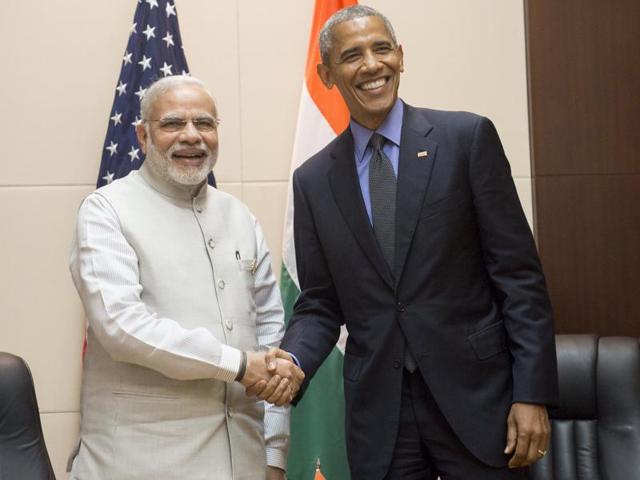
“The government – US government — respects the unity and territorial integrity of Pakistan and we do not support independence for Balochistan,” state department spokesman John Kirby said in response to a question at the daily briefing.
To a direct question about US reaction to Prime Minister Narendra Modi’s recent remarks on the issue, Kirby noted his remarks and said, “I think I just gave you our reaction to events there.”
Modi has sought to draw the world’s attention in recent remarks to rights violations — which he described as “atrocities” — in Balochistan by Pakistan’s armed forces. But he has not called for the province’s independence, being demanded by groups there citing protracted neglect of the mineral-rich region by Islamabad and the massive use of force to put down protests and dissent.
Multiple rights agencies have reported the disappearance and death of people in Balochistan, with estimates put by noted Pakistan journalist Ahmed Rashid in 2014 at “between hundreds and several thousand”. International Voice for Baloch Missing Persons says upwards of 19,000 people are missing.
The US has itself cited rampant right violations in Baluchistan on multiple occasions in its reports on the state of human rights in Pakistan, but that’s as far as it has gone.
Michael Kugelman, a South Asia expert at Wilson Center, a DC think tank, said the US response on Monday “reflects long-time US policy when it comes to Balochistan, and that is to simply express support for Pakistan’s territorial integrity. This is a pretty immutable policy on the part of the US, and I doubt it will be changing at all anytime soon”.
Also, an expert on Pakistan with another DC think tank, who did not want to be identified, said the US “does not declare support for disintegration of any country. They have never even supported an independent Kurdistan so Balochistan is a bridge too far. The US also does not want to risk its relations with Pakistan.”
Besides, the expert pointed out, Modi had only highlighted the plight of the Baloch people and spoken of human rights. “Even he did not call for an independent Balochistan.”
Modi first raised the issue publicly at an all-party meeting on Kashmir on August 13 when he spoke of “atrocities committed by it (Pakistan) against people in Balochistan and PoK (Pakistan-occupied Kashmir)” and said that Pakistan would have to answer to the world community for this.
He also brought up the issue in his Independence Day speech, thanking “some special people…of Balochistan, Gilgit and Pakistan-occupied Kashmir (who) had conveyed good wishes and gratitude to me (for his earlier remarks highlighting atrocities in Balochistan)”.
Taken together, the references were seen as signalling the start of an aggressive push by India to use Balochistan, to counter Pakistan’s continuing strategy to internationalise Kashmir.


