
 E-Paper



A first in the US: legal pot sales begin in Colorado on New Year's Day
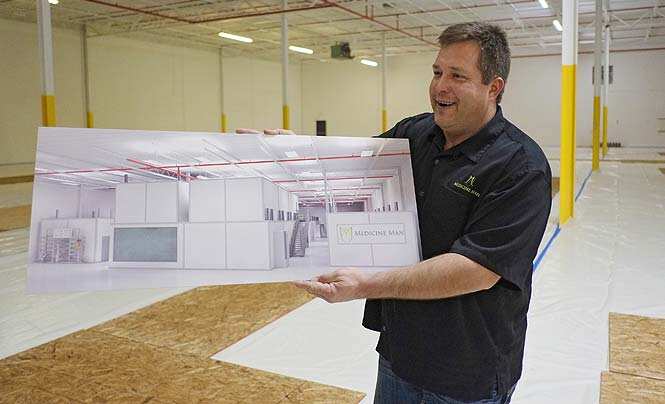
As Colorado prepares to allow recreational marijuana sales, hopeful retailers like Andy Williams are investing their fortunes into the legal recreational pot world. In fact, a gleaming white Apple store of weed is how he sees his new Denver marijuana dispensary.


A gleaming white Apple store of weed is how Andy Williams sees his new Denver marijuana dispensary.
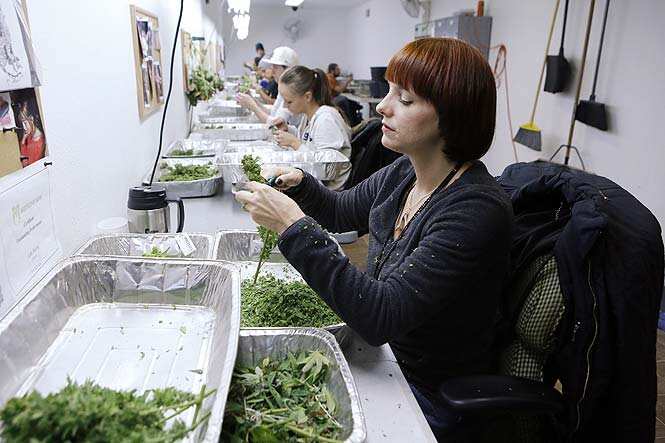
Two floors of pot-growing rooms will have windows showing the shopping public how the mind-altering plant is grown. Shoppers will be able to peruse drying marijuana buds and see pot trimmers at work separating the valuable flowers from the less-prized stems and leaves.
"It's going to be all white and beautiful," the 45-year-old ex-industrial engineer explains, excitedly gesturing around what just a few weeks ago was an empty warehouse space that will eventually house 40,000 sq ft of cannabis strains.
As Colorado prepares to be the first US state to allow recreational marijuana sales, starting January 1, hopeful retailers like Williams are investing their fortunes into the legal recreational pot world — all for a chance to build even bigger ones in a fledgling industry that faces an uncertain future.

Officials in Colorado and Washington, the other state where recreational pot goes on sale in mid-2014, as well as activists, policymakers and governments from around the US and across the world will not be the only ones watching the experiment unfold.
So too will the US Department of Justice, which for now is not fighting to shut down the industry.
"We are building an impressive showcase for the world, to show them this is an industry," Williams says, as the scent of marijuana competes with the smell of sawdust and wet paint in the cavernous store where he hopes to sell pot just like a bottle of wine.
Will it be a showcase for a safe, regulated pot industry that generates hundreds of millions of dollars each year and saves money by not locking up drug criminals, or one that will prove, once and for all, that the federal government has been right to ban pot since 1937?
Cannabis was grown legally in the US for centuries, even by George Washington. After Prohibition's end in the 1930s, ending a ban on the sale of alcoholic beverages, authorities turned their sights on pot.
The 1936 propaganda film "Reefer Madness" warned the public about a plant capable of turning people into mindless criminals.
Read:Selling pot in shops becomes legal in two US states, may generate $1 billion per year
Over the years, pot activists and state governments managed to chip away at the ban, their first big victory coming in 1996 when California allowed medical marijuana. Today, 19 other states, including Colorado and Washington, and the District of Columbia have similar laws.
Those in the business were nervous, fearing that federal agents would raid their shops. "It was scary," recalls Williams, who along with his brother borrowed some $630,000 from parents and relatives to open Medicine Man in 2009. "I literally had dreams multiple times a week where I was in prison and couldn't see my wife or my child. Lots of sleepless nights."
That same year, the Justice Department told federal prosecutors they should not focus investigative resources on patients and caregivers complying with state medical marijuana laws - but the department reserved the right to step in if there was abuse.
In Colorado, the industry took off. Shops advertised on billboards and radio. Pot-growing warehouses along Interstate 70 in Denver grew so big that motorists started calling one stretch the "Green Zone" for its frequent skunky odor of pot.
The city at one point had more marijuana dispensaries than Starbucks coffee shops, with some neighborhoods crowded with dispensary sign-wavers and banners offering free joints for new customers. Local officials have since ratcheted back such in-your-face ads.
But the marijuana movement didn't stop. Voters in Colorado and Washington state approved recreational pot in 2012, sold in part on spending less to lock up drug criminals and the potential for new tax dollars to fund state programs.
The votes raised new questions about whether the federal government would sue to block laws flouting federal drug law. Colorado Gov John Hickenlooper famously warned residents not to "break out the Cheetos or Goldfish too quickly," and activists predicated a legal showdown.
That didn't happen. In August, the Department of Justice said it wouldn't sue so long as the states met an eight-point standard that includes keeping pot out of other states and away from children, criminal cartels and federal property.
Colorado law allows adults 21 and older to buy pot at state-sanctioned pot retail stories, and state regulations forbid businesses from advertising in places where children are likely to see their pitches.
Only existing medical dispensaries were allowed to apply for licenses, an effort to prevent another proliferation of pot shops. Only a few dozen shops statewide are expected to be open for recreational sales on New Year's Day.
Legal pot's potential has spawned businesses beyond retail shops. Marijuana-testing companies have popped up, checking regulated weed for potency and screening for harmful molds. Gardening courses charge hundreds of dollars to show people how to grow weed at home.
Tourism companies take curious tourists to glass-blowing shops where elaborate smoking pipes are made. One has clients willing to spend up to $10,000 for a week in a luxury ski resort and a private concierge to show them the state's pot industry.
Dixie Elixirs & Edibles, maker of pot-infused foods and drinks, is making new labels for the recreational market and expanding production on everything from crispy rice treats to fruit lozenges.
"The genie is out of the bottle," says company president Tripp Keber. "I think it's going to be an exciting time over the next 24 to 48 months."
It's easy to see why the industry is attracting so many people. A Colorado State University study estimates the state will ring up $606 million in pot sales next year, and the market will grow from 105,000 medical pot users to 643,000 adult users overnight - and that's not counting tourists.
Toni Fox, owner of 3D Cannabis Center in Denver, anticipates shoppers camping overnight to await her first-day 8am opening. She's thinking of using airport-security-line-style ropes to corral shoppers, and suspects she's going to run out of pot.
A longtime marijuana legalisation advocate, she knows it's a crucial moment for the movement. "We have to show that this can work," she says. "It has to."
The challenges, activists and regulators say, are daunting in Colorado and Washington state. One of the biggest questions is whether they have built an industry that will not only draw in tens of millions of dollars in revenue but also make a significant dent in the illegal market. Another is whether the regulatory system is up to the task of controlling a drug that's never been regulated.
There are public health and law enforcement concerns, including whether wide availability of a drug with a generations-old stigma of ruining lives will lead to more underage drug use, more cases of driving while high and more crime.
As state officials watch for signs of trouble, they will also have to make sure they don't run afoul of the Department of Justice's conditions.
To stop the drug from getting smuggled out of state, regulators in both states are using a radio-frequency surveillance system developed to track pot from the greenhouses to the stores and have set low purchasing limits for non-residents.
Officials concede that there's little they can do to prevent marijuana from ending up in suitcases on the next flight out. The sheriff in the Colorado county where Aspen is located has suggested placing an "amnesty box" at the city's small airport to encourage visitors to drop off their extra bud.
To prevent the criminal element from getting a foothold, regulators have enacted residency requirements for business owners, banned out-of-state investment and run background checks on every applicant for a license to sell or grow the plant.
Whether the systems are enough is anyone's guess.
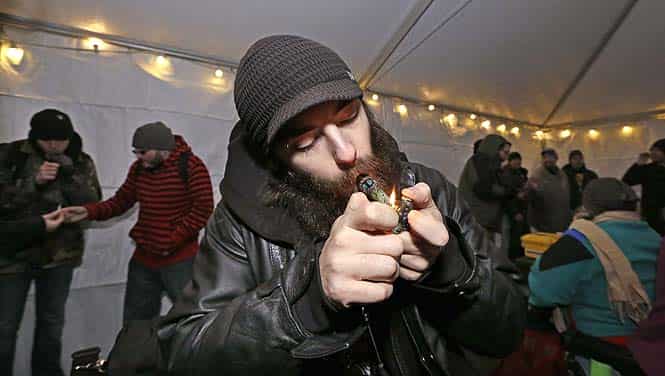
For now, all the focus is on 2014. This being Colorado, there will be more than a few joints lit up on New Year's Eve. Pot fans plan to don 1920s-era attire for a "Prohibition Is Over!" party.
Williams says he's done everything he can, including hiring seven additional staffers to handle customers. All he has to do is open the doors. "Are we ready to go? Yes," he says. "What's going to happen? I don't know."


