E-Paper



Avalanche effect: Fewer Everest attempts from Nepal this year?
The icefall doctors of Everest, the hardy Sherpas who fix ropes and ladders along the route to the world's highest peak for benefit of climbers, have begun preparations for the coming spring season.


The icefall doctors of Everest, the hardy Sherpas who fix ropes and ladders along the route to the world's highest peak for benefit of climbers, have begun preparations for the coming spring season.
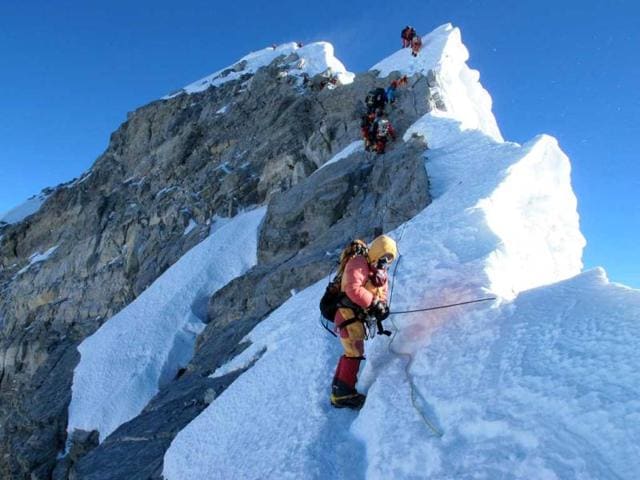
But the slopes of the 8,848-metre peak which witnesses a heavy rush of climbers every year during April-May could witness fewer attempts at glory from the southern or Nepal side this season.
It was while fixing ropes on the route for last year's spring climbing season when 16 Sherpas were buried under an avalanche on April 18. Thirteen bodies were recovered and three more still lie buried under snow.
The incident put an end to last spring's expeditions. The after effects of the tragedy, which raised questions on safety and better management, is likely to affect climbing on Everest this season too.
Two major companies from outside Nepal, High Adventure Expeditions (USA) and Peak Freaks (Canada), have already announced their decision to cancel their Everest expeditions for this year.
Following last year's tragedy the Nepal government announced better safety measures and higher insurance cover for Sherpas, but dithering attitude on extension of permits to last year's climbers has affected most expeditions.
Last year's avalanche forced 334 climbers from all over the world to abandon their attempts on Everest. Nepal government is yet to decide whether the individual permits issued last year will be valid for this season too.