E-Paper



Fresh talks between Madhesi parties and Nepal govt fail to make headway
Fresh talks between the Nepal government and parties from the Madhes region protesting against the country’s new Constitution ended inconclusively here on Thursday, setting the stage for further protests.


Fresh talks between the Nepal government and parties from the Madhes region protesting against the country’s new Constitution ended inconclusively in Kathmandu on Thursday, setting the stage for further protests.
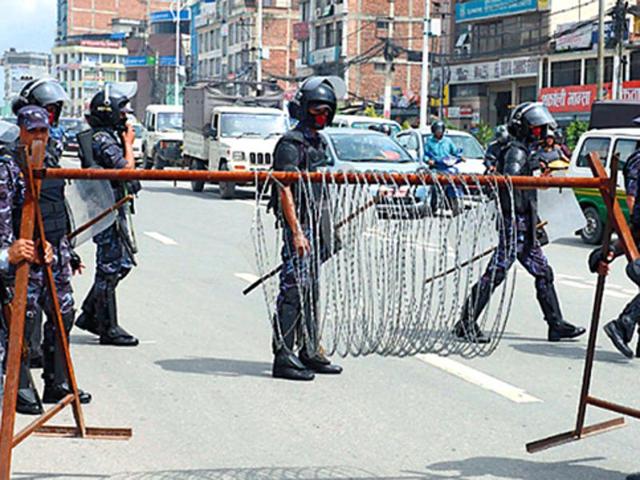
The fresh round of talks was the first since leaders of the four Madhesi parties went to New Delhi to interact with Indian ministers, officials and politicians on the current situation in Nepal.
Though there was discussion on the demands of the Madhesi parties such as fresh demarcation of state boundaries and proportional representation in all government organs, the parties failed to reach any consensus.
The main opposition party, the Nepali Congress, also attended the meeting.
“Our protests will continue till all our demands are fulfilled,” said Upendra Yadav of the Federal Socialist Forum-Nepal, one of the four parties comprising the United Democratic Madhesi Front.
The Madhesi parties, which have been obstructing proceedings in parliament for several weeks, however, agreed to let the House function to allow the tabling of a bill on an earthquake reconstruction authority.
Madhesis belonging to the Terai region, which borders India, have been protesting against the new Constitution for more than three months.
The protesters have blocked several key border points with India, preventing the entry of goods from India and creating a shortage of essential goods including petroleum products.