E-Paper



Heavy rainfall causes flooding, landslides in Nepal
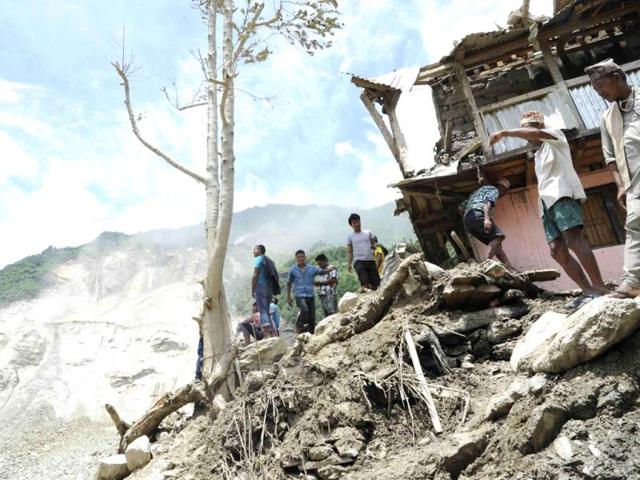
Heavy rainfall since Wednesday has caused flooding, landslides in some parts of Nepal damaging bridges, houses and affected vehicular movement.


Heavy rainfall since Wednesday has caused flooding, landslides in some parts of Nepal damaging bridges, houses and affected vehicular movement.
With water levels of major rivers like Koshi, Karnali and Narayani rising there is a threat of flooding in areas lying downstream including parts of Uttar Pradesh and north Bihar.
According to the hydrology and meteorology department, water level of the Koshi River was flowing above the danger level at 6.22 m at Chatara on Thursday morning.
The flow of water on the river was measured at over 260,000 cusecs per second and 38 of the 56 sluice gates on the Koshi Barrage on the Indo-Nepal border have been opened.
The water level is higher than August 2008 when eastern embankments of the barrage collapsed leading to massive flooding in north Bihar that killed many and left over a million homeless.
There is fear there could be more landslips at Mankha in Sidhupalchowk district, which was hit by heavy landslide earlier this month that claimed 156 lives.
The landslide had blocked the Sun Koshi river and created a large lake. Effort to resume normal flow of water on the river by clearing the debris is still underway.
A 29-year-old woman and her 7-year-old son were killed and three other members of the same family were injured when a landslide damaged their home in Jajarkot district in mid-western Nepal on Thursday morning.
Traffic on East-West highway remains affected since Wednesday night after a bridge on Rato Khola on the border between Mahottari and Dhanusha districts collapsed due to rise in water level.
Nearly half a dozen villages have got inundated after an embankment on the Kamala River on the border between Siraha and Dhanusha districts in eastern Nepal bordering India broke on Thursday morning.
Meanwhile the hydrology and meteorology department has dismissed news reports about likelihood of incessant rainfall for three days in most parts of Terai and some parts of hills as false and misleading.