E-Paper



I am not anti-India, Nepal PM Oli tells Modi amid protests
Nepal’s Prime Minister KP Sharma Oli told his Indian counterpart Narendra Modi that he was “not anti-India” against the backdrop of speculation that a crisis created by Nepal’s new Constitution has affected relations between the two countries.


Nepal’s prime minister KP Sharma Oli told his Indian counterpart Narendra Modi that he was “not anti-India” against the backdrop of speculation that a crisis created by Nepal’s new constitution has affected relations between the two countries.
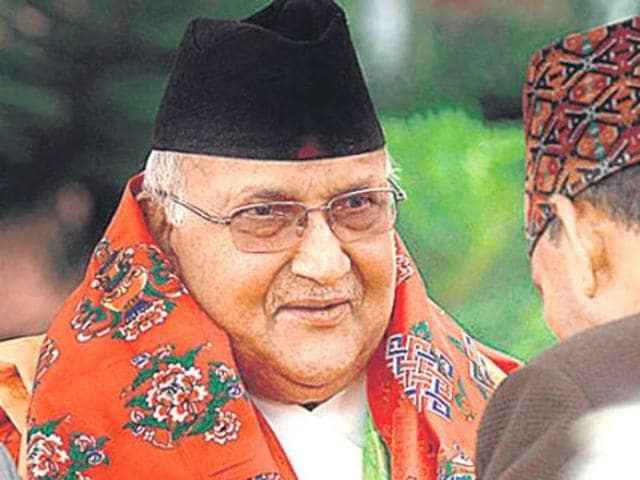
Oli and Modi discussed a range of bilateral issues on phone. The call, made by Oli, lasted 20 minutes and the conversation centred round the blockade of border points, the scarcity of petroleum products and medicines, and a proposed amendment of the Constitution to address demands of parties representing the Madhesi people.
“Our Prime Minister said that contrary to the image portrayed in some sections of the media, he is not anti-India and wants to strengthen ties with the southern neighbour,” Gopal Khanal, Oli’s foreign affairs advisor, told Hindustan Times.
Madhesis residing in the Terai plains bordering India have been protesting against the Constitution for four months. They have blocked key border points, including the one at Birganj that accounts for nearly 70% of bilateral trade.
Nepali politicians have accused India of backing the blockade, a charge denied by New Delhi.
A brief statement issued by the external affairs ministry said Oli had briefed Modi on political developments in Nepal. Modi “emphasised the importance of finding a durable solution to the political problems facing Nepal based on consensus or ‘sahmati’”, it said.
This was the first time the two leaders talked on phone in nearly two months. Modi first called Oli to congratulate him on his election to the prime minister’s post in October.
The two leaders talked again on November 2, when they discussed the blockade. Since then, there has been a chill, mainly because Oli and several of his ministers accused India of imposing the blockade.
Officials said Modi also asked Oli to visit India soon, and Oli responded positively, saying he would do so once the situation at home eases.
There has been speculation that Oli might make his first foreign trip to China and not to India, like most of his predecessors, following a recent visit to Beijing by deputy prime minister and foreign minister Kamal Thapa.
“Oliji has received invitations from both neighbours but nothing has been fixed yet. He will undertake a visit to either of the two countries keeping his national priorities and schedule in mind,” Khanal said.
Officials said Oli made a request for help in easing the border blockade. Modi reportedly responded that India has no role to play in the matter and that the flow of supplies through Biganj will become normal once the Madhesi people lift the blockade.
Modi reportedly told Oli that petroleum products, medicines and other essential goods are being supplied through other border points and instructions have been issued to Indian authorities to airlift medicines to Nepal as and when required.
The two premiers exchanged New Year greetings and Oli thanked Modi for New Delhi’s message welcoming the tabling of a bill to amend Nepal’s Constitution to address two demands of the Madhesi people related to proportional representation and delimitation of constituencies.
Madhesi parties, under the banner of the United Democratic Madhesi Front, have rejected the Constitution amendment proposal, saying it doesn’t deal with their core demand of fresh demarcation of state boundaries.
Read More:
Constitution amendment: India tells Nepal to bring Madhesis on board
Losing the plot: What went wrong for India in Nepal
India asks Nepal to solve crisis, warns against ‘China card’