E-Paper



Nepal assembly endorses new constitution with majority vote
Nepal’s constituent assembly voted overwhelmingly in favour of a new constitution on Wednesday evening ending a seven-year process that saw many ups and downs.


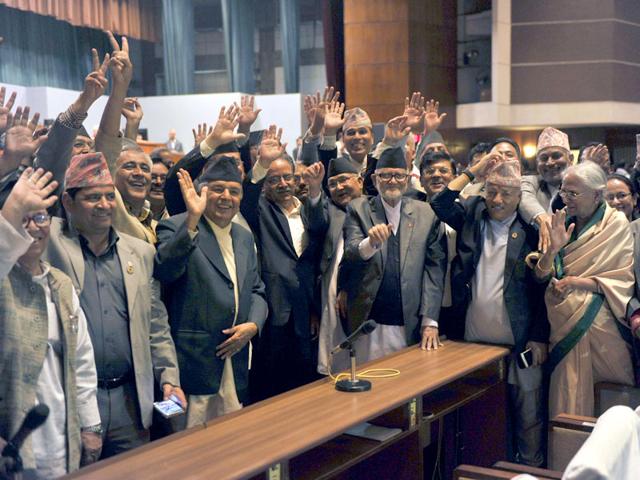
Nepal’s constituent assembly voted overwhelmingly in favour of a new constitution on Wednesday evening ending a seven-year process that saw many ups and downs. Despite 11 minor parties from southern plains quitting the process in protest against demarcation of federal states, 507 members of the 601-strong assembly voted in favour of the new statute.
Lawmakers from Rastriya Prajatantra Party-Nepal, which espouses reinstatement of Hindu state status and monarchy, was the only party that voted against the final draft. The new constitution will come into effect on Sunday with President Ram Baran Yadav unveiling it. The interim constitution, in existence since 2007, will cease to be effective after that.
“The constituent assembly endorsing the constitution is a matter of pride for all Nepalis. Congratulations and best wishes to all,” Prime Minister Sushil Koirala tweeted soon after voting was over. There was an atmosphere of relief and cheer among lawmakers once voting was over late on Tuesday night, but protests against the statute continue in the southern plains.
Over 40 people including 11 policemen have been killed in clashes in the past one month due to protests by Madhesis, Tharus and other marginalized communities unhappy with boundaries of the seven new states. There is fear these communities will continue to remain underrepresented. With no talks taking place to resolve the issue, the major parties decided to push through the constitution.
Prime Minister Koirala has assured that unresolved issues would be addressed through amendments in the constitution once talks with the agitating parties take place. Nepal has had six constitutions and interim statutes in the past six decades, but this is the first time a constitution has been passed by a properly elected constituent assembly.
The latest process started in 2008 after a 10-year-long civil war which claimed over 16,000 lives and a peoples’ movement culminating in removal of the 240-year-old Shah dynasty. The first constituent assembly was dissolved in 2012 due to differences among political parties on several issues including federalism, government, judiciary and elections.
The second constituent assembly was elected in 2013 with promises by most parties to deliver the new statute within a year. The devastating quake in April this year forced parties to speed up the process. Lawmakers have rejected proposals for reinstatement of Hindu state status and the monarchy and as per Nepal’s new constitution the country will be a secular, multi-party democracy.
The government has asked people to celebrate the occasion and have announced holidays on Sunday and Monday.