E-Paper



Nepal-China transit treaty is posturing by Kathmandu, say experts
The signing of a transit treaty by Nepal and China, aimed at reducing the landlocked Himalayan country’s dependence on India, has been described by experts as posturing by Kathmandu.

 Prefer HTon Google


The signing of a transit treaty by Nepal and China, aimed at reducing the landlocked Himalayan country’s dependence on India, has been described by experts as posturing by Kathmandu.
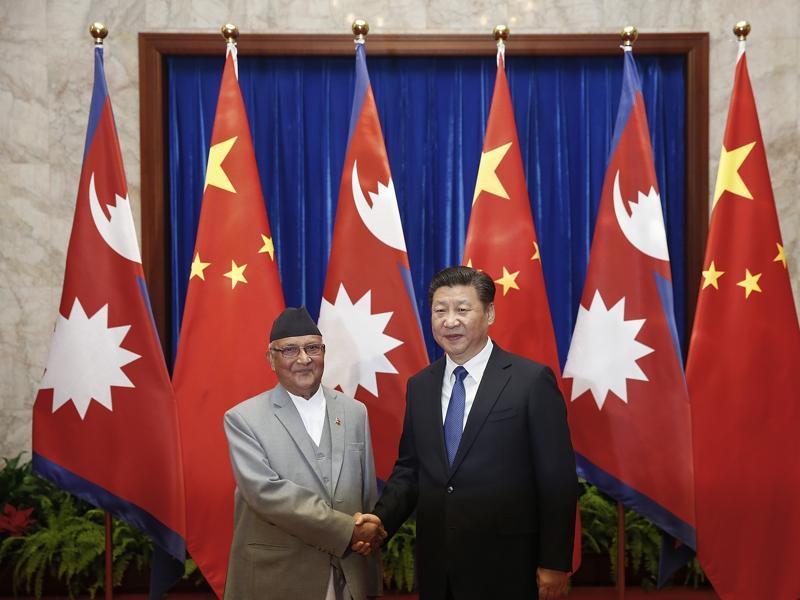
Nepal currently has access to sea ports for trade with third countries only through India. But the treaty inked in Beijing on Monday during Prime Minister KP Sharma Oli’s visit hopes to change that.
Though news reports in Kathmandu referred to the treaty as “a major geo-political shift”, experts see it more as a gesture by Oli to please the public in Nepal and send a message to India.
“The treaty is purely symbolic as it will be difficult to put into operation. People are not going to be fooled by it,” said Lok Raj Baral, a former Nepali ambassador to India.
Read | Nepal PM gets red carpet in China, signs deal for rail link via Tibet
The Chinese sea port nearest to Nepal is at Tianjin, located 3,300 km from the border between the two countries. In contrast, Haldiya port near Kolkata, through which Nepal conducts almost all of its third country trade, is barely 1,000 km away.
During Oli’s visit to India last month, New Delhi had agreed to allow Kathmandu to use the Vishakhapatnam port for its third country trade.
“Even if they are able to bring goods from Tianjin to the Nepal-China border, our poor infrastructure won’t make the plan feasible,” said Baral.
A senior Indian diplomat, who spoke on condition of anonymity, said: “Since Nepal is a landlocked country, it is obligatory for neighbours who have access to the sea to let Nepal use their ports for trade.”
The diplomat felt the transit treaty between Nepal and China is “impractical” and couldn’t be implemented because of geographical conditions, infrastructure and costs involved when compared to transit trade through India.
“It was a purely political move by the Nepal government aimed at media management at home. We are very well aware of it and we’re not bothered in the least,” the diplomat said.
Nepal and India share a 1,800-km open border with 27 points through which trade takes place.
But only one trading point is currently operational between Nepal and China, and another at Tatopani has been closed since last year’s massive earthquakes.
China has expressed its willingness to bring its rail network to the Gyirong border point with Nepal by 2020. During his talks with the Chinese leadership, Oli requested that the rail link be extended further inside Nepali territory.
A recent blockade of the border with India by Madhesi parties opposed to Nepal’s new Constitution has forced Kathmandu to look for alternatives to end its complete reliance on its southern neighbour for essential goods and trade.