
 E-Paper



President gives his nod, GST Bill becomes Act
The government will also start process to create the crucial GST Council, which will be chaired by the Union finance minister with all state finance ministers as members

 Prefer HTon Google


As government is racing against time for implementing the goods and services tax, President Pranab Mukherjee on Thursday gave assent to Constitution Amendment Bill on Goods and Services Tax (GST), making it an Act.
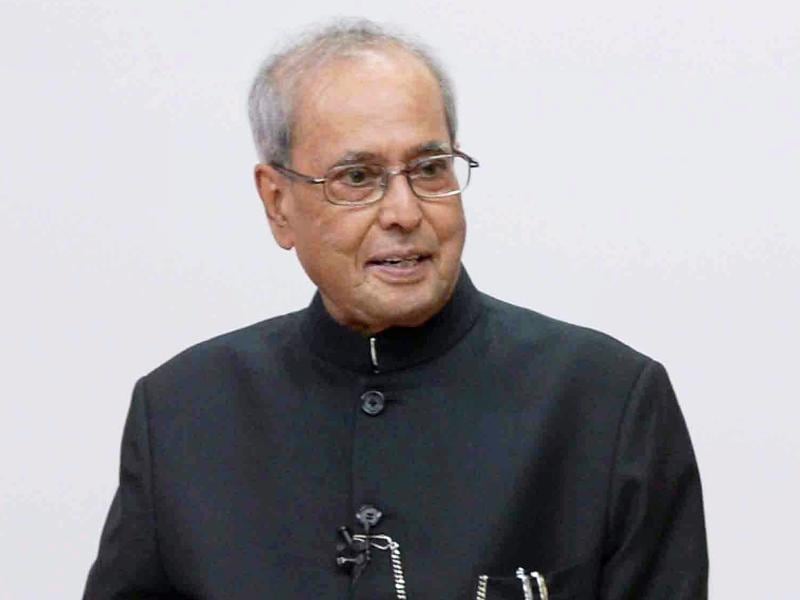
The President’s nod sets in motion a series of bureaucratic procedures such as a Gazette notification, Parliament re-considering the three bills — one for Central GST (CGST), another for an Integrated GST (IGST) and the model bill to facilitate states to levy their respective State GST, which are to be passed in the Winter Session of Parliament.
The CGST and IGST will be drafted on the basis of the model GST law. The states will draft their respective State GST (SGST) laws with minor variation incorporating state-based exemptions. The IGST law would deal with inter-state movement of goods and services.
Meanwhile, the government will also start process to create GST Council, which will be chaired by the Union finance minister with all state finance ministers as members and is crucial as it will decide the GST rates.
“With the passing of the GST Amendment Bill, a big milestone in the eventual implementation of GST has been achieved. The immediate next step would be the creation of the GST Council which will discuss and decide on the rates, the tax base, exemptions and all other essential features of the GST law. The earlier the GST council is now formulated the earlier the detailed features of GST would be finalized and help the industry in designing its processes for the GST implementation,” Bipin Sapra, tax partner, EY India.
GST – the country’s single largest which will subsume most of the central and state taxes such as Value Added Tax (VAT), excise duty, service tax, central sales tax, additional customs duty and special additional duty of customs, has already been ratified by 17 of the 29 states.
The Parliament had on August 8 passed the bill which was then circulated to state governments seeking its ratification.
A Constitution amendment bill needs to be ratified by the legislative Assemblies of at least 50% of the states before sending it for President’s nod.
Assam, Bihar, Jharkhand, Chhattisgarh, Himachal Pradesh, Gujarat, Madhya Pradesh, Delhi, Nagaland, Maharashtra, Haryana, Sikkim, Mizoram, Telangana, Goa, Odisha and Rajasthan have ratified the Bill.
Revenue Secretary Hasmukh Adhia had recently said that the government is ahead of schedule for implementation of GST.
“Instead of 30 days kept for this (states’ ratification), it is achieved in 23 days,” he had said in a tweet.
The government has set for itself a deadline of April 1, 2017 to roll out the unified Goods and Services Act, which it is racing to achieve.


