
 E-Paper


Follow the latest breaking news, major developments and agenda-setting stories from India and around the world with the newsdesk at Hindustan Times. Operating round the clock, the desk brings together experienced editors, reporters and correspondents to deliver fast, accurate and contextual reporting across subjects that influence public policy, governance, business, society and international affairs. The HT News Desk covers politics, elections, government policies, the economy, business and markets, science and technology, the environment, law and order, infrastructure, education, climate issues and geopolitics, while closely tracking developments across states, institutions and global capitals. The team also leads coverage of major breaking news events, policy announcements, court proceedings, natural disasters, public emergencies and significant international developments. Reports published by the newsdesk are based on information gathered from reporters on the ground, official statements, government agencies, court records, regulatory filings, recognised institutions and other authoritative sources. Stories undergo editorial scrutiny and verification processes to ensure accuracy, fairness and relevance, and are updated as events evolve and additional information becomes available. Whether covering a key political decision in New Delhi, an economic policy shift affecting millions, a landmark court ruling or a major global event, the HT News Desk aims to provide readers with reliable, fact-based journalism that delivers not only the latest developments but also the context and analysis needed to understand their wider implications.
Pakistan blames India for cross-border pollution
A report in Pakistani English daily, Dawn, blames the Indian states for the “alarming situation in south and central (Pakistan) Punjab” as the region warms up to winter.


After cross-border terror, it’s cross-border pollution.
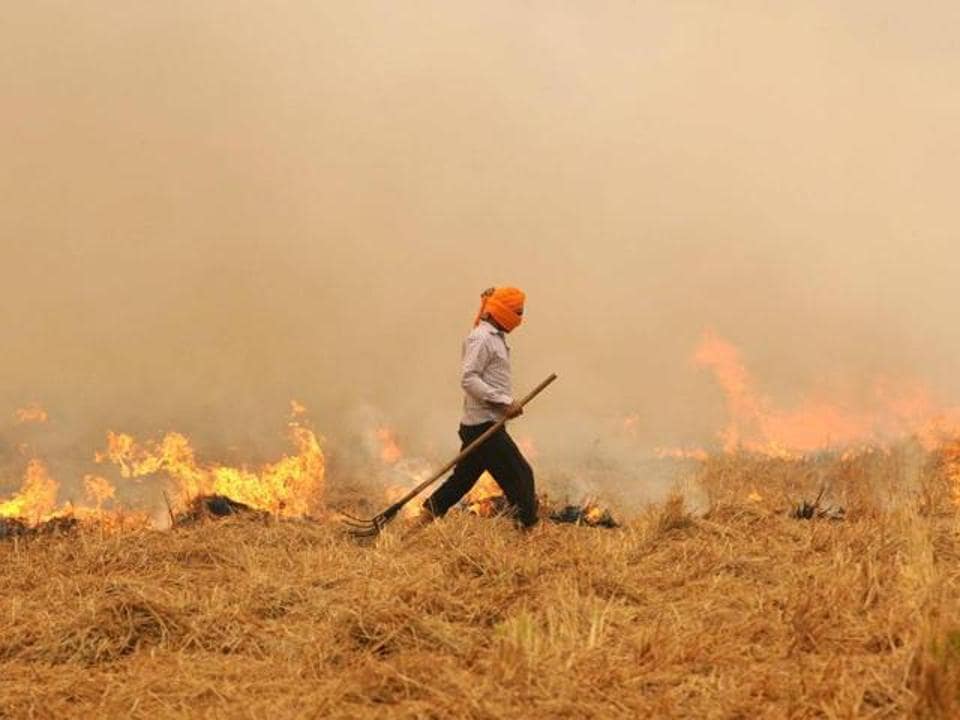
Pakistan on Friday blamed India for causing an “incursion of smoke” due to crop stubble burning and emissions of thermal power plants in the border states of Punjab and Rajasthan.
A report in Pakistani English daily, Dawn, blames the Indian states for the “alarming situation in south and central (Pakistan) Punjab” as the region warms up to winter.
“It is not good in Lahore. Environment protection department officials said control over local pollution contributions thinned the lower layer of smog though its upper layer thickened because of enhanced incursion of smoke and ash of the crop stubble being burnt on a large scale in adjoining Indian Punjab,” the report said.
An official said though emissions from the coal power project at Sahiwal in Pakistan was causing pollution, the four power plants in Indian Punjab and nine in Rajasthan were to blame for the worsening situation over four days.
“Crop stubble burning is causing smog over a large area in India, and media reports there say it has failed to control the pollution-causing practice despite public outcry and censure by courts,” the report said. It claimed that 2,620 fire incidents had been spotted via satellite in Indian Punjab in 24 hours. “There were just 27 cases of torching of crop residue in Pakistan’s Punjab,” it added.
The smog was particularly thick in Bahawalpur, Multan, Okara, Pakpattan, Chiniot and Faisalabad.
The smog was a concern in Pakistan Punjab last year too, irritating eyes and the throat besides causing breathing problems.
Rain is seen as the only way to clear the phenomenon but it is not forecast in a week.


