E-Paper



Star para-athlete forced to take off prosthesis at airport, left bleeding
One of India’s top para-athletes has alleged that he was forced to remove his prosthetic leg and humiliated by the security staff at Bengaluru airport.

 Prefer HTon Google


One of India’s top para-athletes has alleged that he was forced to remove his prosthetic leg and humiliated by the security staff at Bengaluru airport.
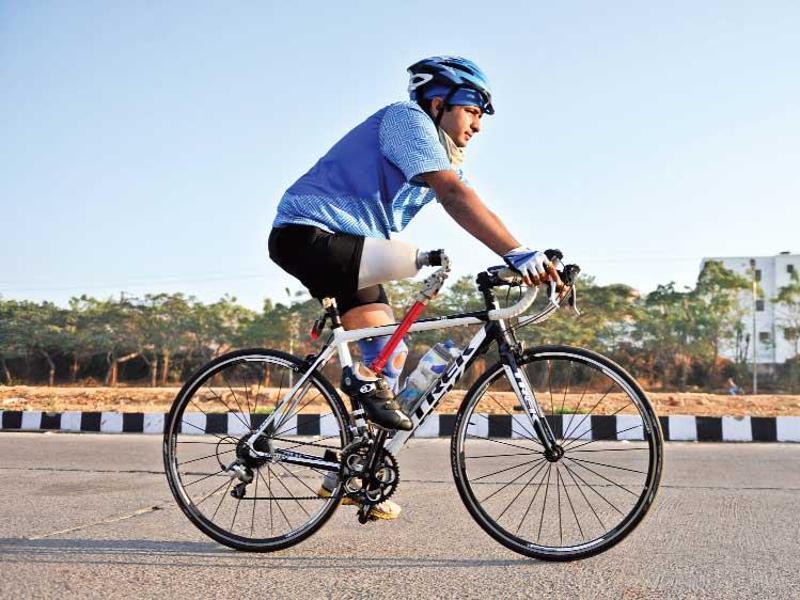
Two-time para-cycling Asian medallist Aditya Mehta wrote on Facebook post that Central Industrial Security Force (CISF) officials at Bengaluru airport made him “undo and redo” his prosthesis during the security check for a 5.30am flight to Hyderabad.
“I have been suffering with an injury since the past 20 days with my stump and the security check officials only had to say “It is your problem!”. It took me 40 min for the entire process which left me bleeding at the end,” Mehta wrote.
The athlete said this wasn’t the first time he was forced to undergo the ordeal and had similar experiences at Delhi and Bengaluru earlier this year.
“I have mentioned how painful the procedure is to remove the prosthetics and wear it back. Worth mentioning is the psychological scar that it can leave on a physically challenged person’s mind.”
“Thankfully, I am not that weak mentally.”
He said that a foundation run by him had asked for full-body scanners at airports to deal with disabled persons but no action – not even sensitization of security staff – had been forthcoming.
“This isn’t just my personal battle but the emotions behind the cause is. I am not here to absorb the humiliation and break. I am here to stand for my people and make a change,” he wrote.
“This isn’t a plea because we have pleaded before with no luck. This is a challenge to your oppressive system.”
More than 21 million people in India are certified as disabled but often complain of neglect and discrimination, especially in accessing public spaces and services. A clutch of medals at the recently concluded Paralympics in Brazil brought back the focus on social bias against para-athletes and how many of them had surmounted obstacles to represent India at the world stage.