E-Paper



To free herself from torturous marriage, Muslim woman divorces husband at press meet in Lucknow
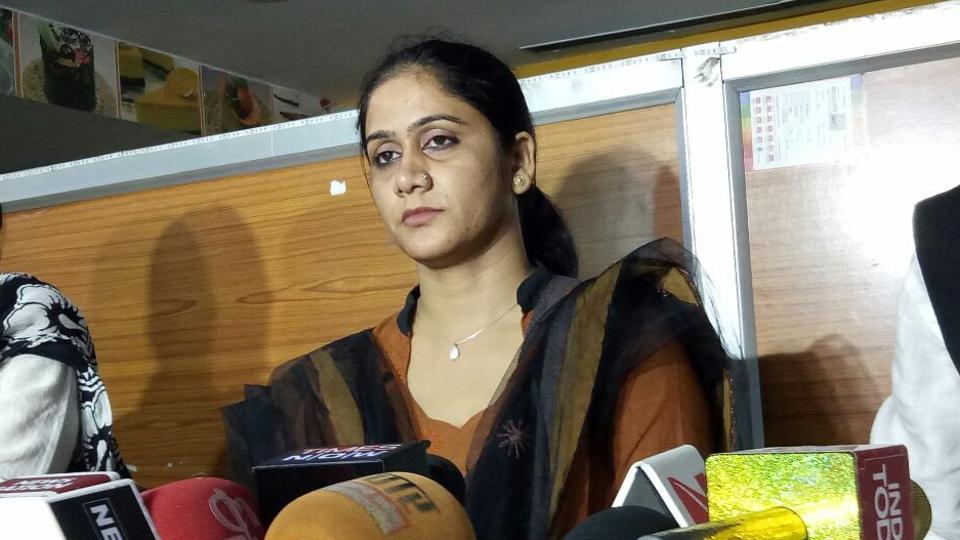
Shajada Khatoon said she decided to divorce through a letter, which she signed at the press conference, because her husband and clerics were avoiding her plea for 18 months.

 Prefer HTon Google


A Muslim woman divorced her husband at a press conference in Uttar Pradesh capital Lucknow after her plea for “khula” to “free herself from a tortuous marriage” was allegedly ignored by the man and clerics.
The move comes weeks after the Supreme Court banned instant divorce, or triple talaq, by Muslim men. Khula is the process through which a Muslim woman can divorce. It’s long and elaborate.
Shajada Khatoon said she decided to divorce through a letter, which she signed at the press conference, because her husband and clerics were avoiding her plea for 18 months.
“Juber Ali made my life hell just a few days after I got married on November 14, 2005. The torture was so much that I filed a case against him. But that too did not bring relief,” she said.
“I wish I’ll be free from today.”
Khatoon, a schoolteacher, has not been living with her husband for the past 18 months.
She sent a letter seeking divorce on September 6 to her husband, a mechanic in a consumer goods store in Lucknow’s Daliganj area.
“I am living alone without any support or security from anyone. No one has the right to compel me now to live with my husband and if someone has an objection they might move court,” she said.
According to Maulana Khalid Rasheed Farangi Mahli, member the All India Muslim Personal Law Board, such a khula is not accepted.
It has a procedure wherein the husband is served notices on the request of the wife. A verdict is given if the husband does not turn up after three notices.
“If the husband turns up on the first notice and agrees for it, they are allowed to separate and the woman can live with whoever she wishes to. Sometimes husband does not turn up and this takes over a year but in no case a letter can be a base for khula,” Mahli said.
Advocate Rijwan Ahmad, who was present at the press conference, said no one can compel her to live with that man since she had filed for a divorce.
“Now if someone has a problem they might go to court,” he said.
According to social activist Naish Hasan, the woman visited clerics for help but could not get any.
Naish is the general secretary of Muslim Woman League.