
 E-Paper



Playing drums in Tanzania not the problem, Modi’s silence on Kashmir is
One does not expect the PM to comment on the killing of every militant in Kashmir--but if the killing has other consequences, then silence is not an option.

 Prefer HTon Google


Prime Minister Narendra Modi has been criticised for playing the drums in Tanzania even as Kashmir burns. This, social media warriors have declared, is proof of his priorities. While this simplistic binary may get likes and retweets, it is unfair.
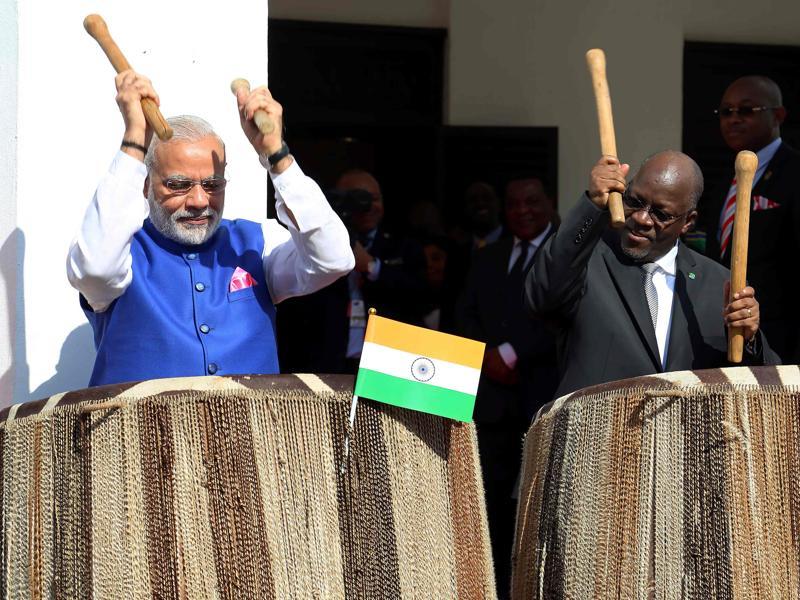
The PM is on an important visit to Africa: his first since taking over. Once he is there, he has to immerse himself in engaging with his hosts and reaching out. To expect him to drop everything does not do justice to the multiple responsibilities the head of the Indian government executes.
Playing the drums on external soil is not the problem. His silence on a burning internal issue is the problem. Communicating his achievements in Africa--or wishing a colleague for his birthday as he did to Suresh Prabhu on Monday morning--is not the problem. Not reaching out, instantly, to Kashmiris through modern technology that he so likes is the problem. Deploying top ministers and the government’s propaganda machinery to advertise even incremental progress is understandable. Silence in putting forth the view of the Indian state on a grave political-security issue is inexplicable.
READ | The Kashmir manifesto: Delhi’s policy playbook in the Valley
And this is all the more so because Modi is an effective communicator.
Look back at the last few days. One does not expect the PM to comment on the killing of every militant in Kashmir--but if the killing has other consequences, including the deaths of many others who India considers its citizens, then silence is not an option. Take Barack Obama. He was in Europe when the Dallas killings took place, but he instantly spoke out on the need for calm.
One does not expect that a single comment by the PM will address the long-standing alienation in Kashmir. But not even deigning to comment as people die only adds to the perception that the Government of India is insensitive and does not care.
READ: Operation wasn’t for Burhan Wani, had targeted another militant
It is not just about the PM. Take the others who make up the establishment. India’s national security machinery will not give away trade secrets. But custodians of the security state must explain the rationale and timing of its actions, and its plans to contain the fallout of any such action. Just saying Wani was a terrorist and deserved to die is not enough.
The opposition hasn’t fared much better. Rahul Gandhi, the voice of the Congress, has not made a statement on the Kashmir killings. He has not even put out a tweet. Does the face of the opposition have no view on what’s happening in India’s most sensitive state? Or is he in a bind--he can’t support the government, but opposing it could invite tag of being “anti national”.
The Indian state’s bleeding capacity is extraordinarily high. It has seen worse in Kashmir. And those at the apex of the decision-making apparatus probably think this too will pass. But a silent PM, and the government’s overall weakness in communication over the past few days, has meant that India confronts the danger of losing the narrative in Kashmir, yet again.


