
 E-Paper



Rise of Taliban in Afghanistan is ominous for South and Central Asia
Taliban aim to seize political power by force and convert Republic of Afghanistan into an Emirate with Pakistan playing Dr Jekyll and Mr Hyde behind the scenes.

 Prefer HTon Google


Prime Minister Imran Khan has told western media that Pakistan’s leverage on Taliban has diminished after the US announced the date of withdrawal of forces from Afghanistan, resulting in a de-facto victory of the Pashtun insurgent group. In the same interview, PM Khan claimed that Pakistan’s leverage over Taliban came from Islamabad’s recognition of the Sunni fundamentalist group after it seized Kabul in 1996.
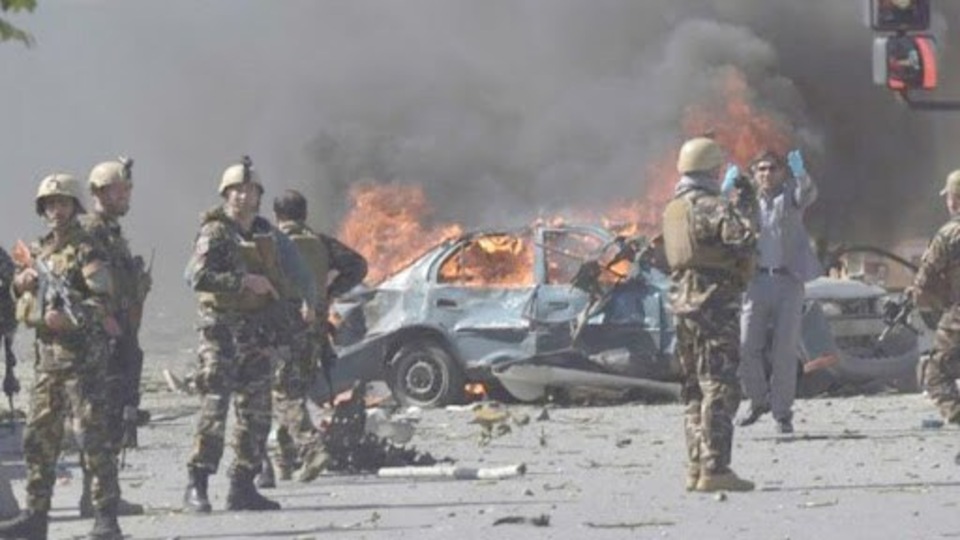
While the Afghan army is fighting a tough battle against the Taliban with public support in Baghlan and Paktia province, PM Imran Khan's virtual disavowing of past links with them is classic doublespeak which the West, particularly the US under guidance from the UK, has been duped for the past two decades.
Every intelligence agency that has operated in the Af-Pak region knows that the Taliban leadership lives under protection of Pakistan’s deep state in cantonments of Quetta and Karachi. The drug-funded weapon and cadre supply lines to Taliban run through Khyber and Spin Boldak pass with Sirajuddin Haqqani of Haqqani Network appointed as the sword arm of the ultra-conservative Sunni insurgent group. Pakistan-based India specific terrorist groups like Jaish-e-Mohammed and Lashkar-e-Taiba act as force multipliers for Pakistan’s influence on Taliban as well as provide terror training camps to the Punjabi groups in Afghanistan.
Now that the US has begun withdrawal of forces from Afghanistan, the democratic institutions raised in the country in the past two decades will now be in peril as Taliban have no value for women, minorities and human rights in their objective to establish an emirate with Sharia rules. Even though the present Afghan leadership has promised a fight to Taliban, the return of the insurgent group in Kabul will be seen as victory of jihad by Islamists and have long standing ramifications on an already unstable world. This too at a time when the world is still suffering from the impact of 2014 siege of Mosul by the so-called Islamic State.
The prediction of an imminent sweep of Afghanistan by the Taliban appears to a hurried one as neighbours of Kabul like India, Russia, Iran and Central Asia understand the security ramifications of emirate, as it will give rise to Sunni fundamentalism as witnessed before the rise of the Pashtun group in early 1990s. Fact is that there are fault lines within the Taliban with the rise of Mulah Mohammed Yaqoob, eldest son of Taliban supreme leader Mullah Omar, who declared himself as the commander of the faithful in Kandahar in April 1996. With the present Taliban leader Hibatullah Akundzada being more of a cleric, the contest is between his deputies - Sirajuddin Haqqani and Mullah Yaqoob, who has the legacy of his mujahideen father.
It is expected that once US and NATO forces exit Afghanistan fully, neighbouring powers will start talking to each other to ensure that the Taliban is contained and with it the leverage of Pakistan and its all weather ally China in the region. The past experience of Taliban rule for the Afghan population particularly the women, Tajik, Hazara and other minorities will lead to a serious armed struggle and the country will again slip into civil war.
The Pakistani deep state will ensure that India will be impacted on the security front by the rise of Taliban at least in the union territory of Jammu and Kashmir with eastern Afghanistan providing strategic depth to terrorist groups like JeM and LeT. Rather than putting all eggs in western basket, India will have to take pro-active steps to ensure that the present regime challenges the Taliban insurgents and the Afghan army does not give a walkover to the insurgent group. The nightmare of Indian Airlines Flight number IC-814 hijacking to Taliban ruled Kandahar and the release of Pakistani terrorists Masood Azhar and Omar Sayeed Sheikh in exchange for hostages should not be forgotten.


