
 E-Paper



Sonny Mehta: The legacy of a publishing legend
His deep love for books, enthusiasm for new ideas, and belief in the freedom of writers made Mehta stand out

 Prefer HTon Google


When Robert Gottlieb moved from Alfred A Knopf to The New Yorker in 1987, his successor as editor-in-chief was met with what might euphemistically be called scepticism. Knopf was the most storied name in the American publishing; and in its 72-year history, it had had only two editors-in-chief, Gottlieb and Alfred A Knopf himself.
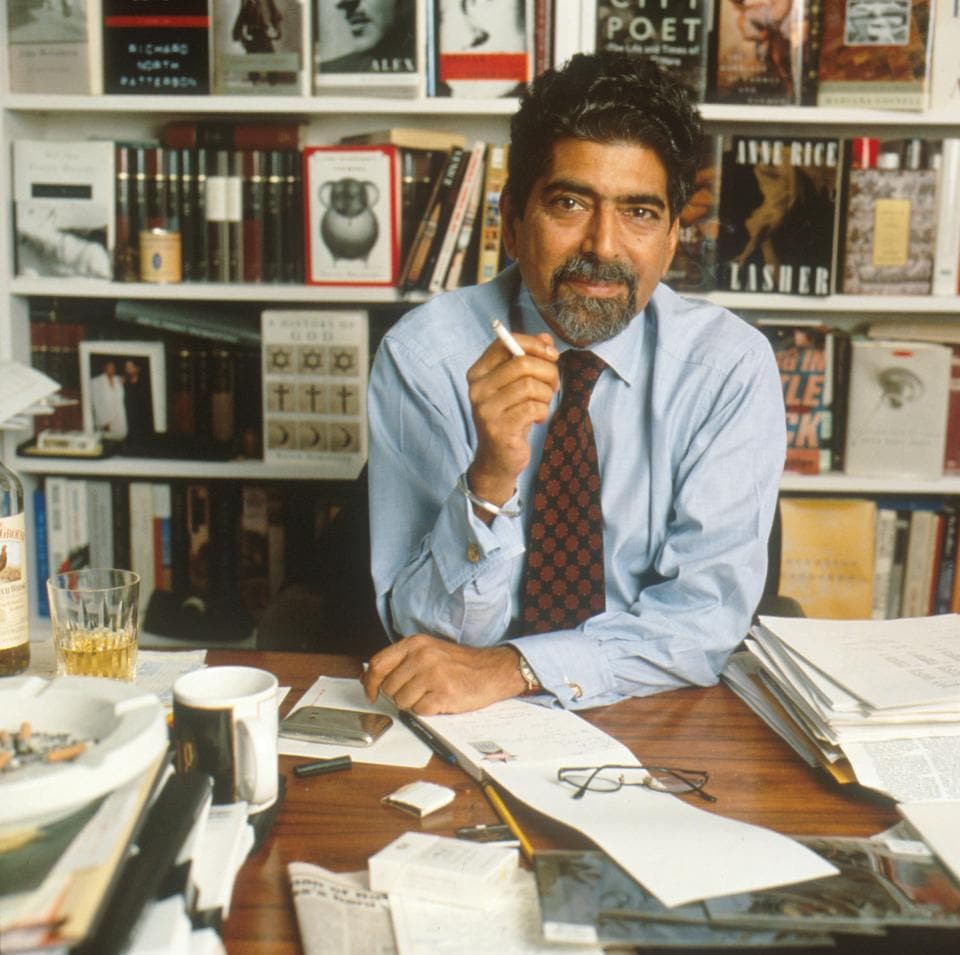
That successor was an Indian, and had worked in the very different world of British paperback publishing. His management style was a sharp departure from the hands-on Gottlieb. The transition was described by one colleague as “traumatic”. Some gave Sonny Mehta, who died peacefully yesterday at 77, only a year in his new job. He lasted 32; long enough to be known as the greatest publisher of his time.
Ajay Singh Mehta, known to all as Sonny, was born in 1942 to a Punjabi family. His father’s diplomatic career meant an international childhood: he lived in five countries before being sent to boarding schools, first at Sanawar and then Sevenoaks. From the latter, he went to Cambridge, where he met Gita Patnaik, whom he went on to marry: she later became a distinguished writer and filmmaker. She was as loquacious as he was laconic: They made a yin-and-yang couple of surpassing charisma and liveliness.
The plan had been that Sonny would follow his father into the foreign service. But he failed to turn up for the exam — an episode of great consequence for the world of books — and went into publishing instead. He co-founded Paladin, and went on to run Pan, where he published a string of best-sellers as well as introduced a new generation of novelists who would come to define British fiction — Ian McEwan, Julian Barnes, Graham Swift. Then came Knopf.
What made him such a brilliant publisher? Five qualities come immediately to mind. One was his total freedom from snobbery. Sonny loved books, and not just the “serious” or “literary” kind. He attributed this to a youth in which he read anything that was available, mostly in paperback. He published Nobel-winning novelists — Kazuo Ishiguro, Toni Morrison — but also Jackie Collins and EL James. The last time I met him, he was reading, for pleasure, the new Harlan Coben.
Second was a belief in the intrinsic worth of books, and a confidence in his own judgment. Sonny took pride in Knopf’s continued profitability, but he never judged the value of an individual book or author by their sales. Third, the ability to allow talented people to work with freedom, rather than attempt to impose his personality on Knopf. Fourth, his engagement with every aspect of publishing, from marketing to production. There may have been no other publisher who was as passionate about book design. Sonny could frustrate authors with his inaccessibility, but he published with exemplary care. At his Knopf, books received only the best of everything.
Finally, to the end, Sonny retained the thrill of discovering something new. “On a good day”, he told Dave Eggers in 2016, “I am still convinced I have the best job in the world.” A “good day” was one on which he read an outstanding new submission. In my last conversation with him, he spoke about his excitement at acquiring A Burning by Megha Majumdar, which Knopf will publish in June 2020.
That was Sonny the publisher. Sonny the person, in the six years I knew him, was a softer, milder version of Sonny the legend. Sonny the legend was the only publisher left of whom authors and agents spoke with reverence, occasionally fear. He was famous for a whisky-and-cigarettes habit that survived the corporatisation of publishing, and for his style — in every sense, the epitome of class, and of cool.
The Sonny I knew was empathetic and hugely generous. And patient — as a young writer conscious of the privilege of his time, I would inundate him with questions about books and publishing. Like other United States-based “cricket tragics”, he relished the fact that the Internet allowed him to watch and follow matches all around the world, and at odd hours.
And, all his life, Sonny carried with him not merely an Indian passport, but the intense patriotism of one who had grown up in the first years of the new republic. He may have “bunked” his own exam, but he was deeply proud of his father’s career, and especially of the fact that Amrik Singh Mehta, then in the Air Force, had been one of those chosen by India’s first Prime Minster, Jawaharlal Nehru, to join the first batch of independent India’s diplomatic corps. His father’s Indian Foreign Service appointment letter, signed by Nehru, may have been Sonny’s most cherished possession.
But my most indelible memory is of Sonny the legend. At one end of their long Manhattan living room, Gita and I were speaking with a friend of theirs. At the other, Sonny sat smoking, taking in the conversation without saying anything. Their friend was telling us about a work of history he wanted to write. It was a brilliant idea, he said — but while his agent had circulated the proposal, no publisher was interested.
Sonny, who had said nothing for half an hour, stood up. “If it’ll be so brilliant,” he said, “then why don’t you quit whining and write the f***ing book?” With unanswerable crispness, he voiced a credo — don’t make excuses, get on with it — that he lived by, and that we can all aspire to.


