
 E-Paper



Terms of Trade: Bihar’s story, via a 2025 airport, 1998 murder and a 1954 novel
According to the 2019-21 National Family and Health Survey’s district-wise average asset score of households, Purnea was ranked 687th

 Prefer HTon Google


Earlier this week, Prime Minister Narendra Modi inaugurated an airport in Purnea in the poll-bound state of Bihar. While new airports being opened these days are pretty common, the fact that the latest one is in Purnea makes for an interesting coincidence for a political economy column by a Bihari.
That Purnea has finally got an airport – it was being demanded for a long time and even the pro-Congress MP was more than happy to share the stage with the Prime Minister during the function – suggests that the place has a reasonable number of people who can afford to travel by air. Purnea otherwise is one of the poorest districts in all of India.
According to the 2019-21 National Family and Health Survey’s district-wise average asset score of households, Purnea was ranked 687th among India’s 707 districts. Clearly, there are hundreds of districts above Purnea in this ranking which cannot boast of an airport.
This in many ways is the larger story of Bihar. A lot of the state’s population now seeks its livelihood from migration. Bulk of these migrants use subsidised rail travel for transport. But there are enough white-collar migrants who can easily afford to buy plane tickets as well. Politics and politicians in the state are often trying to celebrate the latter’s world while competing with each other to woo the former. The latter is a numerically much larger cohort, has very little cause for celebration in their lives, but extremely important for making for breaking political fortunes.
To be sure, economics, whether reflected in infrastructure developments of things such as airports or economic palliatives to woo the poor, is not the only weapon in the arsenal of the average politician in Bihar. Caste and religion play as important a role, sometimes in counter-intuitive ways.
The Lok Sabha MP from Purnea, for example, is Rajesh Ranjan aka Pappu Yadav, who contested as an independent candidate and defeated the Janata Dal (United) nominee pushing the Rashtriya Janata Dal (RJD)’s non-Yadav candidate to a distant third position. While his wife is a Congress (RJD’s ally) MP from Rajya Sabha, Pappu Yadav’s political assertion in the state often does not go well with the RJD because it seen as a challenge to the RJD’s, especially its first family’s hegemony among the state’s most numerically significant caste group, namely the Yadavs. These tensions are an apt reminder that politics does not necessarily lend itself to sweeping generalisations of conflict between broad interest groups such as the proverbial lower castes and upper castes.
What makes the Purnea’s political economy story even more interesting is another twist in the tale going back almost three decades. On 14 June 1998, Ajit Sarkar, the then MLA of Purnea from the Communist Party of India (Marxist) or CPI (M) was murdered in broad daylight in Purnea. Among the main accused in the killing was Pappu Yadav who had lost the Lok Sabha election from Purnea despite being the incumbent MP in 1998 after Ajit Sarkar refused to support him in the elections. Sarkar, had won the Purnea AC for the third time in the 1995 elections and he had defeated Pappu Yadav by a narrow margin of about 3000 votes in that election. Pappu Yadav was convicted by the lower court for the murder and spent eight years in jail before the Patna High Court exonerated him.
As a Bengali, Sarkar did not have enough of “caste capital” of his own, often considered critical in Bihar to win elections. The key support-base he enjoyed were the Santhals (Scheduled Tribe) who have lived in Purnea for a long time and constitute the poorest of the poor in the district. Class politics in Purnea survived when it had more or less atrophied in the post-independence churn in most parts of Bihar and north India. It had to be physically exterminated by killing Ajit Sarkar.
Of course, things have changed in the last three decades. Communist parties are now in an alliance with the RJD, whose strongmen allegedly (in legal parlance) killed grass root charismatic communist leaders such as Ajit Sarkar from the CPI (M) or Chandrasekhar, a former JNU Students’ Union President from the CPI ML Liberation. Whether class struggle has become muted in Bihar on account of these political alliances or the next generations of both the working class and the relatively privileged migrating out of the state to make a better future for themselves instead of fighting each other in class war is a more difficult question to answer substantively. Anecdotally, the answer seems to weigh in favour of the latter explanation. However, it will be historically short sighted to attribute the muting of class contradictions to developments since the 1990s, which is when resisting the BJP and allying with the RJD became an imperative in the state’s politics.
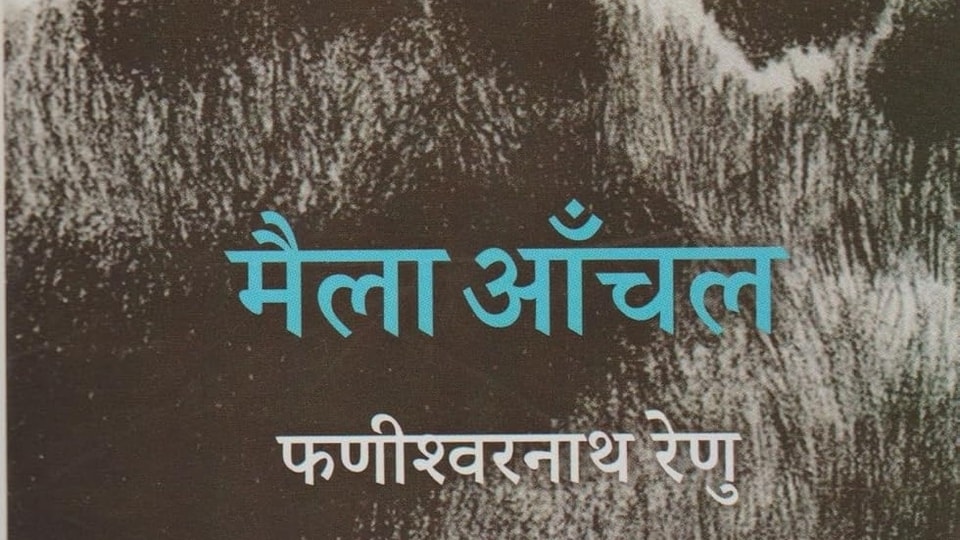
It is here that Phanishwar Nath Renu’s cult classic 1954 novel Maila Aanchal (The Soiled Border), a pioneering work which established the genre of the regional novel in Hindi literature, is a good read to understand what has changed and not changed in Purnea and perhaps all of Bihar in the last century or so. Renu, who was an active participant in the Quit India Movement and the even anti-monarchy struggle in Nepal before taking to writing literature, has given a vivid account of society and politics in a fictitious village Marygunj (named after the dead wife of a British indigo planter) in Purnea district in the period between the Quit India Movement and the immediate aftermath of independence. The village is extremely poor, so much so that even a plebian feast is considered a big luxury by the people. Inequality is widespread. There are diseases like malaria and cholera which kill people and an aversion to modern medicine which makes things worse.
Also Read: Terms of Trade: What is a good foreign policy for India?
There are entrenched and intersecting fault lines of caste, class and modernity or lack of it in the village. There are emerging tensions, both of class and caste in the Congress party organisation which leads to some of its most committed and radical organisers being ridiculed, side lined, even killed by the next generation which has usurped power after independence. The radical socialist party in the village is led by a Yadav whose claim to leadership is his own physical and his caste group’s numerical strength. This person is betrayed by the revolution and also betrays it at different points in time. The former in the mistreatment, both personal and political, he receives from his party’s leadership and the latter in his colluding with feudal forces in the village to evict Santhals from their land. There are characters in the village who have lost all hope in the future and those who continue to work for a better future even though there are no grand achievements or personal fortunes to be made. There is utmost respect for national leaders even though their local workers are often seen with suspicion and circumspection. The entire village mourns collectively when Gandhiji is killed even though the local Congress leadership is seen as having become corrupt.
Maila Aanchal ends without a grand climax or anti-climax. There are things which have turned for better and there are tragedies which strike in the course of such change. There are momentary heroes and do-gooders. Sometimes they turn into villains or falter in their conduct.
Also Read: Terms of Trade: Goodbye, Sankarshan Thakur
Had there been a Renu around today, he could very well have written a 21st century version of the novel. Some of the protagonists would change for sure, but the dialectics and their contradictions which gave the novel its gripping appeal can still be found in Bihar.
Just a couple of months before Purnea came in the news for its airport being inaugurated, it was in the news for five women being killed for allegedly practising witchcraft. Characters in Renu’s novel would never have imagined an airport close to their village, but they were extremely familiar with women being branded and persecuted as witches.
Social change does not subscribe to election cycles. It takes its own sweet time. This is what makes rereading a novel from the 1950s absolutely worth it even in 2025 if one wants to understand Bihar’s nuances rather than outrightly celebrate or bemoan the events of the past hundred years.


