
 E-Paper



Urban Agenda | In car-choked Indian cities, parking regulations remain a non-starter
Even though Delhi has one of the world’s largest metro networks and a growing bus fleet, measures have failed to arrest the growth of private vehicle ownership.

 Prefer HTon Google


Unregulated on-street parking obstructing pedestrian movement or narrowing the motorable carriageway is common in car-choked Indian cities. So is the sight of emergency vehicles getting stuck in the web of haphazardly parked cars and drivers breaking into street fights over that elusive vacant spot.
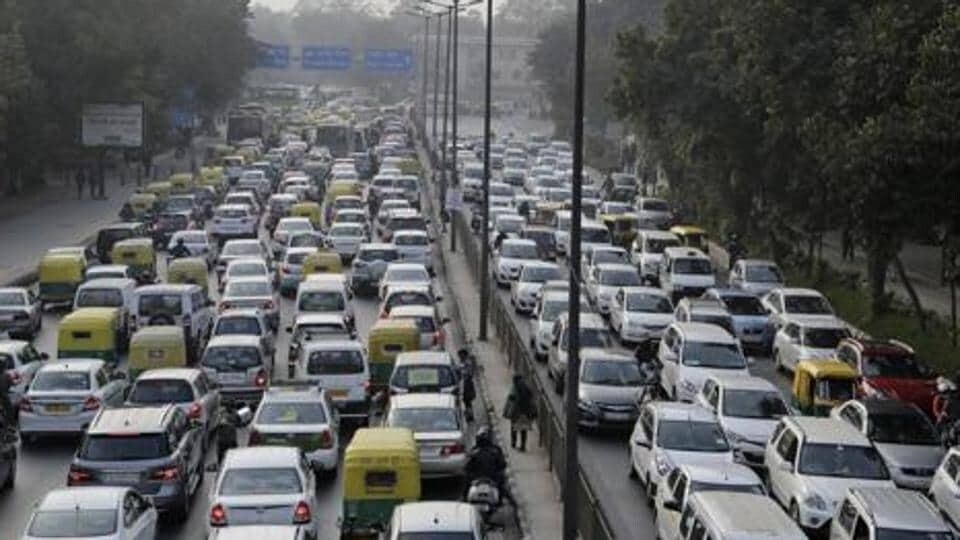
While encroachment of public land for parking cars for free or a small charge is most preferred, authorities continue to build multilevel car parking facilities that remain underutilised. Mobility experts say this is because implementing a comprehensive parking policy is missing. "Most cities have engaged private operators only in busy commercial zones where users pay a flat fee, and there is enforcement by the traffic police," said Parin Visariya, deputy manager - Inclusive Compact Cities at The Institute for Transportation and Development Policy (ITDP)-India. The rest, he said, is largely unregulated with often instances of vehicles taking up footpaths and forcing pedestrians to walk on roads.
Policies remain on paper
Parking policies in Indian cities are largely framed by states or cities only after being pulled up by courts or other autonomous authorities.
For instance, the Chennai Unified Metropolitan Transport Agency informed the Madras High Court while hearing a public interest litigation on the matter on April 21 that a parking policy has been drafted and will be notified once the model code of conduct is put in place for the ongoing Lok Sabha elections is lifted.
Similarly, in Mumbai, the city’s civic body formed the Mumbai Parking Authority (MPA) to form a draft policy after being pulled up by the Bombay High Court. However, even when policies are formed, implementation often remains on paper.
In the Delhi-NCR region, the Commission for Air Quality Management (CAQM) issued an advisory to all urban local bodies (ULBs) in the last week of April to implement ward-wise parking management area plans (PMAPs) by the end of August. While the Delhi government notified the Delhi Maintenance and Management of Parking Rules, 2019, following the Supreme Court’s directive, their implementation has been missing and limited to pilots, which were subsequently discontinued.
Multiple source apportionment studies have held that vehicles are a major contributor (as much as 50% at times) to Delhi’s infamous air pollution. Even though Delhi has one of the world’s largest metro networks and a growing public bus fleet, measures have failed to arrest the growth of private vehicle ownership. The case is similar in Mumbai where pilots of the new parking policy for three wards have failed to take off.
Focus on revenue, not regulation
In the absence of full-fledged policies and implementation, ad hoc parking regulations are, at best, seen by civic authorities as a revenue generation tool and not as a means to disincentivise personal vehicle usage, as advised by the CAQM and the national transport policy. However, even then, due to the lack of a thorough approach, civic bodies underperform in their collections.
Centre for Sustainable and Equitable Cities (C-SEC), which prepared a parking area management plan for South Delhi's Green Park Metro Station in 2022 found that the potential revenue from managing on-street parking in the area is ₹10-19 crore annually while the civic body was only earning ₹13 lakh a year. Their study found that while it was possible to park cars for free or to pay a day fee of ₹200, the average rent of 1 sqft of commercial space in the area is ₹650.
Sonal Shah, executive director at C-SEC study found that within a five-minute walking distance of Green Park Metro Station, only four of the 12 roads were priced for on-street parking.
Shah said they chose to pilot with a metro station area to demonstrate implementation of the Delhi Parking Rules 2019 because the authorities should prioritise improving access to metro stations. This could enable a modal shift to public transport, reduce the use of personal vehicles and contribute towards improving air quality in Delhi. While rampant on-street parking exists, a multi-level car park in the vicinity remains underutilised, as seen in other parts of the city.
Dynamic parking fee is the way forward
Experts like Visariya and Shah have advocated introducing dynamic pricing as a demand management measure for on-street parking. They say that in its absence, users are not motivated to use multi-level facilities or other non-street parking options. Visariya said that other reasons for underutilising multi-level parking are a general lack of poor user experience due to inadequate lighting and the lack of functioning lifts.
Ranchi, in 2016, first introduced differential pricing based on demand in the Main Road, with the city designating four-colour-code zones after assessing the demand and road space. Visariya said, “While the system worked to make traffic movement efficient by optimising the available on-street parking spots and voluntary off-street parking or in parking less busier spots wherever feasible, it was discontinued due to political pressure.”
He further said that due to the marginal increase in on-street parking pricing, a private parking market naturally developed, which unlocked private parking for public use.
Variable pricing like that implemented in Ranchi has been proposed in Delhi, Mumbai, Surat, and Pune in their respective policies, but their implementation has been stalled for years. Policy observers said that every state government in power tries to avoid or reverse stringent parking policies or fee hikes fearing political backlash irrespective of the state and political party.
The issue of equity
Jagan Shah, CEO of Infravision Foundation and former director of the National Institute of Urban Affairs, an autonomous think tank under the Housing and Urban Affairs ministry MoHUA), said this trend reflects the inequality embedded in the contemporary Indian city.
“Public interest is served when there is equitable allocation of public land. There is a trade-off between allocating increasing amounts of space for parking private vehicles, a large part of its unpaid use, and allocating the same land for housing units. A single parking space of 18 square metres could house a car, a habitable room, or wider footpaths.”
“The allocation of land is at heart a policy decision. It is therefore a good reflection of power. It is not insignificant that power today has become clearly equated with wealth, access, and privilege. The choice between parking spaces, affordable houses and wider footpaths is made by those in power.”
Incidentally, a 2012 study by the Centre for Science and Environment (CSE) on the assessment of multi-level parking facilities in Sarojini Nagar in Delhi found that public money spent to create one parking space was nearly equal to one low-cost housing unit.
Anumita Roychowdhury, executive director of research and advocacy at CSE and author of the report, said: “We found the space allotted for a single car parking slot was more than that of a housing unit under Jhuggi Jhopdi Awas Yojana. Parking was taking up a huge portion of the scarce urban land resource which had other competing demands such as housing.”
“At that time, it was found that nearly one-third of all of Delhi’s land was utilised either for driving vehicles or parking vehicles without recovering the true cost of using vehicles due to free or low parking fees,” she added.
However, there is a contrasting tide among developed countries. Across the United States, there have been multiple instances of old, underutilised parking lots being converted into affordable housing structures in at least eight cities. In Canada, Toronto’s city council is currently considering a similar project.


