
 E-Paper



1, 2, 3: How lists keep us safe, sane and stress-free
In resolutions season, here’s a look at what lists do for us, why we make them, and our long and colourful relationships with them.


1. Obviously, this article is in the form of a list. Because there are two kinds of people in the world. 1a) Listmakers, and 1b) Those who are not on the list of listmakers’ favourite people.

2. Regardless of which kind you are, lists run your life. Things to do, stuff to buy or not buy, taxes filed, tabs to close, people to avoid, episodes to binge-watch before sleep takes over. For modern life, the list is the backbone of productivity. It assigns order and priority, culls clutter, keeps track of what your brain can’t. And it’s a reminder of what you’ve accomplished and what you still can.
3. In 2020 especially, lists saved lives. At hospitals, staff checklists helped prevent contamination and contain virus spread. Infection data showed which measures were helping.
4. For everyone working from home, a schedule offered an illusion of control amid chaos and uncertainty. Veena Parmar composed a list almost every day since the lockdown was announced in March. Not the to-do kind. “Working non-stop from home got me so stressed, I didn’t want to face the next morning,” says the 34-year-old tech troubleshooter from Mumbai. She and a friend decided to send each other a nightly list of everything that made them happy that day — samosas, dressing up, naps. “Initially, it was difficult,” she admits. “I slowly started appreciating being safe at home, and finding happiness in small, unusual things.”
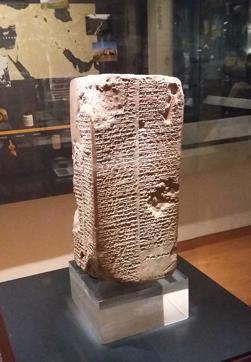
5. List-making is older and more entwined with civilisation than we realise. Most surviving examples of cuneiform, the oldest script, consist of accounting lists. Sumerians and Ancient Egyptians catalogued deities’ names, royal titles, jewel collections and property records. Christianity counted deadly sins, commandments, litanies and then, one day, Martin Luther’s 95 Theses changed the world. In 10th-century Japan, Sei Shonagon, poet and lady-in-waiting to the Empress Teishi even created list-led poetry — Things That Quicken the Heart, Awkward Things, Things Later Regretted. Scholars are only now looking at such tallies to better analyse the histories of language, ideas and power.
6. Most research focuses on the West. But at Belgium’s Ghent University, post-doctoral fellow Karl-Stéphan Bouthillette is studying how ancient Indians used lists to order their universe. “They’ve been part of Indian culture from its very inception,” he told Wknd. “How could there be any caste in India if there were no list? Indians seems to have delighted in classifying, dividing, and ordering the world in various colourful patterns since as long as can be remembered. Like any social hierarchy, Indian society, ancient or modern, is a (conventional) list.”
7. A list will tell you as much by what it includes as what it excludes. New connections are forged within it, arguments implicitly made against hidden counterpoints. Without the list, there would be no Periodic Table, no 12-Step Programme, no Olympics, no Kama Sutra, no Constitution, no Spotify. Philosopher Umberto Eco put it simply. “The list is the origin of culture,” he wrote in The Infinity of Lists, his 2009 book on the subject. It makes infinity comprehensible — through catalogues, museum collections, encyclopaedias and dictionaries. As humans, he says, “we like lists because we don’t want to die”.
8. It’s possible, by this point, that only inveterate, incurable list-makers are still reading. They’d do well to look up the Smithsonian’s Archives of American Art, which has lakhs of lists in its collection. There are hastily scrawled grocery stubs from decades ago, someone’s half-done to-do list, dance cards, membership registers, art inventories and who’s whos.
9. A productivity coach will tell you that a to-do list is the ticket to meeting your personal goals for 2021. Science agrees. In the 1920s, Russian psychologist Bluma Zeigarnik studied restaurant waiters to learn how the brain tackled pressing tasks. Servers, she found, could recall pending food orders well. But after they were done serving, their minds simply wiped out details of who’d ordered what. We remember things we need to do better than things we’ve done, she surmised. And the list is a great way to keep track.
10. The worst list-makers worry about completing tasks, fear a drop in their rankings, and struggle to recognise good data from bad. The cool ones wonder whether a list of all lists would ultimately contain itself. Don’t take it all too seriously. Bouthillette’s research shows that many profound Indian thinkers did not believe in the absolute reality of any list. “For many of them,” he says, “what was composite could never be real.”


