E-Paper



MP: Writers returning awards must be heard, says Puri Shankaracharya
Religious guru Puri Shankaracharya Swami Nischalananda Saraswati said in Bhopal on Tuesday that by returning top national awards writers, filmmakers and intellectuals had exhibited “extreme emotional reaction” and should be heard.


Religious guru Puri Shankaracharya Swami Nischalananda Saraswati said in Bhopal on Tuesday that by returning top national awards writers, filmmakers and intellectuals had exhibited “extreme emotional reaction” and should be heard.
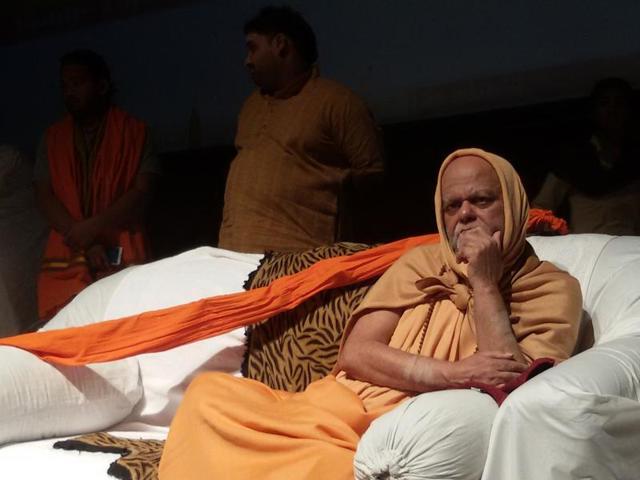
Saraswati, however, cautioned that it required to be seen if some intellectuals were returning the honours because of some malicious political intent.
“They (writers and scientists) should be heard and understood on why they are so restless and uneasy. And accordingly their issues should be resolved with patience. But at the same time it needs to be seen whether some are returning awards because of some malicious political intent,” Shankaracharya said in an interview to HT. He was speaking on the sidelines of a symposium organised by People’s Group, Bhopal on ‘Vedas and Science’.
Dozens of Indian writers have returned top national awards to protest against the “rising intolerance” in the country, especially after the Dadri lynching and murder of a rationalist thinker MM Kalburgi.
Responding to a question on the rising chorus for banning cow slaughter in the country, Saraswati said it was the “moral responsibility” of all the political parties in the independent India to not forget the vision of the people who fought foreigners and anti-social elements to achieve freedom.
“Wherever they are, what Mangal Pandey and Bhagat Singh must be thinking now? They sacrificed their life for our freedom. If our country has to address its major issues and demands, our government should remember what such people, whose sacrifices helped us to gain freedom, actually wanted for this country. If their vision and feelings are kept in front, you will know what needs to be done,” he said.
He, however, refused to give any suggestions to the Prime Minister on the issue. “If he asks me, I will tell him…Before elections, he had come to me and sat before me for 40 minutes. Even Amit Shah came to me…When they want suggestions, they will come to me,” he said.
On his take on Shankaracharya of Dwarka Peeth Swaroopanand Saraswati’s campaign against Sai Baba, he said, “You should be content with what he has said on the issue. I am not opposed to him. He invited me in the past and I have given my intent in writing to him”, he said.
Earlier, addressing the symposium on ‘Vedas and Science’, the religious leader said the root cause of the many ills plaguing modern world was primarily because it was not following the holistic Vedic model of development and progress.
“The blind progress based on technological prowess is proving to be destructive for the world. The so-called development is followed by inflation, pollution, damage to Nature, unemployment, breakdown of joint families and so on. In Vedic model, the universe is not only created by God, but it is God. Creation is like a spider weaving a web that comes from within it. And according to Vedic view, God is the fruition of deepest longing for immortality and joy in the hearts of people. Unless progress is based on this view, there is no hope,” he said.