E-Paper



Rare swamp deer from Kanha to find second home at Van Vihar in Bhopal
The Madhya Pradesh wildlife department has sent a team from Van Vihar National Park, Bhopal to Kanha Tiger Reserve to translocate five rare swamp deer to Van Vihar to ensure their isolated population doesn't get wiped out.


The Madhya Pradesh wildlife department has sent a team from Van Vihar National Park Bhopal to Kanha Tiger Reserve (KTR) to translocate five rare hardground Swamp deer (Barasingha) to Van Vihar to ensure their isolated population doesn't get wiped out due to outbreak of any epidemic, over-hunting on account of their inability to enter deep forests fast due to their long antlers and almost no gene flow due to continuous inbreeding.

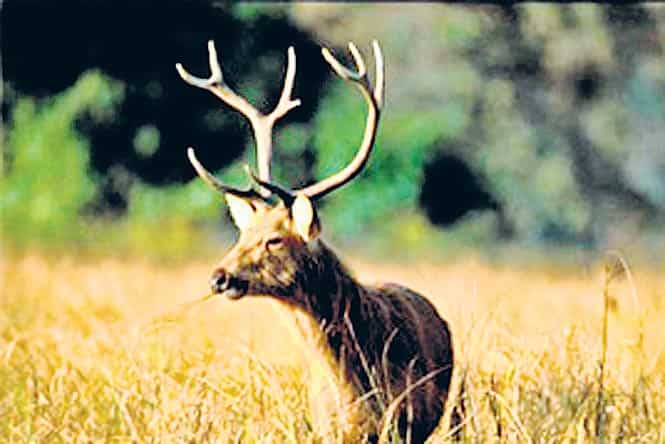
After over three decades, Madhya Pradesh forest department is retrying to translocate rare Swamp deer and find its second home. Earlier it had tried to translocate this deer species to Bandhavgarh, but it didn't work.
Swamp deer is the state animal and it is found only at KTR, which is spread between Mandla and Balaghat districts of the state. Right now, the population of the swamp deer at KTR is around 550, which has shown progress after it hit an all-time low of 66 in 1967, said forest officials.
KTR deputy director OP Tiwari told HT on phone that officials and experts concerned met in Kanha on Tuesday to devise a strategy on effective shifting of two male and three female Swamp deer to Van Vihar.
He said a previous attempt to shift Swamp deer to Bandhavgarh was made in early 1980s but it didn't work out. "But if the shifting works out and Barasingha are able to settle in Van Vihar, then we will be translocating more Barasinghas from Kanha to Satpura Tiger Reserve, for which we have conducted habitat study," he said.
According to the National Tiger Conservation Authority, Kanha National Park has also distinguished itself in saving the highly endangered hard ground Barasingha from extinction, and has the unique distinction of harbouring the last world population of this deer species.
The swamp deer are under threat because of their antlers and meat, and fragmentation of their habitat as many wetlands have got converted and used for agriculture, change in river dynamics, reduced water flow during summer, increasing siltation and less availability of grass in some areas where it is cut by local people.
Safari in charge at Van Vihar National Park Sanjay Pathak told HT, "Our officials will have to trap them and translocate them here. It may take some time but definitely it will be done within this month. We are trying to see whether they can thrive in an area away from Kanha, whether we can develop a second home for them. We will also try to encourage their breeding here."
The swamp deer, which has become extinct in Pakistan and in Bangladesh, occurs in few isolated pockets of India- primarily in Kanha National Park, Assam and Uttar Pradesh.
Three subspecies of swamp deer are found in India, including the southern hard ground swamp deer found exclusively in MP, where it has adapted to hard ground in open Sal forests with grasslands. Western swamp deer is adapted to the flooded tall grassland habitat in the Indo-Gangetic plain, while Eastern swamp deer is found in Assam.