
 E-Paper



Alokparna Sengupta Of HSI/India On Books About Farm Animals
On bringing out children’s books on being compassionate towards farm animals

 Prefer HTon Google


Why did Humane Society International/India venture into publishing children’s books?
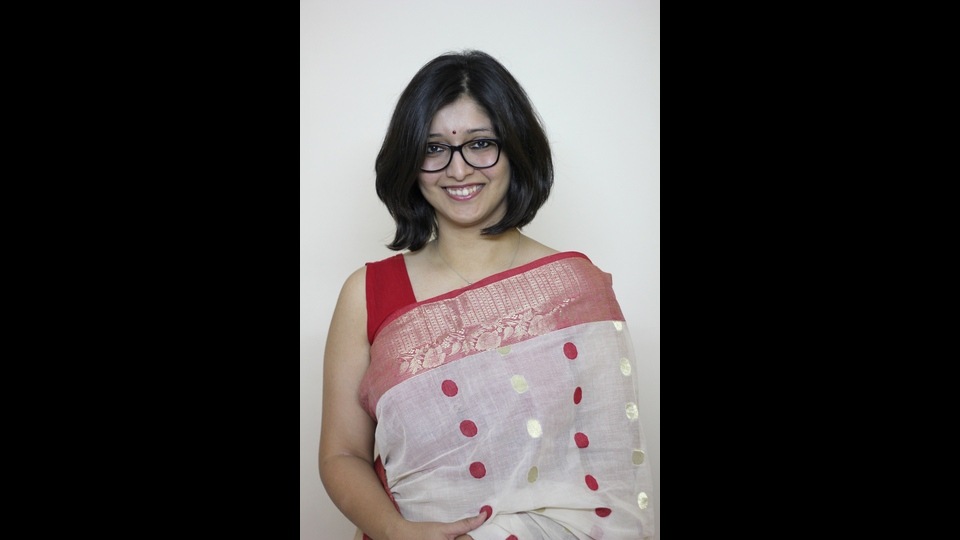
Pratham Books approached us with the idea of creating some books on the theme of compassion towards animals. I asked if we could focus on farm animals. It is easy to be compassionate towards dogs and cats. Many people find them cute, have them as pets, or just like to play with them. When it comes to farm animals, people tend to adopt a more utilitarian point of view.
Farm animals seem to have value only as food. Sadly, they are not seen as sentient beings.
At Humane Society International/India, we have a team of people across the country who go to schools and colleges to talk about farm animal protection. We want to use children’s books in these interactions. We have published three books – Happy as a Hen, Beauty is Missing, and Haru. Reading out stories in classrooms, having discussions with the children around them, giving away copies of these books as gifts and awards for various activities – that is the plan.
Children have a natural curiosity about animals but adults put fear in their minds. If a child wants to touch a dog, parents and grandparents say, “No, don’t go near it. It will bite you.” We hope that the books we have created will help children connect with animals beyond dogs and cats. Goats are fun too. Have you seen them standing on bikes and climbing trees? We do not need to humanise animals. What we need to do is just observe them and appreciate them.
Tell us about the workshops you hosted with the authors and illustrators of these books.
We had two workshops with the authors and illustrators. We spoke to them about the abuse of farm animals in India. We shared information on the peculiar characteristics of farm animals. Our intention was to support these authors and illustrators, and also evoke warmth and connection. It was a fun, interactive space where people shared a lot of personal stories. Some of the discussions we had during the course of the workshops eventually made it into the books.
What kind of funding did Humane Society International/India provide Pratham Books?
It was 12 lakh rupees; four lakhs per book! The funding that I am referring to includes costs such as payments for authors, illustrators, translators, as well as printing and distribution. The books are available not only in English but also in Marathi, Hindi, Tamil, Telugu and Kannada. The books are also available online on the StoryWeaver platform. They can be downloaded for free. We have printed 2000 copies of each book. Hopefully, these will get over in no time. Will we have a second print run? That is for Pratham Books to decide. We will be supportive of that.
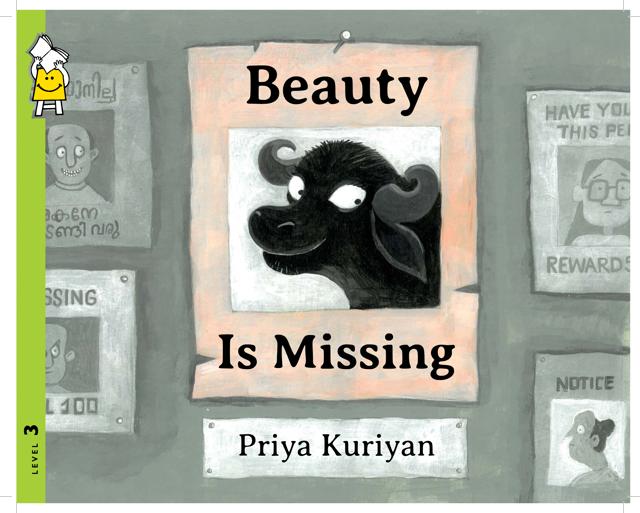
Beauty is Missing, written and illustrated by Priya Kuriyan, revolves around the kidnapping of a music-loving buffalo who enjoys the radio. The relationship between Tessamma and her buffalo is beautifully depicted. How did this book come into being?
Everyone likes talking about cows but buffaloes get neglected though they are used by the dairy industry and the beef industry. This is probably because of their dark skin and the mythology around them. Buffaloes are considered the vehicle of Yamaraja, the deity of death. They get associated with Mahishasura, who was half human, half buffalo. He was killed by Durga. We wanted to break these stereotypes, and explore the personality of buffaloes. Cattle love music. There are many videos of people playing music, and buffaloes running towards them. Priya built on this, and came up with a story that will hopefully change how people look at buffaloes.
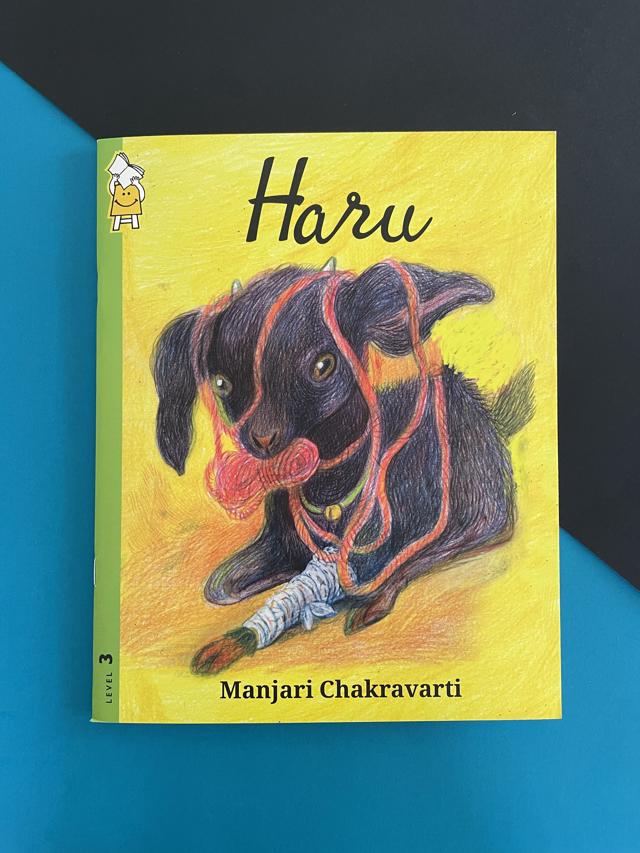
The animal-human bond that is explored in Beauty is Missing is also present in Haru, written and illustrated by Manjari Chakravarti. Here, the protagonist is a goat. I was surprised to see Haru chewing on wool, which comes from another animal – sheep.
Yes, that’s true! It is a bit absurd. You must have noticed that Haru the goat is having milky tea and buttered toast. Milk and butter come from farm animals. They are not part of a goat’s diet. Let me tell you a story. Once I saw a baby buffalo – a calf – chewing on the tassels of a shawl. It was not a synthetic one. Animals do these things to find comfort. A two-month kitten that I had adopted used to fall asleep only if he had a soft toy with him. It was a source of security for him.
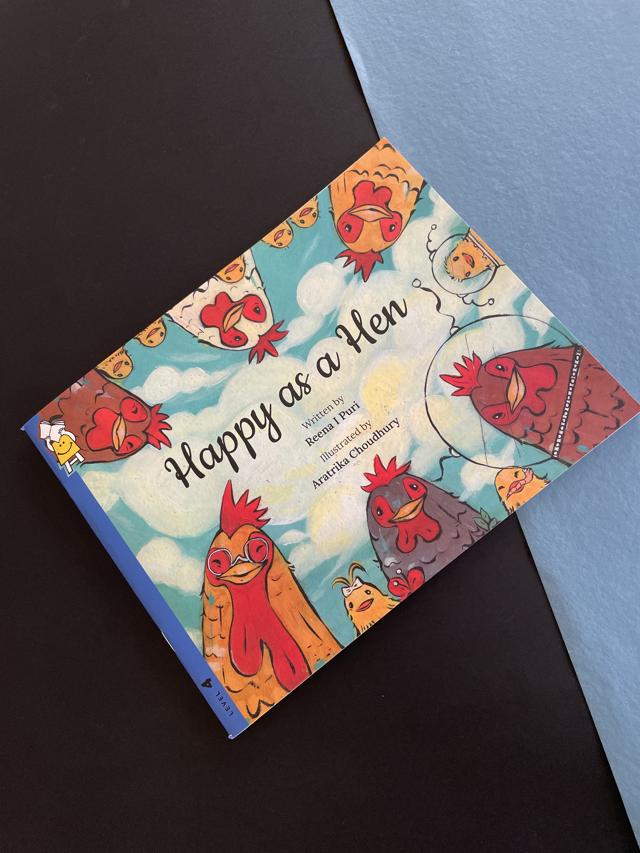
In Happy as a Hen, written by Reena I. Puri and illustrated by Aratrika Choudhury, we come across a spaceship that rescues chickens from cages. Chickens are presented as victims, and humans as villains. What was the thought process behind this?
The idea was to use a story as an entry point to communicate what happens on a factory farm. Chickens are subjected to intensive confinement throughout their lives. Five to eight of them are crammed together in a cage. Their beaks are cut off when they are young. When they grow up, they are given space that is smaller than an A4 size sheet of paper to produce eggs for humans.
I must confess that, growing up in a Bengali family, I used to be a hardcore non-vegetarian. I have been vegan for the last 10 years but there was a time when I would not even enter a vegetarian restaurant. A big shift happened inside me when I learnt that chickens recognize their mother’s voice from the time that they are in the egg stage. For instance, if you put 200 newly hatched chickens in one place, each one will go behind their mother because of the unique voices. Hens are exploited for their eggs and their meat. They live in terrible conditions.
In India, the conversation around vegetarianism often gets mixed up with politics, religion and caste. How did you grapple with all these concerns while publishing the book?
To be completely honest with you, this has been a real challenge. What helps is that I can fall back on my own experience as someone who ate meat. I used to love dogs but my compassion did not extend towards farm animals. I remember a friend asking me, “How can you love animals and still be non-vegetarian?” That line of reasoning did not make sense to me then.
Things changed when I was at an animal shelter in Hyderabad. I met someone who was taking a hen to the vet for some sort of medical treatment. At that moment, I was suddenly hit by this major realization. I told myself, “Oh my God! Just like I would take my dog to a vet, this person is taking their hen to a vet.” On another occasion, I was at a shelter in Udaipur where I met a male calf who was less than a month old. He was separated from his mother after she gave birth to him. His mom was at the dairy farm, and he had been abandoned. The shelter took him in. It was so sad that we had to buy milk from a shop and give it to the calf. He had been taken away from his mother, and the milk that was naturally produced for him was not available to him.
Our objective is to highlight cruelty that farm animals have to undergo so that people can make an informed decision. There is cruelty in religious festivals celebrated by Hindus and Muslims. Animals who get sacrificed have individual personalities. They get attached to their owners. Often, they have no idea that they are being raised in order to be killed. It is heartbreaking.
Also, the dairy industry and the meat industry are closely linked. They profit off each other. We, as an organisation, do not go around asking people to turn vegan right now. It has to be a very internal exploration, an introspective journey for each person. Some people connect with the idea of consuming only plant-based food for health reasons; some do it for the environment. We do not say that mid-day meals should stop serving eggs. There are people in our country who do not have basic nutrition. If they need eggs for their nourishment, we can’t impose our agenda on them. We are targeting people who have purchasing power, who can afford to make choices.
In India, the rich are overfed and the poor are starving. We cannot have a meaningful conversation about vegetarianism if we exclude food security. The animal protection movement needs to be intersectional and inclusive, so we are trying to listen more and engage with diverse voices. We have to make an effort to understand the issues faced by factory farm workers, and by people who are involved in animal slaughter for a living. What are their working conditions like? Do they want to pursue their hereditary occupation? What security net do they have?
Apart from working in the animal protection movement, you also write books for children. Is Pommy and Tommy (2022) based on your dog? Are you planning to write more books?
The book Pommy and Tommy has a strong personal connection for me. It is about this lonely girl who comes to Hyderabad and is scared of dogs but Tommy comes into her life and opens up a new world for her. Many of the humans and animals in the book are drawn from my real life. Tommy helped me understand that, if you have a pet, you must learn to take full responsibility.
I am in the process of writing another book. I lost my dog Inky to brain tumour in 2020. She was a rescue. I had found her outside Dwarka Sector 12 metro station some years ago. She had been injured in a bike accident. I thought of fostering her, and giving her up for adoption later but she chose me as her person and stayed with me for 10 long years. I miss her so much. This is an emotional subject for me, so I am unable to end the Inky story I am writing. Inky used to love running. You know, one day, I saw her running behind butterflies. That is a special memory.
Do you have any other pets?
Yes, I have two cats. My elder one’s bhaalo naam is Oliver, and daak naam is Awwwly. The younger one’s bhaalo naam is Mewrugan, and daak naam is Mewry. My mother’s dog is Borfi. All these animals are blessings in our lives. Thank you for this opportunity to talk about them.
Chintan Girish Modi is a writer, journalist and educator who tweets @chintanwriting


