
 E-Paper



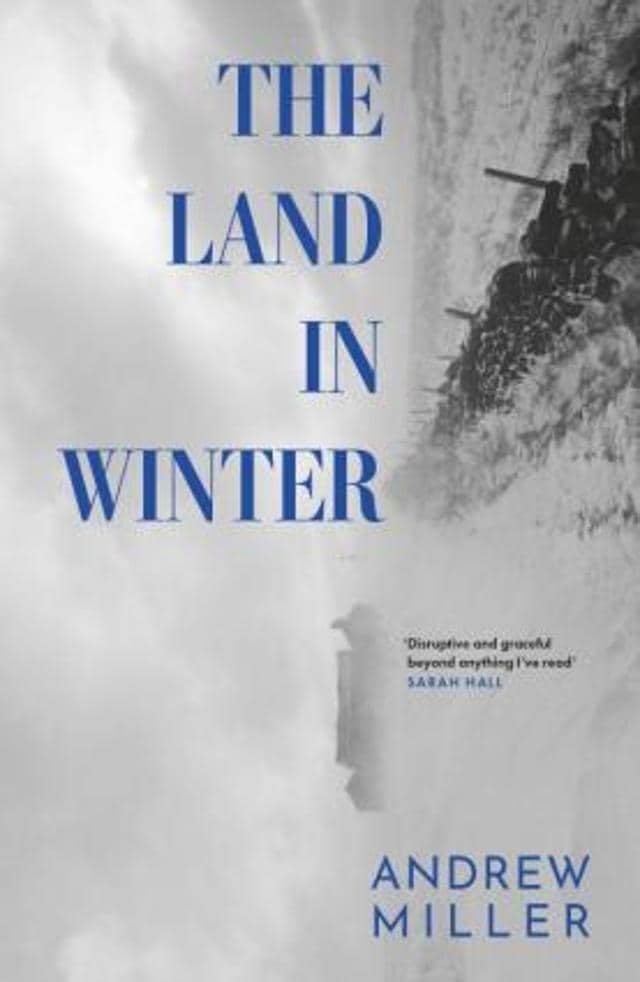
Andrew Miller: “I wanted to write a novel with lots of good forward energy”
The author of the Booker shortlisted The Land in Winter on borrowing from the young married lives of his parents for his novel

 Prefer HTon Google


Tell us about the history that helped birth this novel.

The circumstances for this novel? I borrowed a lot from the young married lives of my parents, as far as I remembered and understood them. The view you have of your parents’ lives when you’re a young child is a peculiar one. And I wanted to write a particular kind of novel, something free, and with lots of good forward energy. Very much a novel of character.
And the more I read and researched, the more fascinated I became with the early Sixties — the egg from which the modern world is hatched. There were huge shifts, technological and attitudinal. Everything from the role and rights of women to sexuality, immigration, and just the kind of society we wanted to be, the kind of lives we wanted. Also, it was a time when we had the best soundtrack ever.
The Second World War influences the lives of your novel’s protagonists indirectly. How did you sketch their mental maps?
It comes back to thinking hard about their circumstances. As the novel opens, the war has been over for 17 years. The characters in the novel were teenagers when it happened. They were too young to have played ‘an active part’; they weren’t in the military. However, a war is different for everyone. For example, my grandfather thoroughly enjoyed it. He had a great time. He got out of the house for five years. He felt useful.
Gabby Miklos, a Hungarian doctor, a partner with Eric at the surgery, had a wartime experience far more damaging than anything the others went through. In many ways, he’s the moral compass of the book. On one occasion, he tries to explain to Bill what happened to him, but Bill doesn’t want to hear it. Bill’s all about the future. The past scares him a little. It’s a hole to climb out of.
The reader enters The Land in Winter with the story of a young man killing himself. The haunting ways in which this surveillance structure is described make one wonder whether home is a kind of correctional facility too, with equivalent effects. For example, over the phone, Eric asks Irene who’s at the door.
Great question. I quite liked that moment, the way Eric says, ‘Who’s that?’ It’s a crazy question because he knows very well that from the phone, she can’t see who’s at the door. But the idea of home as an asylum? In some ways, it’s exactly what we want our homes to be — a safe place away from the world. But if we associate asylum with locked doors and stupefying medications, then that’s less attractive. Interestingly, of course, all those things also go on in homes.
Regarding surveillance, these four characters — the two couples — are noticing each other all the time. They see each other’s cars. They catch glimpses of each other in the village. One night, Eric looks at Rita through the window when he’s drunk. He doesn’t know why he’s doing it, but he’s seeing her. He has the idea that doctors should be trained at looking through windows; it’s a way to know others. But surveillance also has a controlling angle to it. For example, Eric is constantly watching his wife for signs that she’s on to him, has uncovered his secret.
Irene reflects how Mrs Bolt is the paid secretary and receptionist, while she did all that labour for free. The novel is set during the second wave of feminism. Did that influence gender dynamics in your book?
In the 1950s and 1960s, women’s fiction increasingly expressed their frustration at their lot in life. A good example would be Penelope Mortimer’s late Fifties novel Daddy’s Gone a Hunting. The other great theme from the time was pregnancy and abortion. The latter was still illegal in 1962. Lynne Reid’s The L-Shaped Room, for example.
In my book, Irene’s life is perhaps where feminist questions are most in focus. She’s always at home. Middle-class women had a sharply limited set of choices. This was certainly true of my own mother.
Rita’s life in comparison to Irene’s is freer. She’s had an adventurous life, perhaps even a racy one, working in nightclubs. It’s certainly a life her husband would rather not know much about.
In the Booker Foundation interview, you talk about your love for DH Lawrence and Thomas Hardy, both of whom challenged contemporary sexual morality in their work. Please tell us about their influence on your writing.
At school, I was completely hopeless; I had no interest in what the school had to offer, except for the English and History classes, the only ones where I occasionally paid some attention. I remember reading aloud around the class, doing Lawrence’s The Rainbow. And also, Hardy’s Tess of the d’Urbervilles. For me, it was complete seduction.
It has been said many times, but Tess… is just an extraordinarily beautiful book. Reading the evocations of living and working in this landscape — Wiltshire, very near where I live today — where she falls in love with the hopeless Angel Clare deeply affected me. I was 16 at the time, and very interested in the idea of falling in love.
For Lawrence, writing was never just a kind of entertainment. He was writing to change things, change the world, or change himself, finding the big life. And he talks about it: that in the act of reading some novel, he said, it was a bright book of life. He believed in the transformative possibilities of fiction. He’s a little out of favour now. The feminists gave him a bit of a battering. But, my goodness, the first 150 pages of The Rainbow are astonishingly good, as good as anything written in British prose in the 20th century. I’ve a feeling that some bright young person is going to find Women in Love or something, and suddenly they’re going to go on TikTok and say, ‘Hey, look at this, it’s incredibly interesting.’ And Lawrence will be back.
Did the novel’s climax, the Boxing Day party scene, have some literary influences?
One of them was Robert Coover’s Gerald’s Party — an experimental novel I read in university. It’s a 300-page novel about a party that gets increasingly surreal and out of hand. It starts at the party, and we don’t go anywhere else.
In my novel, I wanted the opportunity to put everybody in the same confined space and see what happens. And the choreography of it all is so interesting. I was looking at Pina Bausch stuff on YouTube — a wonderful, playful German dancer and choreographer on whom Wim Wenders made a delightful film. In fact, there was something about Pina’s dancing that I wanted for the entire book. That sense of lightness and play. And surprise!
Saurabh Sharma is a Delhi-based writer and freelance journalist. They can be found on Instagram/X: @writerly_life


