
 E-Paper



Book Box: A Reader in Chicago
Wandering through Chicago’s streets, in a city of art, architects and deep-dish delights, the greatest luxury is being alone.

 Prefer HTon Google


Dear Reader,

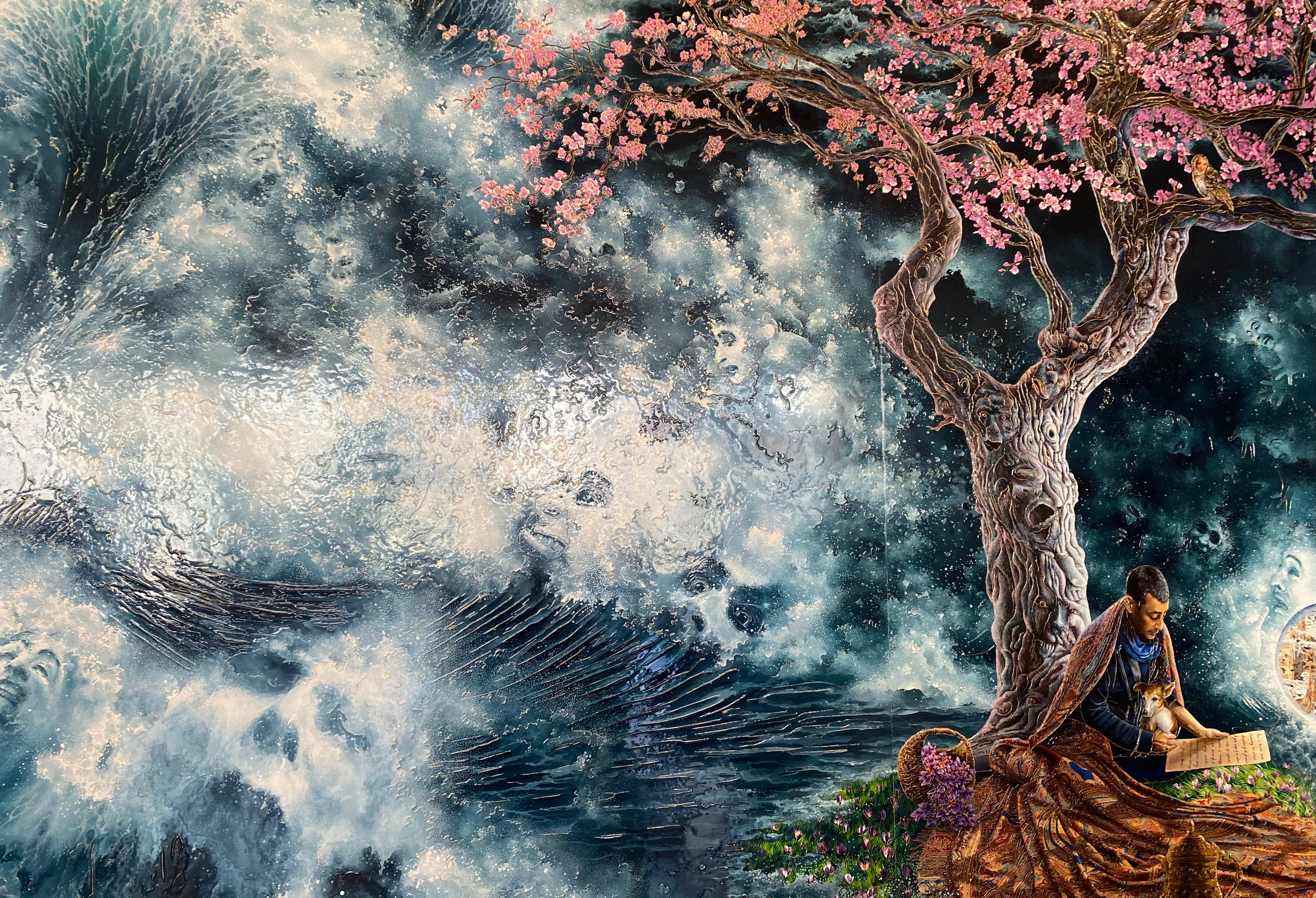
At Chicago’s Art Institute, sunlight pours in. It illuminates 9th century stone statues of Durga and Vishnu, Grecian urns, and along the wall, a magnificent mural entitled Paradise Lost by Kashmiri-bred British artist Raqib Shaw.
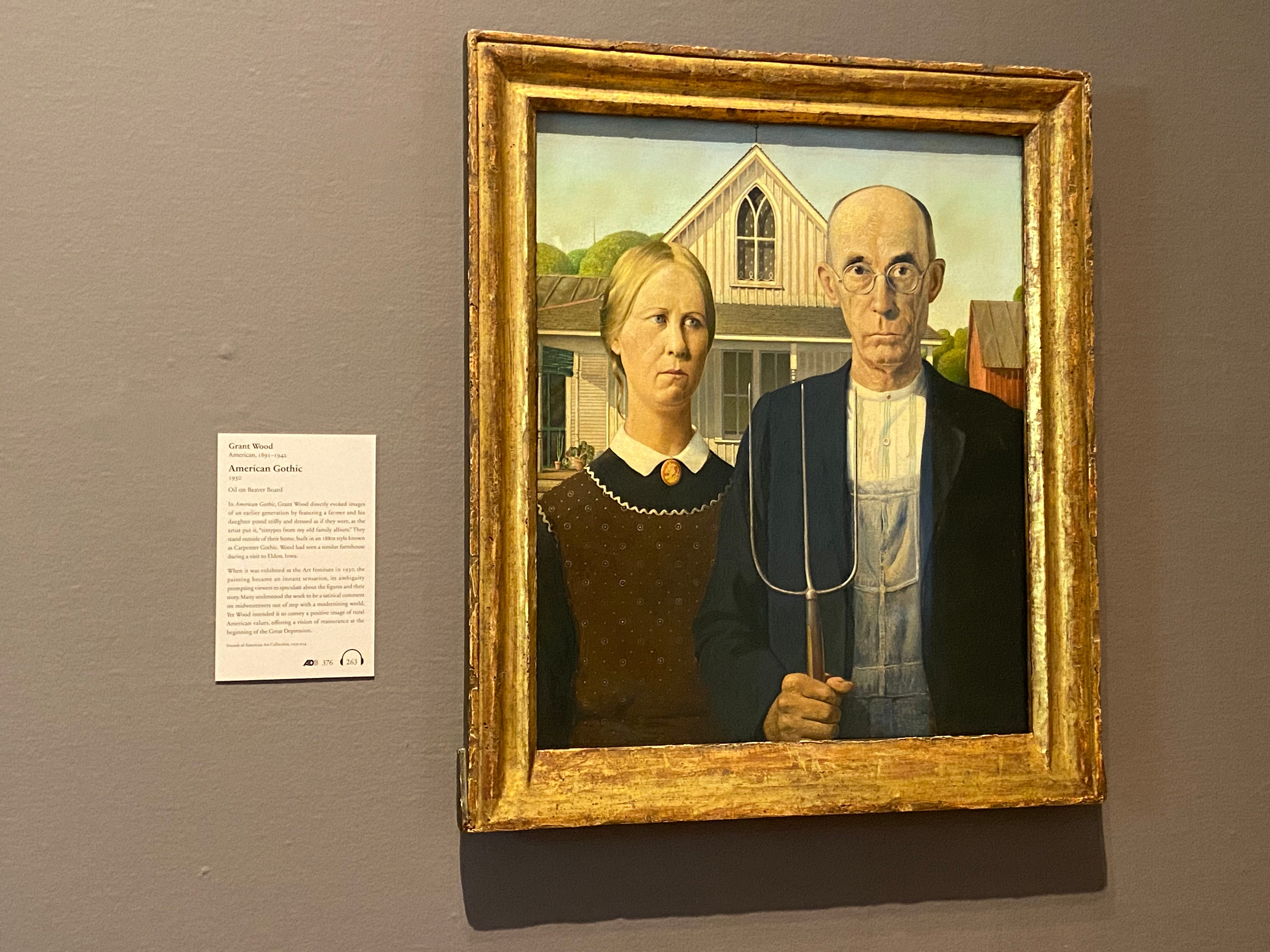
I tear myself away from these wonders. I have a mission: to find American Gothic. It is a painting I first discovered in the pages of Wellness, Nathan Hill’s novel about modern marriage and psychological wellness set here in Chicago. Jack, the art student in the book, becomes obsessed with this painting; it turns into a sort of leitmotif, a frozen question he keeps coming back to.
And then I walk into a room and there it is—a stern farmer holding a pitchfork, a woman standing beside him. The couple look stoic. Controlled. Putting on a face. Painted in 1930 by Grant Wood, this work has sparked countless conversations about the unknowability of other people. Do the couple embody the American dream, independent, with their dream farmhouse behind them? Or are they already in turmoil, simply hiding it under a veneer of stoicism?
Standing there, I think of Jack and Elizabeth, of supermom Brandi and her successful husband Lawrence in Wellness. In the novel, the happy Instagram photos of this couple are a stark contrast to the painting in front of me. Wellness is about psychology, technology and modern married life. But it is also a story of Chicago, about the kind of love story that can happen here, about the impact of the architecture and the art of a city. I am moved by Nathan Hill’s talent to capture this, his ability to mix genres, to use a famous painting to freeze time in his novel. Just as the stillness of a canvas can mask emotional tension, so can the happy Instagram pictures, he seems to be saying. You only need to replace the farming pitchfork with the Fitbit, or with the smartphone.
Outside, the air is warm and blissfully still—no chilly winds blowing in from Lake Michigan today. I am tempted to turn left and walk to Bookville, the independent bookstore tucked away on the first floor of the historic Fine Arts Building. But it’s late afternoon already and my stomach is rumbling.
I turn right instead, walking past a group of Indian techies in jeans and dark glasses, consulting Google Maps.
“There it is, I see it gleaming,” says one, and I realise they are searching for the famous Chicago Bean. Designed by British Indian-born Anish Kapoor, this great big metallic mirror is mesmerizing in the many reflections of yourself it throws back at you, and I’ve spent hours around it, moving, measuring, photographing.
But today, with a head full of stunning images—everyone from old Impressionist favorites to American Gothic to the stunning Raqib Shaw—I decide to walk on.
Surrounding me are towering skyscrapers, the legacies of iconic Chicago architects like Daniel Burnham and Ludwig Mies van der Rohe. I’ve read some of their stories in the classic The Devil in the White City, a propulsive true crime narrative that contrasts the building of the 1893 World’s Fair with the rise of a serial killer. If there’s just one book you want to read about this midwestern city, this is the one.
As I walk on, the rich smell of butter and baked cheese stops me in my tracks. The call of Chicago's famous pizzas. It helps that I am hungry, having made do with a hasty breakfast of coffee and croissant and no lunch.
“A deep-dish pizza will take 45 minutes. Can I get you some cheese and chilli fries in the meantime?” asks the waitress.
Yes, I say immediately, even as I marvel at her marketing.
I open my phone and carry on reading Black Wave by Kim Ghattas, a book giving me context on the war in Iran. It begins in 1979, with the start of the revolution, and traces the forty-year rivalry between Saudi Arabia and Iran, the rise of radical Islam, and the role of the US in trying to navigate it all.
Sitting here in Obama’s city, I read about how the former president did the best he could to deal diplomatically with Iran, but how he and all the other US presidents before and after failed hopelessly to grapple with the Middle Eastern powder keg of oil money and rabid religion.
Yet inside this pizza place, with its hubbub of voices, beer on tap and basketball on giant screens, all this seems so far away. And then my fries arrive, and then my deep-dish pizza, and now I feel it too — that peculiarly American ability to make everything outside these borders feel faintly unreal, like something happening in a country you only half-believe in.
The six-inch pizza is the smallest on offer and yet it is way too much for me. I pack more than half and get up to go.
As I pick up my rucksack and coat, another woman comes in and takes her place by the bar. Her figure takes me back to the Art Institute, this time to the painter Edward Hopper, known as the chronicler of urban loneliness. Hopper’s figures have always fascinated me—they are always women, almost always alone, sitting at a laundromat, at a diner, sometimes with other people in the vicinity, but essentially alone.
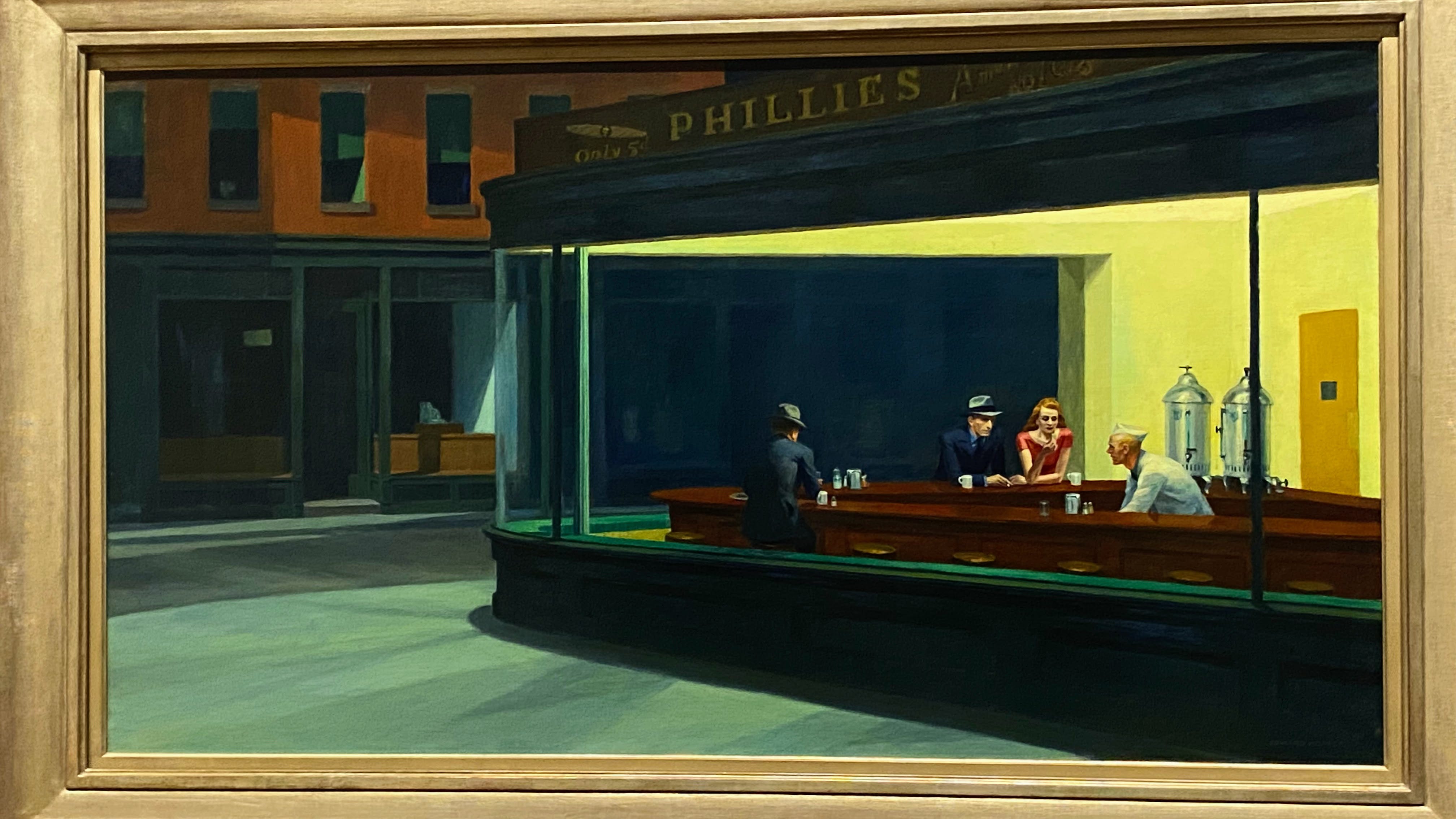
And yet for me, these women are less alone, and more on their own. Safe inside their stillness. Not posed or performing—nothing like the fixed faces of American Gothic. How wonderful it is, I think, to be in a space where you can be a woman, sit still, and simply be.


