
 E-Paper



Book Box | A reader in Morocco
Wandering through Morocco’s medinas, mysteries, and the many thresholds that changed me. Each door here opens onto something unexpected. The trick is gathering up the courage to walk through.

 Prefer HTon Google


Dear Reader,
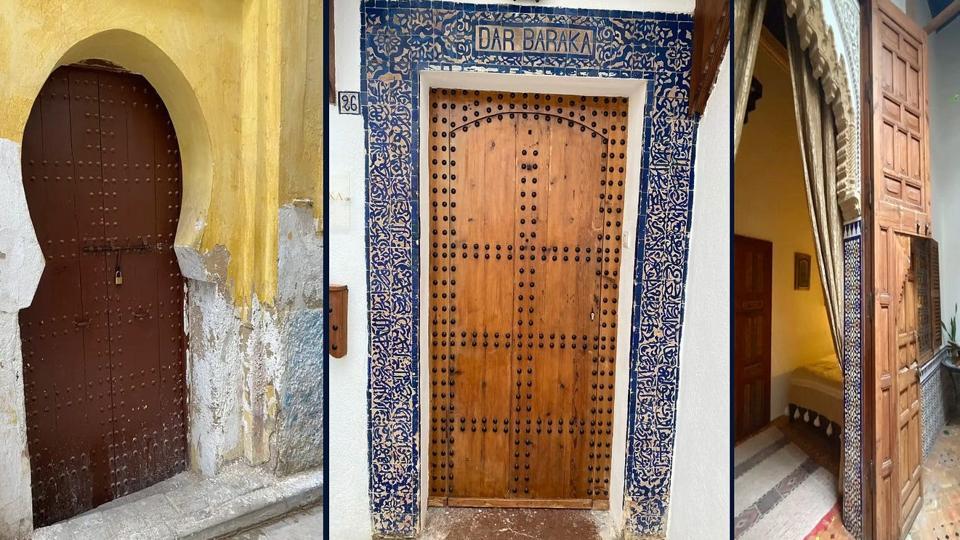
I’ve become obsessed with doors. You see them everywhere in Morocco - ten feet tall, set into the high, windowless walls of the ancient Medina. Burnished oak studded with metallic rivets, sometimes painted with flowers and leaves. There’s the sheer beauty of these doors, and then there’s the mystery of what lies behind them.
In Fes, I walk through one such door and find myself in another world. Gone are the ruined Medina streets with their peeling plaster. I’m standing in a beautiful courtyard at a long table set with candles, silverware, and a bowl of oranges.
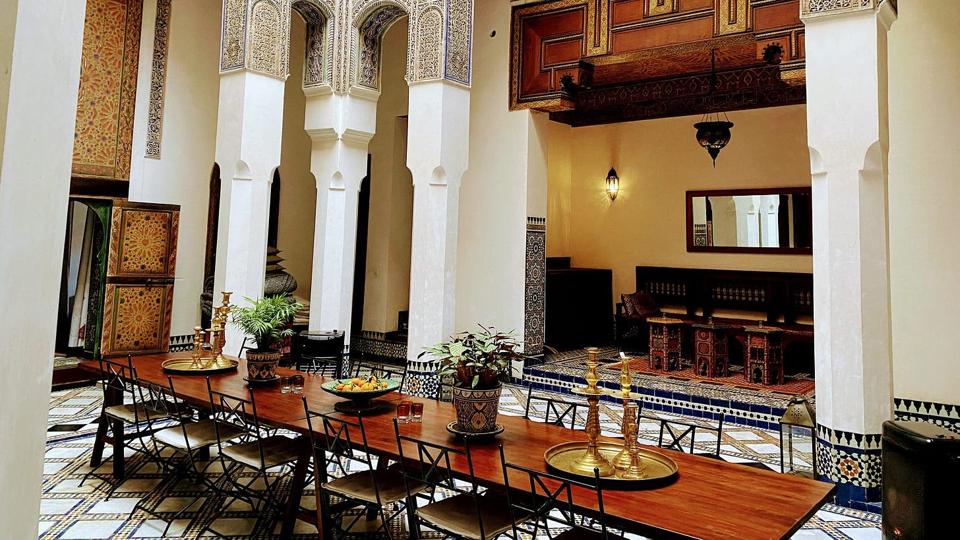
“That’s your room,” says Karen, the Norwegian woman who comes to greet me. She points toward the centre of the wrought iron latticed balconies surrounding us. Karen and her Iraqi architect husband have restored this building - Dar Saffarine, named after the metal workers who surround us, beating brass and copper into intricate filigreed patterns.
That night I read Shadows of Marrakech, a racy murder mystery in which Ramzi, a half-Moroccan half-Scottish scientist, buys such a building and sets up a riad.
When I hunt for more murder mysteries, I am surprised to learn Morocco has almost no tradition of noir literature. “Under King Hassan II, defamation took the place of investigation and fabrication took the place of interrogation. Moroccans had to wait for the death of the king who ruled the country with an iron fist, to read the first detective story, The Blind Whale by Abdelilah Hamdouchi, one year after he passed,” says Yasmin Adnan, editor of Marrakech Noir.
Marrakech Noir is an excellent collection of crime stories that reveal many of the fault lines in Moroccan society - from the toll French colonization has taken to the state repression and imprisonment of young people especially in the sixties and seventies. I read about the mother of one such young man who is taken away by the state police in the story Madam Aicha by Halima Zine El Abidine. She lives in Marrakech, just off the Jemaa el-Fnaa, the Storytellers square, the author tells us, in a house off the alleyway, where a door opens onto a courtyard with a mulberry tree.
Then it’s time to move on.
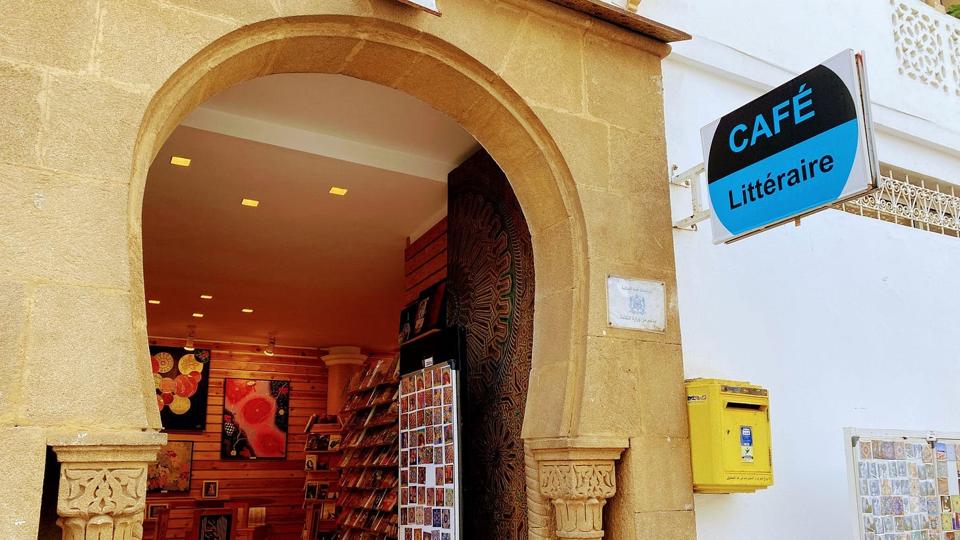
In Rabat, I find an artist who shares my obsession. On a cobbled street off the Atlantic Ocean, Miloudi Nouiga runs Café Littéraire, a bookstore–coffee shop with photographs of doorways everywhere — on postcards, on magnets, in a beautiful book titled Portes et Regrets.
Early morning on my last day, I return to Marrakech on a high-speed train. Sitting at the window, I write my morning pages.
What was my best Morocco moment?
Was it waking up grumpy in Rabat, then walking to Kasbah des Oudayas - a 12th century fortress on the Atlantic Ocean. Sitting on the stone parapet, gazing beyond the surf-laden seas toward Europe, the continent of the colonizers, I felt transported beyond myself to something so much larger.
Scratch that - my best moment in Morocco was being tired and dusty after a day wandering the Fes souk, haggling over gorgeous blue-green pottery and Moroccan rugs, and then finding a roadside stall and drinking deep from a wine-red glass full of tangy pomegranate juice.
Wait - maybe it was that evening in Fes. I sat up in bed in the arabesque light of a lantern watching Hideous Kinky, Kate Winslet playing a young hippie mother who brings her two daughters to 1970s Morocco. Based on Esther Freud’s novel, it captures both the Western fascination with Morocco and the universal experience of a child dragged to a strange country. Afterwards, I went down to dinner in the communal courtyard, eating freshly baked focaccia and traditional tagine with a Cambridge geography professor, his wife, and a German shopkeeper who spends his days on the stock market. Watching that film in a restored riad, eating with strangers - it felt like the film’s themes were playing out around me.
Or maybe my best moment is this one, sitting at the window of a high-speed Moroccan train, watching sunlight illuminate the golden desert landscape as I process what I learned at the Silk Road Slippers writing masterclass, the books I read, the people I met, and the many doorways Morocco opened for me.
Each door in Morocco opens onto something unexpected. The trick is gathering up the courage to walk through.
-------------------------
Sonya Dutta Choudhury is a Mumbai-based journalist and the founder of Sonya’s Book Box, a bespoke book service. Each week, she brings you specially curated books to give you an immersive understanding of people and places. If you have any reading recommendations or suggestions, write to her at sonyasbookbox@gmail.com. The views expressed are personal.
Books referred to in this edition of Book Box:
Shadows of Marrakech by Philip Brebner
Marrakech Noir edited by Yasmin Adnan
Hideous Kinky by Esther Freud
Porte et regrets by Miloudi Nouiga


