
 E-Paper



Book Box: Your phone, privilege, govt: The unseen walls around you
From an Instagram lie to a Moroccan fantasy to a military barrack—a reader’s journey through modern captivity

 Prefer HTon Google


Dear Reader,
I’m on the flight to Delhi. You know that space. Neither here nor there, suspended in the air, and the only thing tethering you to any kind of reality is the book in your hands.
Except my book is about a girl who has no reality at all.
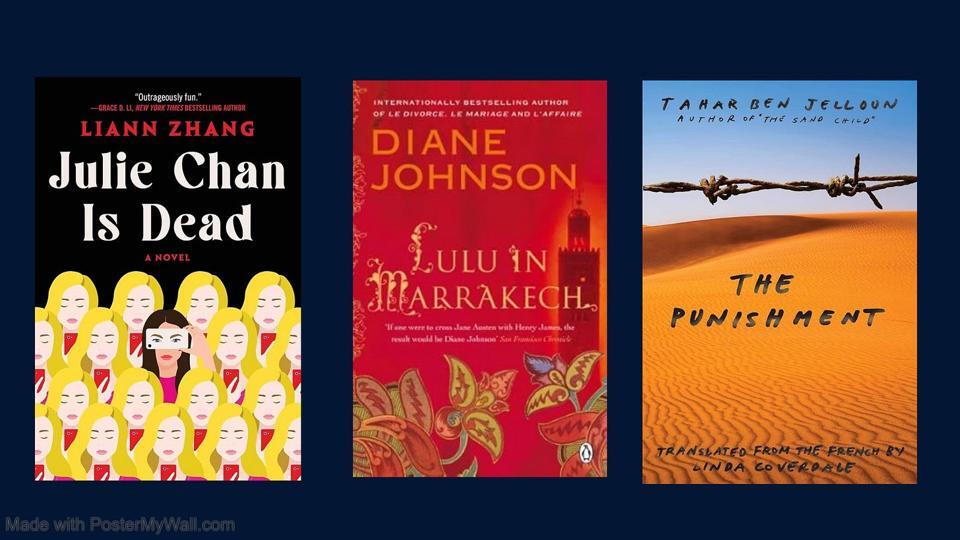
In Julie Chan is Dead, the protagonist steals her twin sister’s identity—this influencer life, all gloss and filters and curated brunches. She gets addicted to likes and shares, to the little hits of dopamine that come from building a beautiful, perfect lie. It’s a prison of performance, but one of her own making. I read it in one gulp, this thriller about the most modern form of theft, of your very self. I look out the window at the clouds and think, God, how exhausting. Maybe it’s not so bad my social media posts are so subdued.
Landing in Delhi, I drive to the wholesale markets in Chandni Chowk, dodging rickshaws and handcarts heavy with cardboard cartons, looking for bargains on light fittings for the new house. I find many and lug two cartons full of lights.
Then it’s time for the overnight bus to Manali, a high-seated Volvo gliding across the highways of northern India. Because I will be travelling to Morocco next month, I start a new book set there, a spy thriller called Lulu in Marrakech. . It promises intrigue, desert heat, and hidden agendas.
But within a few chapters, something feels off. The Morocco I enter feels filtered by a glossy expat gaze. A bubble floating above the real, layered, contradictory country. The bus stops at a roadside dhaba and I step out with the other passengers, eating the smallest thing I can find—a plate of idlis—so as not to feel sick once the winding mountain roads begin.
Back on the bus, I return to Lulu in Marrakech. Now it feels like a cage, a curated version of the Western tourist gaze. An exoticising, an othering, illustrating exactly what Edward Said objects to in Orientalism. I switch off my reading lamp and gaze at the darkening landscape outside till a sweet, heavy sleep overtakes me.
In Manali, the mountain air is clean and cold. I put on my jacket and pull on my woollen socks and walk to the building site. It feels like the opposite of a bubble ; it’s all dust and decisions and the sheer, physical weight of things. Building a house seems a never- ending process that involves mud, money, and a surprising amount of existential doubt.
By night, seeking a different kind of grounding, I turn to Tahar Ben Jelloun’s The Punishment. And what a stark, sobering counterpoint it is. This is the story of a boy, a young poet filled with the ideals of youth, who is sent to a Moroccan military prison for going to a political meeting.
If Julie Chan is a prison of the ego and Lulu a prison of privilege, Ben Jelloun’s world is a prison of the old-fashioned, brutal sort: beatings, diarrhoea, and the Moroccan monarchy’s implacable fist. It is a book that takes me back to the miseries of Soviet gulag life in One Day in the Life of Ivan Denisovich. A book that drives me to despair and makes me wonder why the most profound, most affecting reads are also the most punishing?
Send me the biggest book you can find, the young prisoner asks his elder brother. And receives from him the story of a single day spent in Dublin, a city he has never been to, this story spread over 700 pages in Ulysses by James Joyce. Touchingly, it is this novel and the poems of Rimbaud that keep him sane in his terrible desert concentration camp prison.
So here I am, perched between a half-built house and a fully-felt despair, shuttling in my mind between three different kinds of confinement. The digital prison, the privilege bubble, the brutal barracks — in a book I devoured, in one I discarded, and the one I can’t shake off.
It makes you think. About how different systems—digital, social, political—work to erase who we are. And about all the ways we can be trapped.
The sun sets. There is an instant chill and, tightening my jacket around me, I start to walk back. Two cows and a calf appear on the path, and I have to step aside into the mud. A village woman follows, stick in hand. My shoes are now filthy and I’ve lost my train of thought about prisons and walls and systems of control.
The woman doesn’t look at me. We’re both walking prescribed routes: hers through the village, mine between the building site and the house I am living in. Different walls, same containment.
And it occurs to me—the house, the book, the family, the state—they are all a question of walls. Who builds them, who is forced to live within them, and who, by some miracle or monstrous effort, might one day tear them down.
What about you, dear Reader? What do you do when you come up against walls that box you in, or a system that tries to change who you are?
-----------------------------
(Sonya Dutta Choudhury is a Mumbai-based journalist and the founder of Sonya’s Book Box, a bespoke book service. Each week, she brings you specially curated books to give you an immersive understanding of people and places. If you have any reading recommendations or suggestions, write to her at sonyasbookbox@gmail.com)


