
 E-Paper



Book Box: Why We Need Royal Family Stories
From ancient Rome to Ukraine, read these books, to celebrate coronation week. And meet Ira Mukhoty, who tells us why we need royal family stories.

 Prefer HTon Google


Dear Reader,
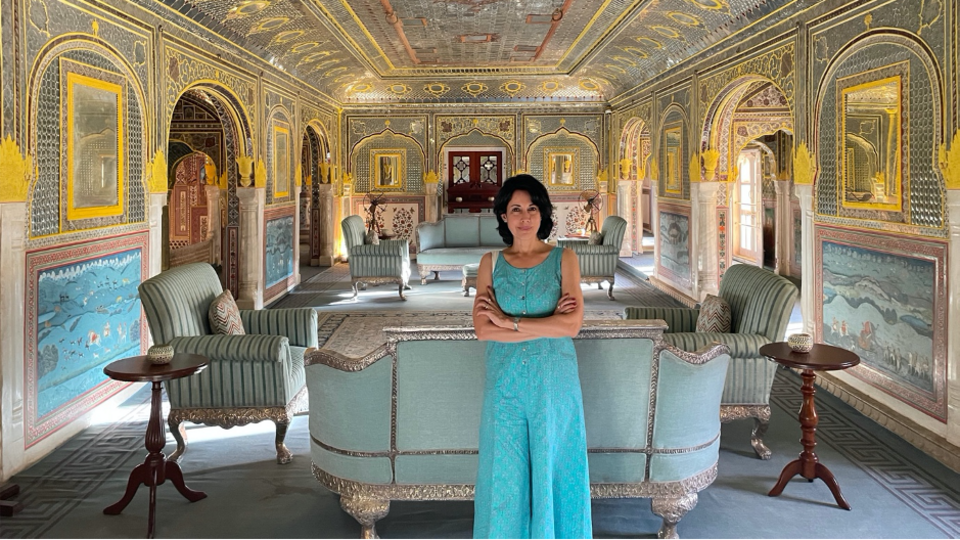
I was eleven years old when Diana married Prince Charles. My friends and I spent hours cutting magazine pictures, to make our royal scrapbooks, little dreaming of the twists and turns, that were to follow Prince Charles, who will finally be crowned King, a week from now.
As we run up to the royal coronation, here are five favourite books from around the world, on kings and queens, that offer excitement, intrigue, and the glamour of crowns and gowns.
Book 1 of 5: Ukraine

I am listening to Enchantment on audio and find myself walking longer to hear more of this riveting retelling of Sleeping Beauty. The action moves between Kyiv, a forest in the Carpathian mountains in Ukraine and New York. It also moves between centuries — I would expect no less from Orson Scott Card (his Enders Game is one of my favourite sci-fi books of all time) In this one, there’s Ivan, who is propelled from being a professor of Slavic languages to a reluctant king-to-be. There are baddies like the Bear and Baba Yaga. It’s action-packed, yet ruminative on matters like good governance and the kinds of contrary forces that swirl around our world; forces that leaders must contend with.
Book 2 of 5: India
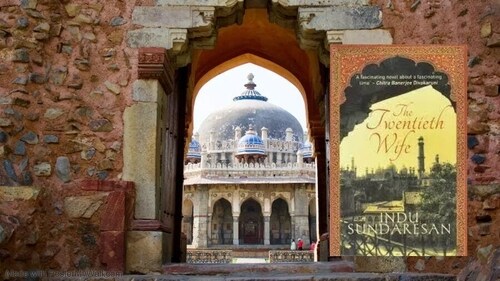
Having grown up in the bedrooms of the Tudor palaces, courtesy Jean Plaidy, I was thrilled to discover Indu Sundaresan. Start with The Twentieth Wife, the story of Mehrunissa, the wife of Jehangir, followed by The Feast of Roses, the story of Nur Jahan and the Taj Mahal. And if you want more, read Taj by Timeri Murari, which does a fabulous job of juxtaposing lives — that of the royalty that commissions the Taj Mahal and of the labourers that construct it.
Book 3 of 5: A Napoleonic Love Story
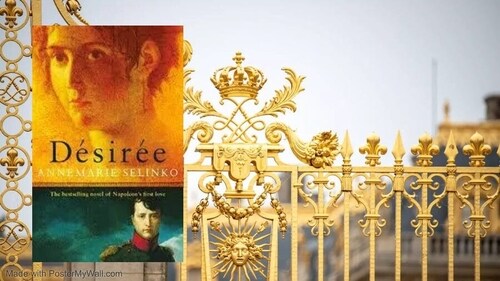
One summer holiday, I discovered a crumbling paperback in my grandfather's study — the first few pages were missing — it appeared to be the diary of a young woman in France who falls in love with Napolean. What a heady, vivid story - written in 1953, Desiree is a little-known gem of a book that tells a tumultuous tale of the daughter of a French merchant falling in love with Napolean, but eventually becoming the Queen of Sweden.
Book 4 of 5: Ancient Rome
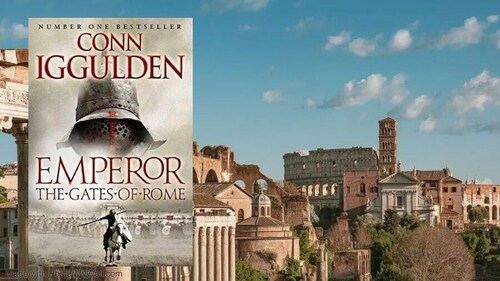
If you are looking for a long commute audiobook, Conn Iggulden’s series on the Roman Emperors is your go-to. Rome is where so much of Western history began, and Iggulden brings it to life, with plenty of action and battle sequences. If you enjoy this, also explore the Mongol series by the same author — Genghis Khan didn’t style himself a king or build cities and palaces, but his leadership and history-changing impact make his story a must-read.
Book 5 of 5: No Longer Royal in Russia
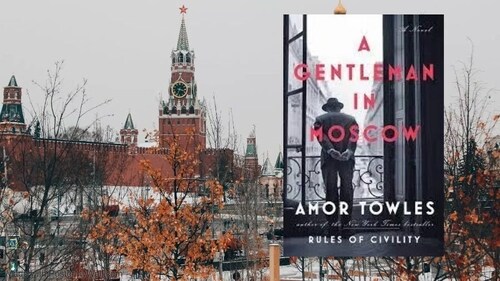
What happens when royalty are stripped of their titles and even their lives? The Scarlet Pimpernel, set during the French Revolution, is an enthralling story of such upsets. For a less swashbuckling, but beautiful rendition of a royalty upturned, read the poignant A Gentleman in Moscow, the story of a Count who must live out his life in imprisonment. And if you’re looking for a more emotional version, of another cast-out royal, head straight to Spare.
Finally, I am thrilled to bring you the incredible Ira Mukhoty, chronicler of kings, queens and princesses, from the Mughals to Rani Laxmibai. This natural history graduate from Cambridge, warns us of the dangers of deleting stories of the Mughal Kings and Queens, as recently happened with certain textbooks. Here are edited excerpts of our conversation.
Tell us about your childhood reading.
I grew up with the great gift of boredom, for which books were often the only escape. There was not a great deal of entertainment available during the endless summer hours in 70s Delhi, and my only sibling was away in boarding school. I also lived across from one of the best family-run bookstores in Delhi — The Bookshop. The wonderful owner was sympathetic to my need for books and whenever I was sick, which was predictably often, he would let me ‘borrow’ great stashes of comic books. When I had read through the family’s books, my French mother casually taught me some basic rules of French grammar and handed me her collection of old French books so I read Colette and Guy de Maupassant alongside Jane Austen, Enid Blyton, and Daphne de Maurier.
From studying natural history at Cambridge, you moved to writing about history and myth.
I wrote my first book, Heroines, in response to the subliminal messages I believed my daughters were receiving, growing up in India. There are many ways in which little girls are taught about acceptable female behaviour, much of it being naturally patriarchal, one of which is through the telling of mythologies. We may not realise it, but we are bombarded by subtle and not-so-subtle messages about the laudable ‘purity’ and ‘chastity’ of women like Sita, and Mirabai, and how we should aspire to be like them. And so I decided to re-examine some of the heroic women from our past, to try and understand if that was truly the only acceptable model for Indian womanhood.
You have written extensively about the Mughals, from Daughters of the Sun to Akbar. Why is important for us to know these stories of the Mughal royalty?
The Mughals are the indigenous empire closest to us in time. The last Mughal emperor was exiled by the British less than 170 years ago, so the flavour of the Mughal empire quite literally infuses the way in which we have been shaped- from the food we eat, the clothes we were, the cadence of our language, and the memory of our past. To ignore them, would be to cause grievous collective amnesia, whereby we would no longer know, or understand, who or what we were.
The Mughal Empire created some of the most glorious works of architecture, painting, and literature that the world has ever known. We can only enrich ourselves by studying and admiring in their proper context, these great works of beauty.
The Mughals wrestled with the same complicated realities of a multicultural and multi-religious country that today’s leaders have to deal with. The most famous of them, Akbar, devised the startlingly visionary thought system of sulh-e-kul, or universal peace, to accommodate all these differences within a harmonious polity. The system that the Mughals created was so successful that it long outlasted them.
What are the dangers of forgetting the stories of the Mughals?
The point perhaps is that we are not really ‘forgetting’ the stories of the Mughals, as though they have been carelessly misplaced, but that conditions are being actively created so that they are delegated to obscurity. And so we must question why this is being done, and to serve what purpose. Today, it is the history of the Mughals, tomorrow it may be that of the Dalits, or of others on the margins of society, so much easier to erase than the Mughals. The result of all this wilful amnesia can never be beneficial. At its most benign, it will leave us poorer in our imagination and our memories. But a more malicious result would be to disenfranchise a huge part of our citizenry and to use the supposed wrongs of the past to hone violence and anger today.
You have received great critical acclaim for uncovering many of the hidden stories of the past. How did this begin?
I was visiting the dargah of Nizamuddin Auliya in Delhi many years ago, and the inner sanctum of the Sufi shrine is forbidden to women, only men are allowed inside. As I was walking around the dargah, waiting for the men to come out of the sanctum, I realised that one of the graves was that of a woman. This was a grave I had walked past many times before, without truly understanding the subversive power of the fact that a woman lay buried there. I thought about how powerful and influential that woman must have been, to be buried so close to this most revered Sufi saint. And that is how I discovered Jahanara Begum, and began work on her extraordinary life.
What are some of your personal favourites in forgotten stories about women?
I recently came across the story of Fanny Mendelsohn, older sister to the famous German composer Felix. Despite being even more talented as a pianist and a composer than her brother, Fanny was discouraged by everyone in her family, because composing was deemed ‘unfeminine.’
To publish a work or a piece of music was considered as offensive as prostitution for a woman right up to the 19th century. These are the stories that I have found the most affecting — stories of the great creative talent of women being suppressed over the generations. Of the great silence that exists, instead of the music and the words.
Which writers have had the most influence on your writing?
The most influential books for me are writers who deal with dislocations, or with their conflicted and ambivalent selves. Those who deal with several realities at once, like being a woman in the world, or an Asian in a Western setting, or a colonised person writing history. People like Toni Morrison, Chimamanda Adichie, Pankaj Mishra, VS Naipaul. And also those who question age-old interpretations like Iravati Karve, and of course the feminist writers who are questioning the absence of women from the narrative, like Caroline Criado-Perez in Invisible Women and Joanna Russ in How to Suppress Women’s Writings. Finally, I also have a fondness for women who rewrite mythology, reclaiming the voices of women, like Madeline Miller with Circe, and Pat Barker’s Silence of the Girls.
Tell us about your family and books — do your tastes in reading overlap?
As far back as I can remember, all my family read books. Now my daughters are great readers too, and it is a fresh joy to discover interesting writers through their lens. Recently my daughter introduced me to academic Lucy Cooke’s brilliant new book called Bitch on the gender stereotypes and sexist mythology that surrounds Darwinian assumptions of female passivity and male aggression.
And lastly, what books are you currently reading?
I have started reading 2-3 books simultaneously, something I never used to do. I have been listening to a couple of books podcast, and I keep coming across fabulous books I had never heard of, and I try reading all of them! And a Kindle makes it much easier to read multiple books. I am currently reading Restless Republic, a fascinating non-fiction book that examines the decade in the 1650s following the execution of the English monarch Charles I.
The fiction books I am reading are Shrines of Gaiety by Kate Atkinson and A Ghost in the Throat by Doireann Ni Ghriofa. I’m not sure why, but I have a real fondness for Irish women writers. They bring an extraordinary lyricism and a poetic sensibility to their work that I particularly appreciate. I am also reading a collection of poems called Ephemeron by Fiona Benson. I read one of the poems, once in a while, when I am in need of inspiration, or just a short furlough from the world.
***
Next week, I bring you a selection of wise, funny and feel-good book gifts, in good time for Mother's Day.
Until then, Happy Reading.
Sonya Dutta Choudhury is a Mumbai-based journalist and the founder of Sonya’s Book Box, a bespoke book service. Each week, she brings you specially curated books to give you an immersive understanding of people and places. If you have any reading recommendations or suggestions, write to her at sonyasbookbox@gmail.com
The views expressed are personal


