
 E-Paper



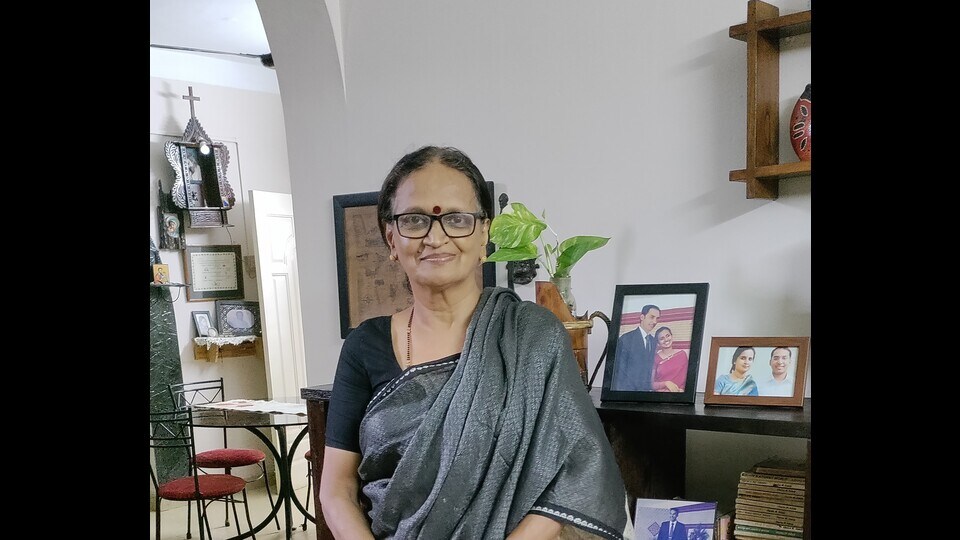
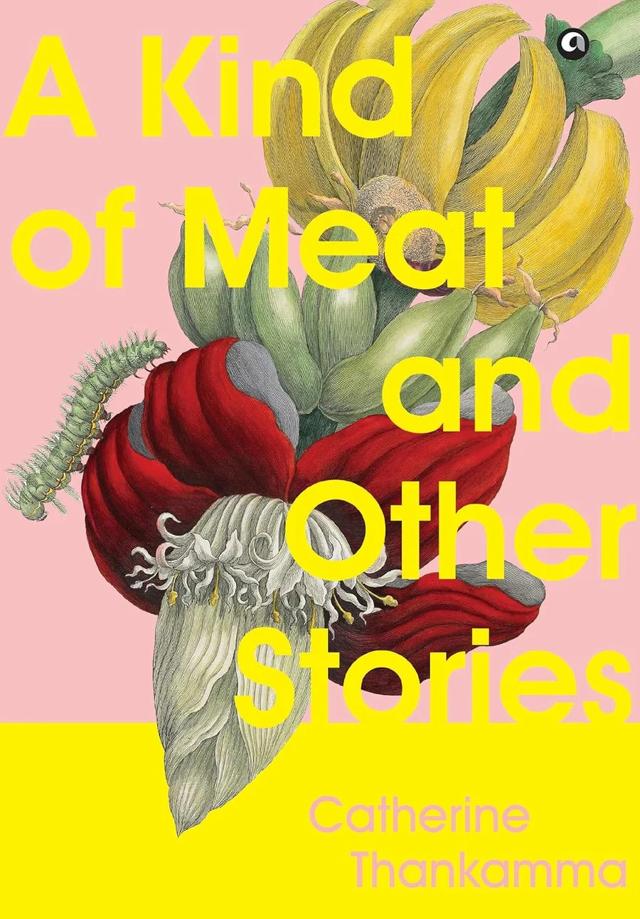
Catherine Thankamma: “I celebrate the quiet resilience of women”
The award-winning translator on her new collection of short stories, A Kind of Meat, and why she enjoys writing in the form

 Prefer HTon Google


You first established yourself as a translator from Malayalam to English. Please tell us about the books you have translated.
The first book I translated was Kocharethi by Narayan, which won the Crossword Book Award in the Indian language translation category in 2011. The others include Susanna’s Granthapura by Ajai P Mangattu, and Aliya by Sethu. Another book, Ayyankali: A Biography by MR. Renukumar, will be published next year.
What are the skills needed to be a good translator?
The basic tenet of translation is that you must read and read till you understand the text at its subtextual level with all the unsaid nuances.
As for language and style, it varies from text to text. Style and sentence structure are very important for writers like NS Madhavan and CS Chandrika. The language was pared down to the basic vocabulary in Kocharethi.
In Pulayathara, style became the means of depicting marginalisation. On the one hand you have monosyllabic utterances of the enslaved Pulayan, the semi-literate sentences of the newly-converted and finally the omniscient narratorial voice which alternates between strident criticism and evocative sentences that have lyrical cadences.
How long have you been writing stories?
For the past 30 years. Since both my husband Joseph and I were in transferable jobs, he in a bank, while I was an English teacher in government service, many a time, I had to handle things on my own. With two daughters to raise, a household to manage, and a career to handle, time was always in short supply. There was just no time to think about writing.
But I used to love watching people and listen to their exchanges. When something struck me, I used to write down points. Then, over the course of several months, I wrote stories around fleeting instances, chance encounters, and exchanges. The brevity of the short story is the best medium for me. So, I kept writing that. In 2015, after my daughters had grown up and I had retired as an associate professor, I finally had time for concentrated writing. I was alone too. My husband, Joseph, passed away in 2011. He had always encouraged me in my writing.
Quite a few stories of your stories in A Kind of Meat are about the Syro-Malabar branch of Kerala Christians. Why did you focus on them?
I belong to this community. On the surface, there is piety, church-going, and community gatherings. But underneath, many of the family relationships are toxic. I wanted to show the dark underbelly.
You have also been critical of the clergy.
There are reasons for this. I addressed this in my story, Pieta where I wrote, ‘Is it piety that you feel when you hear of paedophilic priests… of clergymen arguing vociferously on how to say the Mass, then hear the same wrangling fraternity declare from the pulpit, “Let us follow our Lord and not throw stones; let us pray for truth and justice to prevail.”’ It’s unbelievable!
There was a nun who had publicly stated that she had been raped by a bishop. She is not heard about now. Even those who supported her have disappeared. In some way or the other they have been sidelined and outcast.
I translated Dalit Christian author Paul Chirakkarode’s book, Pulayathara which is now regarded as a masterpiece. In it he tells the story of how low-caste Pulayar and Parayar communities were exploited mercilessly by the landowners – upper-caste Hindus and wealthy Christians – of the Kuttanad region in central Kerala. There was a visible caste system inside the church also.
Despite the grimness, A Kind of Meat is also a celebration?
Yes, that’s right. I celebrated the quiet resilience with which women face reality. My husband’s death has taught me that we are clueless of what the future holds for us. What little agency we have is how we should confront the reality life throws at us.
Shevlin Sebastian is a senior journalist. He is the author of The Stolen Necklace; A Small Crime in a Small Town.


