
 E-Paper



Covid-19: Move out of media lens to see people’s contribution in pandemic fight, says Dutch historian
Humankind: A Hopeful History, a book by Dutch historian and writer Rutger Bregman, takes some of the world’s most famous studies and events and reframes them, providing a new perspective on the last 200,000 years of human history.


Billions of people around the globe have radically changed their lifestyles to stop the coronavirus from spreading further but one has to move out of the media lens to see this, says Dutch historian and writer Rutger Bregman.
He has come out with a book Humankind: A Hopeful History in which he takes some of the world’s most famous studies and events and reframes them, providing a new perspective on the last 200,000 years of human history.
First published in 2019 in the Netherlands as De Meeste Mensen Deugen, it is translated from the Dutch by Elizabeth Manton and Erica Moore.
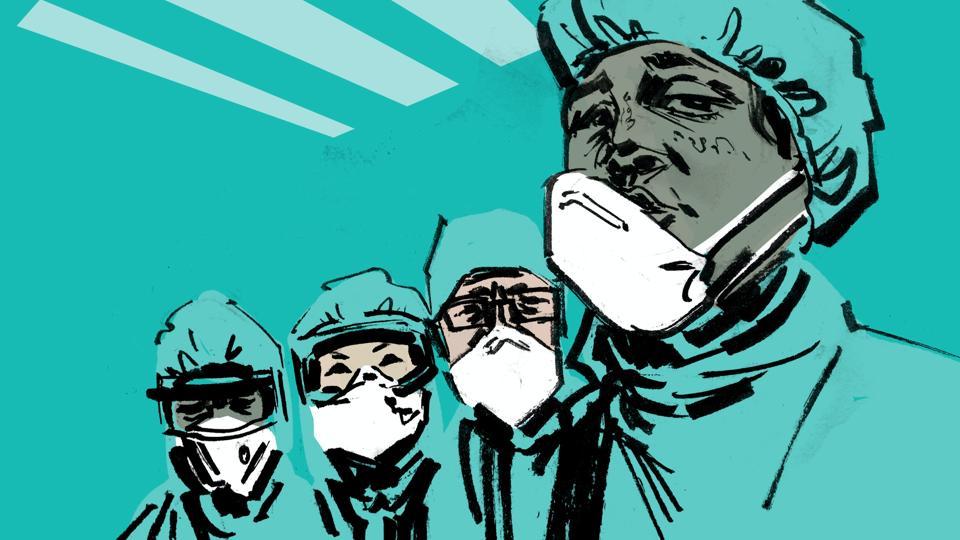
Bregman feels in this time of crisis and a pandemic, humankind has acted somewhat differently - in a more humane and compassionate manner.
“If you follow the news, if you hear about people hoarding toilet paper, it’s easy to get the impression that most people are selfish. But if you zoom out, then you see that billions of people around the globe radically changed their lifestyles to stop the virus from spreading further,” he told PTI.
Sociologists have long known that, after a natural disaster like an earthquake or a tsunami, there is an explosion of cooperation - people from the left to the right, rich and poor, young and old, all working together.
He says during this pandemic, we’ve seen who the real wealth creators are.
“Governments around the globe have published lists of the so-called ‘essential workers’. You look at these lists and you wonder: where are the hedge fund managers? Maybe we need to redefine the value of work. Nurses, teachers and garbage collectors are much more important than bankers and marketers.” Catastrophes also bring out the best in people, he says. “It’s everywhere. It’s not British culture, or African culture, or Indian culture. It’s human nature. People around the world often have more in common than they think.” From the real-life “Lord of the Flies” to the “Blitz”, a Siberian fox farm to an infamous New York murder, Stanley Milgram’s Yale shock machine to the Stanford prison experiment, Bregman shows how believing in human kindness and altruism can be a new way to think - and act as the foundation for achieving true change in the society.
It’s a book about a simple, but radical idea: most people, deep down, are pretty decent, he says.
“We have, in the words of biologists, ‘evolved to be friendly’. This is our true superpower as a species. It explains why we conquered the globe, and the Neanderthals are gone. We’re able to cooperate on a scale that no other species in the whole animal kingdom can. And that’s the secret of our success.” Bregman says he started to notice that so many scientists, from so many different disciplines like anthropology, sociology and psychology were moving to a much more hopeful view of human nature.
“But these brilliant specialists were often so specialised that they didn’t see what was going on in a field next to theirs. That’s why I wanted to give the bigger picture, and to connect the dots. It’s really time for a totally different view of who we are as a species,” he says about the idea behind the book.
Humankind, published by Bloomsbury, makes a new argument: that it is realistic, as well as revolutionary, to assume that people are good. The instinct to cooperate rather than compete, trust rather than distrust, has an evolutionary basis going right back to the beginning of Homo sapiens.
According to Bregman, for a new realism and new view of humankind we need to take an evidence-based approach, redefine what it means to be a realist and start telling each other different stories.
“Human beings become the stories that we tell ourselves. If we assume that most people are selfish, then we’ll design our whole society - our workplaces, our schools and our democracies - around that idea. And we’ll bring out the worst in each and every one of us,” he says.
“If we assume that most people are decent, that we can be trusted, we can move to a much more egalitarian, genuinely democratic and free society. Believing in the good of humanity is therefore an act of defiance,” Bregman, whose last book “Utopia for Realists” has been translated into 32 languages, adds.
(This story has been published from a wire agency feed without modifications to the text. Only the headline has been changed.)


