
 E-Paper



Essay: Defiance in tough times
For centuries, writers and commentators have been persecuted for merely holding views contrary to those in power

 Prefer HTon Google


The police ransacked his study and arrested the Kenyan writer Ngugi wa Thiong’o “because of the Chinese and other literature found in his possession at the time”.
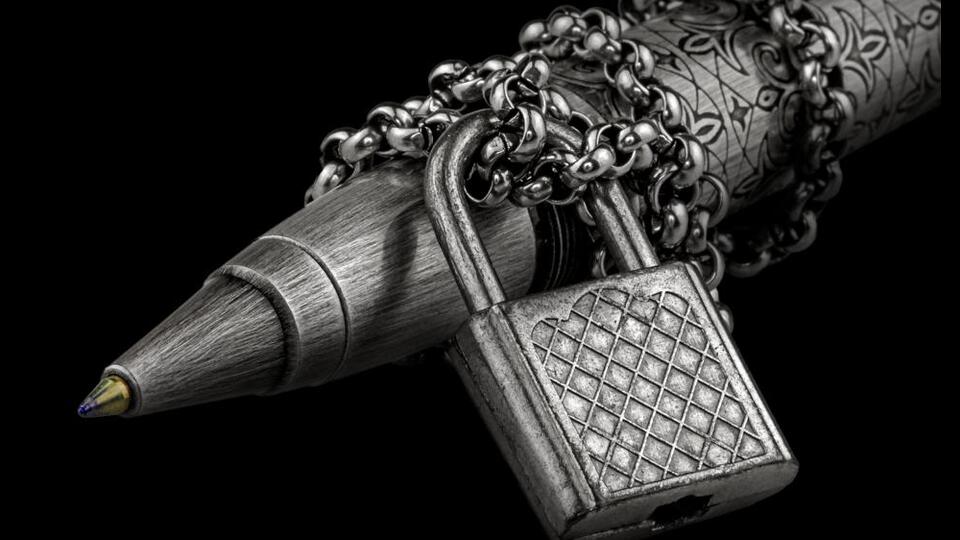
In Detained: A Writer’s Prison Diary, he recounted about the time he asked the jailor if there was any difference between a colonial power and the democratic authoritarianism of President Jomo Kenyatta, who had been an anticolonial activist in the past. “The British jailed Kenyatta. Kenyatta jails Kenyans,” he had said.
This is eerily familiar as police raids the homes of journalists, writers and activists due to an alleged China connection. They were detained for interrogation under the Unlawful Activities (Prevention) Act.
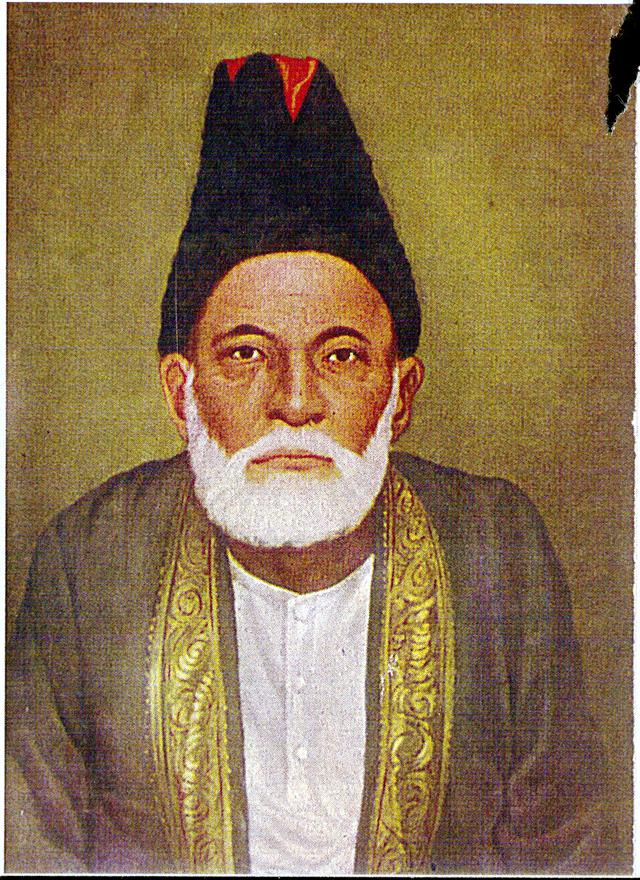
“Mauje khoon sar se guzar hi kyon na jaaye/Aastane yaar se uth jaaein kya! (Come what may, even if our heads are separated from our bodies we shall not desert our land)”. The Maharashtra Police affidavit stated that this two centuries’ old Mirza Ghalib’s couplet “encouraged bloodshed” among members of the banned Students’ Islamic Movement of India (SIMI).
Faiz Ahmed Faiz, Pakistani poet and Nobel nominee whose works, including “Bol ke lab azaad hai tere (speak for your lips are free), was arrested for a failed coup attempt under the Safety Act. His poetry collections, Dast-e Saba and Zindan Namah, were the result of the four years he spent in prison. He died in exile in Beirut.
When and how do those wielding the pen come to be seen as enemies of the State?
This isn’t a contemporary issue. For centuries, writers and commentators have been persecuted for merely holding views contrary to those in power. Fyodor Dostoyevsky was arrested for being a member of a liberal intellectual group and circulating banned political essays. His autobiographical novel The House of the Dead was about the eight years of hard labour in the prison camp. Dante Alighieri wrote the Divine Comedy in exile, never to return home.

Among the more shocking dissidents was Adolf Hitler. He was part of the group of 2000 Nazis that had planned a coup during the Weimar Republic in 1923. He was arrested, and it was in jail that he dictated Mein Kampf.
Several writers have served prison terms, and while many of them published journals about their life behind bars, such incarceration cannot be romanticised as catharsis. Hundreds of prisoners are proven innocent and released years later after their lives and reputations have been destroyed.
Back in 1978 The Weekly Review, a Kenyan newspaper, had blamed Ngugi as being part of the problem for having “moved farther to the left of the country’s political ideological spectrum, he has tended to operate in a world which does not allow for objective appraisal of political realities”.
An observant writer is more likely to possess objectivity than one who mouths the version of the authorities or the mainstream. But rumours can be powerful and pass off as news; allegations become affirmations: “This is terrorism”, “Treason is not journalism or literature”, “They are destroying the country”.
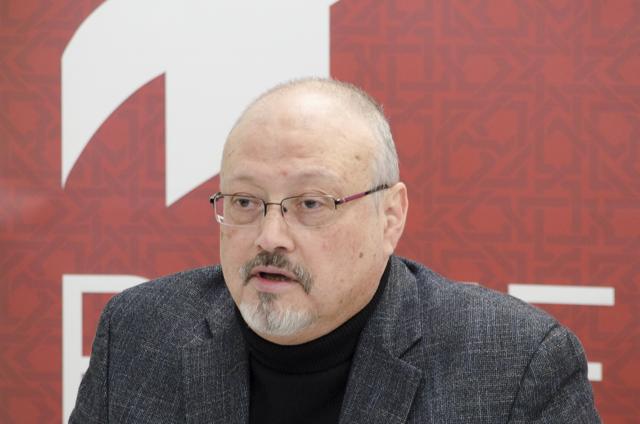
Jamal Khashoggi was a nationalist in the best possible way. According to him, “While Mohammed bin Salman (MBS) is right to free Saudi Arabia from ultra-conservative religious forces, he is wrong to advance a new radicalism that, while seemingly more liberal and appealing to the West, is just as intolerant of dissent.”
For speaking out against the leadership and Crown Prince Mohammed bin Salman, he was assassinated in a most gruesome manner, his body dismembered. Along with two other writers, TIME magazine honoured him with the Person of the Year award. Irony had its moment when in the same year MBS featured in the magazine’s 100 most influential people’s list.
Amidst the boycott calls, those who ought to promote free ideas either selectively time their sympathies for their own convenience or choose to repress views by demanding self-censorship.
Revolutionary poet and activist Varavara Rao, imprisoned in the Bhima Koregaon case, was granted bail on medical grounds after over three years. While he got a lot of intellectual support with #MeTooUrbanNaxal trending, there hasn’t been enough anger over the initial stalling of his book of poems Varavara Rao: India’s Revolutionary Poet edited by N Venugopal and Meena Kandasamy.
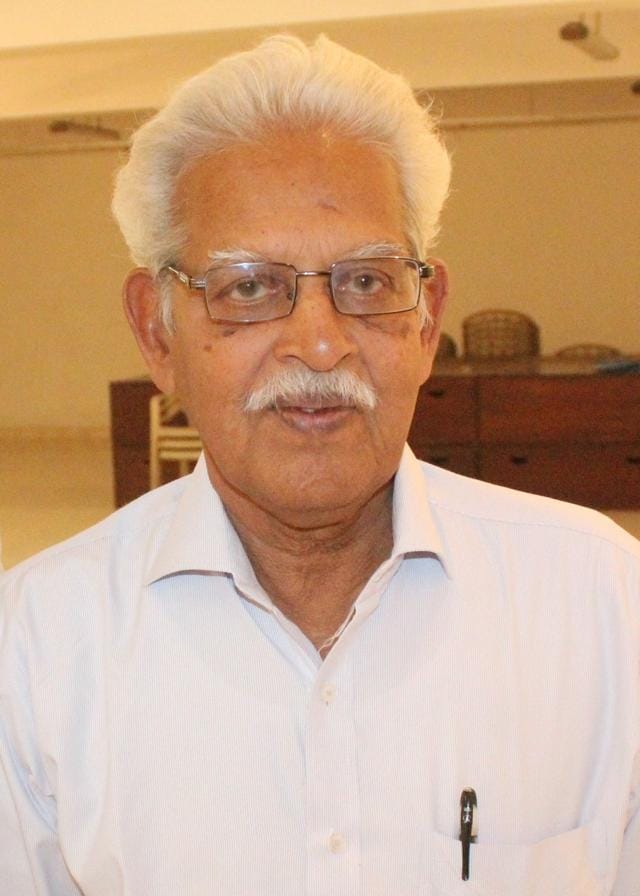
Many of the poems were selected by Rao himself. “I believe his poetry is an expression of his complete personality that blended social history, alternative people’s politics, people’s right to self-determination and unceasing urge for freedom,” Venugopal said in an interview.
A report in The Quint showed thatediting inputs by the publisher have no literary basis and are clearly political. Some poems were booted out because they were about Rao’s pending cases or deemed contentious. The legal team of the publisher suggested editors remove or replace references to the Sangh Parivar, Ayodhya, Hindutva, saffronisation, TADA, UAPA, Naxalbari, advising they, “Substitute ‘insurrection’ for a less violent word like ‘uprising’ or ‘taking a stand’” and that “all the statements against police will be seen to be defamatory and possibly inflammatory”. The ‘revolution’ itself was to be sanitised: “Maybe we can have a note to the effect that references to revolution in the poems means transformation to an egalitarian society through peaceful means and dialogue (or something else on those lines) and that the poet does not himself espouse violent means.”
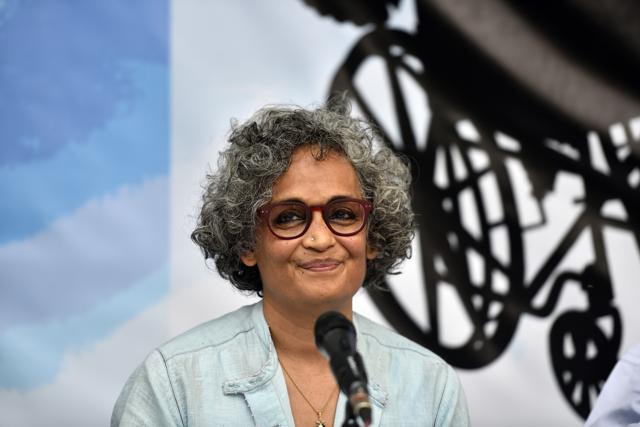
In 2014, Wendy Doniger’s The Hindus: An Alternative History was “pulped” by Penguin India. In solidarity, Arundhati Roy wrote an open letter to the publisher: “Have you forgotten who you are?…you have fought for free speech against the most violent and terrifying odds.” This is factually incorrect. In 1988 it was Khushwant Singh, their consulting editor, who advised against publishing an Indian edition of The Satanic Verses because there could be riots following its release. This was a pre-emptive measure, based on an assumption. It was enough to ignite sentiments, and India became the first country to ban the book.
Writers were also arrested during the Emergency of 1975. Roy’s own novel The God of Small Things was deemed anti-Communist by veteran Marxist leader EMS Namboodiripad: “Anybody who attacks Communists anywhere in the world will be welcomed by the captains of the industry of bourgeois literature in the world.” The then chief minister of Kerala, EK Nayanar, had said, “If the novel had come out with such references to any other political party, it is certain its distribution would have been ensnared in legal tangles.”
Is freedom under threat only when there is a perceptible outcry?
Some years ago, when a Siberian court deemed the Bhagavad Gita “extremist”, Indian Right wing politicians began making demands for the Gita to be made the national book. The ban was on a Russian translation by Swami Prabhupada, the head of ISKCON (International Society for Krishna Consciousness), whose interpretation of the text has raised some eyebrows.
Also rather interestingly, since Lord Krishna – the Gita is his dialogue with Arjun within the Mahabharata – was a Yadav, members of this OBC community also joined in to oppose the ban in Russia. The “upper castes” and the OBCs were ready to fight for the same overseas rights, so to speak.
In 2015, Oxford University Press had asked its textbook writers to keep out all references to pigs, pork, sausages and other pork-related items to avoid offending Jews and Muslims: “Our materials are sold in nearly 200 countries…we encourage some authors of educational materials respectfully to consider cultural differences and sensitivities.”
Why did pigs suddenly ring a discordant note? It seemed quite obvious that the publishers were latching on to the Charlie Hebdo controversy to garner attention, and more control over the authorial voice. Although these were educational texts, and not academic or creative writing, the censorship was even more worrying.
Muslims and Jews had never raised any objections. Such second-guessing ghettoises societies and, thereby demonises them.
These are only examples of the ludicrousness of scotching words and phrases for nebulous “sensitivities”. Those who are targeted are invariably not the voices of the Establishment. They are a threat to the system despite not having the reach of the mainstream.
After General Zia ul Haq put Ahmad Faraz behind bars for his satirical poem Muhasara (The Siege), the poet wrote ‘Don’t kill the Words for all those who are silenced’. It’s a peaceful war cry:
is shahr meñ phir kyā dekhoge
jab harf yahāñ mar jā.egā
jab shahr khañDar ban jā.egā
phir kis par sañg uThāoge
apne chehre ā.īnoñ meñ
jab dekhoge Dar jāoge
(What will you find in the city
When the word is dead
City wrecked,
Then, at whom would you cast a stone?
When you look in the mirror
Your own image will mock you!)
Farzana Versey is a Mumbai-based writer. She tweets at @farzana_versey


