
 E-Paper



Excerpt: The Long Arc of South Asian Art edited by Annapurna Garimella
This extract from an essay entitled Rethinking Community; The Indic Carvings of Quanzhou, that’s part of this collection, looks at Hindu temples built by a Tamil merchant community in medieval China

 Prefer HTon Google


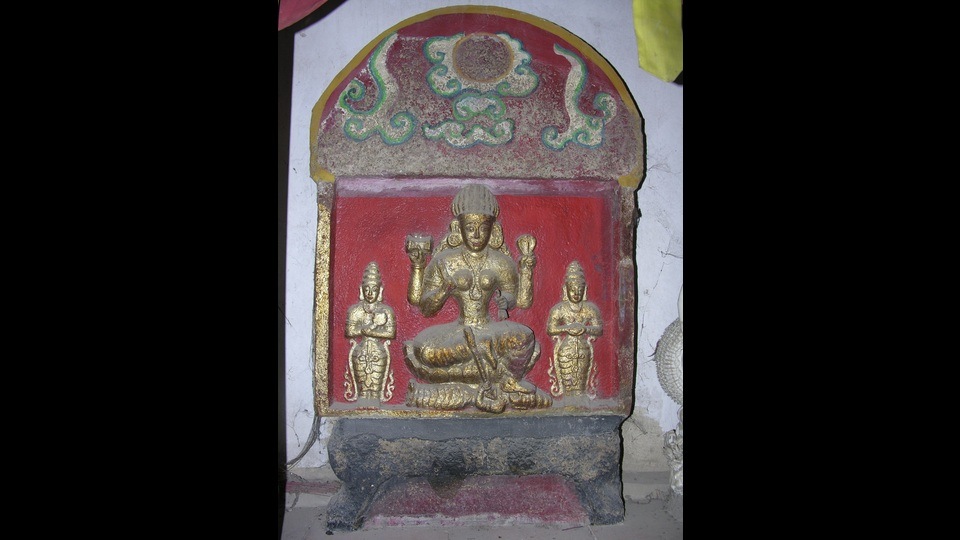
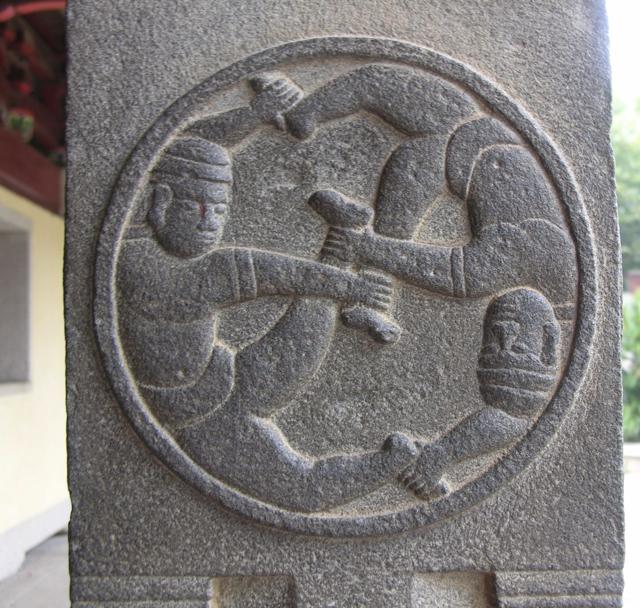
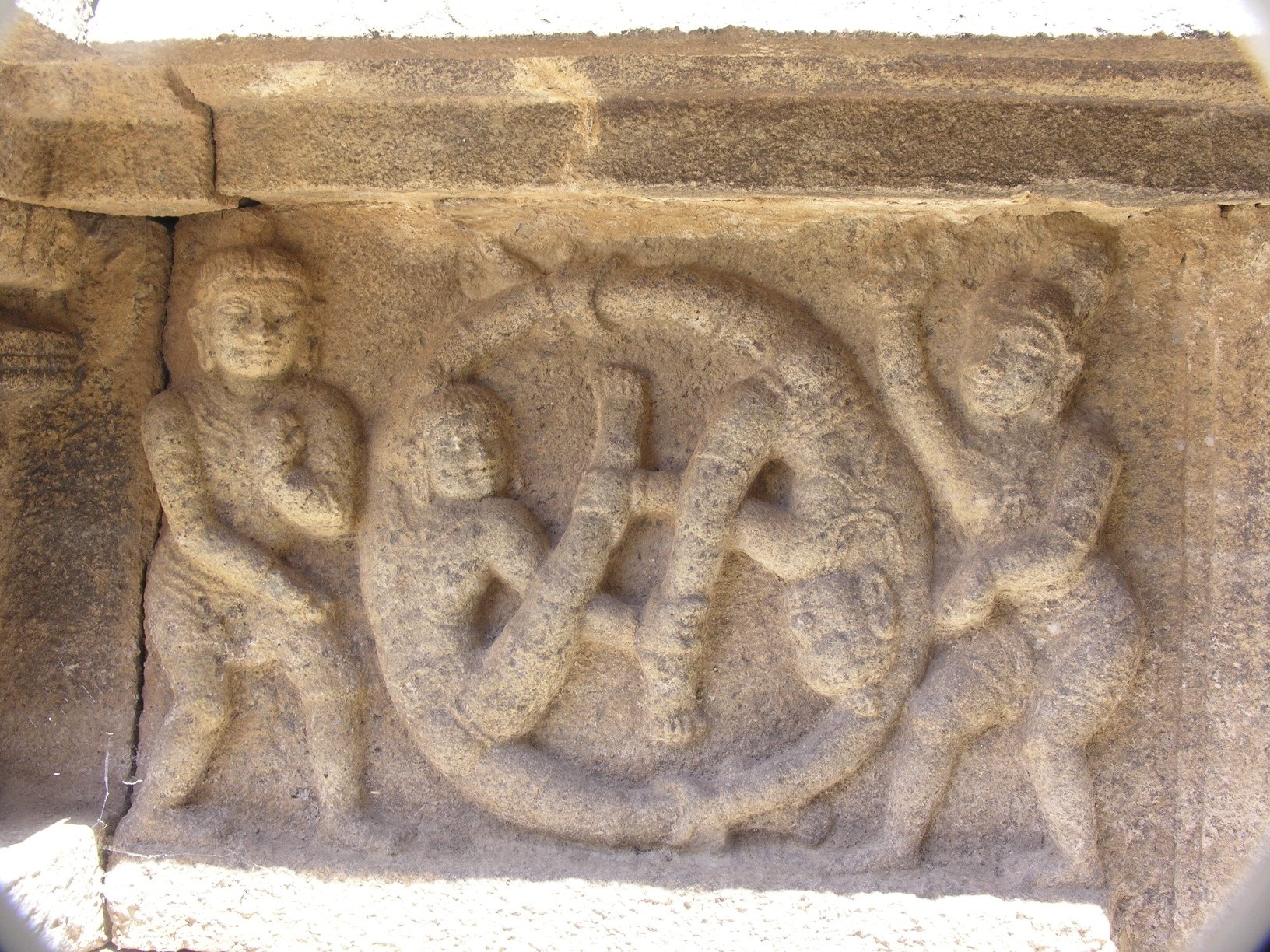
In the late 13th century, a Tamil speaking community in southern China’s coastal city of Quanzhou built a temple devoted to the Hindu god, Shiva. The temple is no longer intact, but over 300 carvings still remain within the city, on display in the collection of the local museum and rebuilt into the walls of the city’s main Buddhist temple. The known carvings are distinguishable by their South Indian style, with their closest parallels in 13th century temples constructed in the Kaveri delta region of Tamil Nadu, and are dispersed across five primary sites in Quanzhou and its surroundings. Nearly all of them are carved in greenish-grey granite, which was widely available in the nearby hills and used frequently in the region’s contemporaneous architecture. The remains attest to the presence of a settled South Indian community in southern China during the late 13th century and indicate an even longer history of cross cultural exchange between China and India (Fig.1).
Scholars have charted the movement and motivations of the 12th-13th century Sino-Indian exchange, analysing the Indic carvings to show persistent cultural and mercantile relations between the two regions. However, existing scholarship stops short of reading a fresh politics of culture and identity from the carvings, one that challenges today’s regnant theories in philosophy, history, and political theory. For, as I show, the carvings resist a binary understanding of cultural interaction, where bounded, definable cultures or ethnicities “influenced” one another. Indeed, I argue that neither the temple patrons in Quanzhou, nor the city’s local artisans viewed themselves, or others, as culturally distinct selves when they interacted. Quanzhou’s Indic carvings, I state, index an active translation of ideas and images in built-form.
Historical background
What little we know of the community of Shiva worshippers in Quanzhou comes directly from the carvings themselves; apart from the material remains of a Shiva temple, history has not documented or referenced its creators. The strongest evidence for its date of construction is a bilingual inscription found in Quanzhou, written in both Chinese and Tamil on a block of diabase stone, which records the consecration of a Shiva temple in 1281.
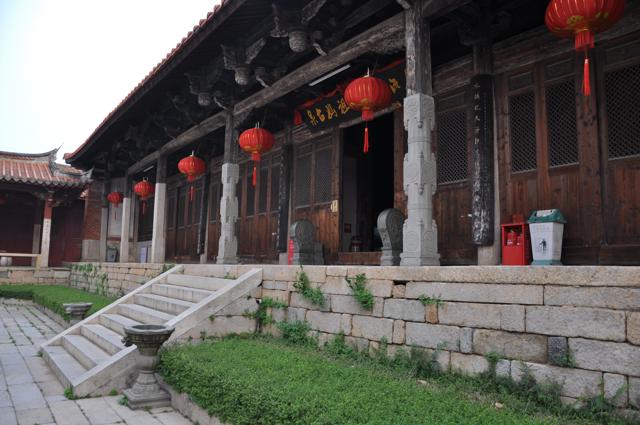
This date is appropriate, given the striking stylistic correspondence of Quanzhou’s Indic carvings with contemporaneous temples in Tamil Nadu, India. Although it is impossible to know for certain where the temple was originally located since it is now dismantled, many sources suggest the southern part of the city. Most of the carvings were found within the Tonghuai gate, located in the south-eastern part of the city, when the city wall was demolished in 1947. This gate was erected during the Ming dynasty (1368-1644), and the carvings were used as building materials to expand the city wall. Although we do not know the exact dates for the dismantling of the temple, this suggests that it could have occurred between the late 14th and 17th centuries. Additionally, there are scattered historical references to Indians living in the southern part of Quanzhou. Zhao Rugua records in his ca. 1225 Description of Barbarian Peoples that foreign merchants living in Quanzhou revered an Indian monk who had arrived by sea in 985 and bought a plot of land in the southern part of the city, aiming to build a temple. Furthermore, a gazetteer from Jingzhang county notes that in ancient times a pool of the “foreign temple of Buddhism” existed in the city’s south, perhaps referring to a Hindu temple tank. Several sources suggest that the southern suburb was the city’s commercial centre throughout the Song (960-1279) and Yuan (1279-1368) dynasties, which has led scholars to believe that the temple was once located in the city’s southern sector, since the community of Shiva worshippers most likely comprised merchants.
In Chinese history, the inscription date of 1281 places the temple in the Yuan dynasty period, initiated by Ghengis Khan, a member of a nomadic tribe of ethnic Mongols. After uniting Mongolia in 1206, Khan extended his empire, which came to include large parts of Asia, the Middle East, and some of Europe. While he did not live to see a complete conquest of China, after his death in 1259, Qubilai Khan (r.1260-1294) continued his grandfather’s war against the Song Empire until 1279, when he took the last Song outpost in Guangzhou. Ultimately, it was the foreign community in Quanzhou, composed of South Indians, Arabs, Persians, and others, that played a pivotal role in the Mongols’ political takeover...
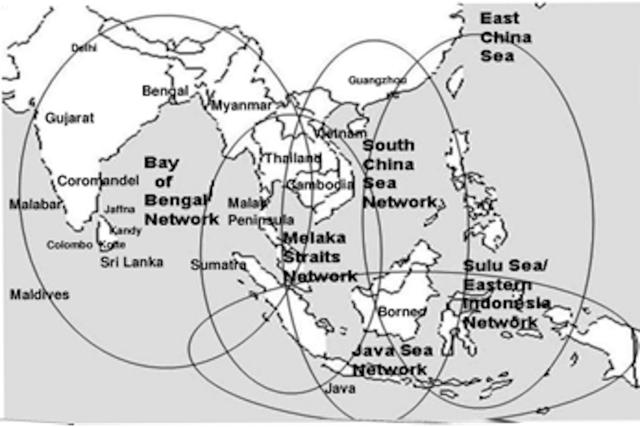
...The period of Mongol rule is marked by increased Chinese mercantile activity along the coastline of southern India. Ibn Battuta, Wang Dayuan, and Marco Polo all provide eyewitness accounts of the presence of Chinese merchants in Indian ports. The Qubilai Khan court considered trade with India so important that it dispatched an unprecedented 16 official, diplomatic envoys to India, primarily along the Coromandel and Malabar coasts. The Yuan official, Yang Tingbi, led several missions to these regions, determined to expand China’s political connections with India. Tingbi’s missions are also suggestive of India’s pluralistic landscape, for he reports meeting with Syrian Christian and Muslim communities in South India, undoubtedly comprising diaspora traders. Moreover, Yuan officials travelled to India on private trading ships, affirming a connection between the court and merchant endeavours to expand their reach in Indian markets and politics.
From the Indian vantage point, 1281 marks the end of the late Chola period in Tamil Nadu, which began in 1070 with Kulottunga I and ended in 1280 with the demise of Rajendra III. As past scholars have noted, the artistic style of the carvings in Quanzhou, in tandem with the Tamil script in the inscription, indicates that the Shiva worshipping community in the city was probably from Tamil Nadu. At the very least, its members had strong ties to this region. As overseas commercial ventures became crucial to ensuring the economic well being of their polity, Chola monarchs pursued aggressive foreign policies that established trading networks and political relations with China. The 1st century Chinese scholar, Pan Kou, shows that, as early as the 1st century, South China and South India were connected by maritime trade routes; however, Quanzhou only emerged as a port of international importance between the 12th and 13th centuries, during the Song dynasty and the Mongol Yuan dynasty. In 1292, Marco Polo visited Quanzhou and commented on the substantial presence of Indian ships loaded with pepper at the port. Archaeological evidence found on the Tamil Nadu coast, including hoards of Chinese ceramics and coins, attest to vibrant trade between southern India and China, which began in the 11th century and continued.
...Through a study of existing, albeit fragmentary, material and written archives of structural stone temple ruins across the Indian Ocean, I argue that merchant groups used architectural patronage as a way to ensure their position in foreign markets and encourage foreign diplomacy. Tamil-speaking merchant groups built their own religious monuments and patronised others in what are now the modern nation states of India, Sri Lanka, Burma, Malaysia, Indonesia, Thailand, Laos, and China. This was a common practice among those who travelled the interconnected Indian Ocean maritime routes. The 14th century Chinese travel writer, Wang Dayuan, claims to have seen a pagoda in Nagapattinam in Tamil Nadu, built by Chinese sojourners and inscribed in Chinese characters, citing a construction date of 1267. Additionally, in the 11th century, Srivijayans built a Buddhist monastery at Nagapattinam using Chinese architectural style. An inscription found in Guangzhou (ca. 1049) records donations made to a Taoist monastery on behalf of the Chola monarch, Kulottunga I. More interestingly, these monuments were not culturally distinct entities, as is evident from the presence of personnel and iconography from multiple cultures in their built-form. For example, the Kaiyuan temple’s gazetteer records that a “Master from India” served as the chief architect in renovating its east pagoda in 1238. Additionally, a bas-relief of Hanuman, the monkey prince from the Rāmāyaṇa, appears on one of the temple’s pagodas. Although it is beyond the scope of this essay to analyse material from Central or Southeast Asia, it is worth mentioning that representatives from these regions were present in Quanzhou and may have contributed directly or indirectly to the Shiva temple’s appearance. Multilingual inscriptions and Indic carvings have been found across Southeast Asia, indicating a wider pattern of migration and settlement by merchants across culturally permeable borders. We suspect that the influx of bodies and ideas from Southeast Asia also affected the appearance of the temple and the community of worshippers within Quanzhou.

Indeed, it appears that the categories of “foreigner” and “merchant” were more salient than “ethno-cultural” identities. While the large volume of literature theorising merchant networks outpaces this essay, we might simply note that this scholarship indexes how merchant trade entailed collaboration between multiple, interdependent and close-knit groups, and it cautions against the anachronistic temptation to separate these networks into ethnic or nationally defined entities...


