
 E-Paper



HT Picks; New Reads
The list of interesting reads this week includes a young Parsi’s memoir of fighting in the first world war, an accessible biography of Emperor Akbar, and an anthology of Indian poetry in English

 Prefer HTon Google


A war memoir that’s one of a kind
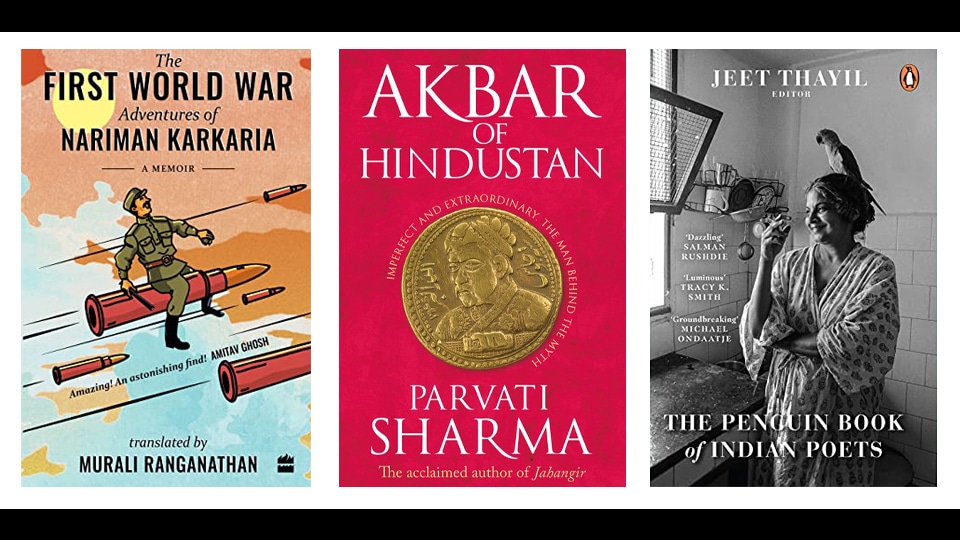
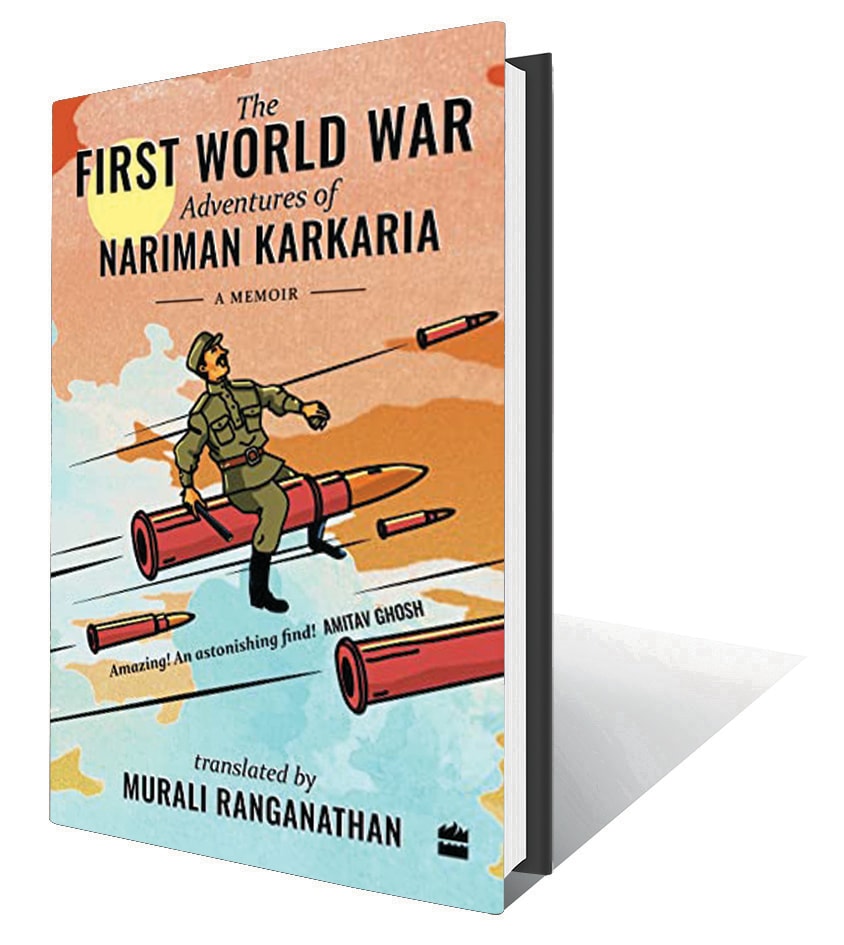
Nariman Karkaria, a young Parsi from Gujarat, had always wanted to see the world. So he left home as a teenager with 50 rupees in his pocket to do just that. After working in Hong Kong and Peking for a few years, in 1914, when war was in the air, he decided to volunteer for the British Army. Passing through China, Manchuria, Siberia, Russia and Scandinavia he reached London early in 1915 and managed to register as a private with the 24th Middlesex Regiment. He was now a Tommy.
Incredibly, Karkaria saw action on three major fronts in the next three years. In 1916, he was in the trenches at the Battle of the Somme. After convalescing from an injury, he was sent off to the Middle Eastern Front where he fought in the Battle of Jerusalem in 1917. He was then transferred to the Balkan Front in 1918, where he served in Salonika. After being discharged, he returned to India and wrote a book in Gujarati about his years of travel and adventure which was published in 1922.
Karkaria’s war memoir is truly one of a kind. And in Murali Ranganathan’s brilliant translation, this astonishing story comes alive with rare immediacy and vigour.*
The man behind the myth
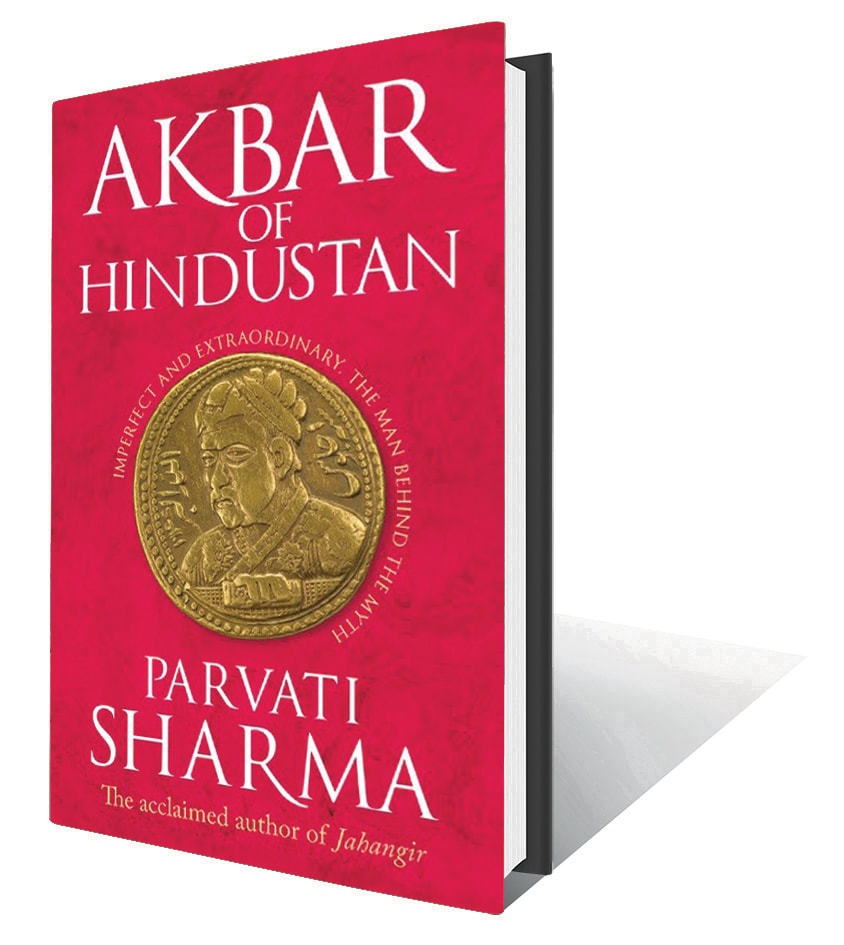
Akbar the Great is a familiar figure to most Indians. Hailed as a brilliant warrior, a great administrator and a visionary ruler whose ideas of pluralism and tolerance sought to unify India with all its diversity of peoples and religion, he is also an increasingly contested figure in the national discourse. And familiar though he might be, Akbar is a mystery too, locked in his own legend; a man to admire but difficult to know.
What was Akbar really like – as a child, a father, a friend and foe? What were his moods like – his anger, his melancholy, his passions and his laughter? How did a 13-year-old fatherless boy, surrounded by ambitious advisers and warlords, become one of the world’s most powerful monarchs and how did he deal with his dizzying rise? Was Akbar a sceptic, or did he believe he had divine, miraculous powers?
With revealing insights into Akbar’s complex and magnetic personality, this biography is also the story of how Akbar’s ideas and ideals of kingship evolved through his reign; of how he came to concentrate in himself both political and religious authority; of his instances of megalomania, his doubts and his yearning for justice. Rich in detail, and in a cast of unforgettable characters, it sparkles with humour and drama too, as it vividly evokes the world he lived in.
Deeply researched and beautifully written, Parvati Sharma’s portrait of Akbar the Great brings alive as never before a man imperfect and extraordinary, who ruled for nearly 50 years and has lived in the Indian imagination for close to half a millennium.*
A monumental undertaking
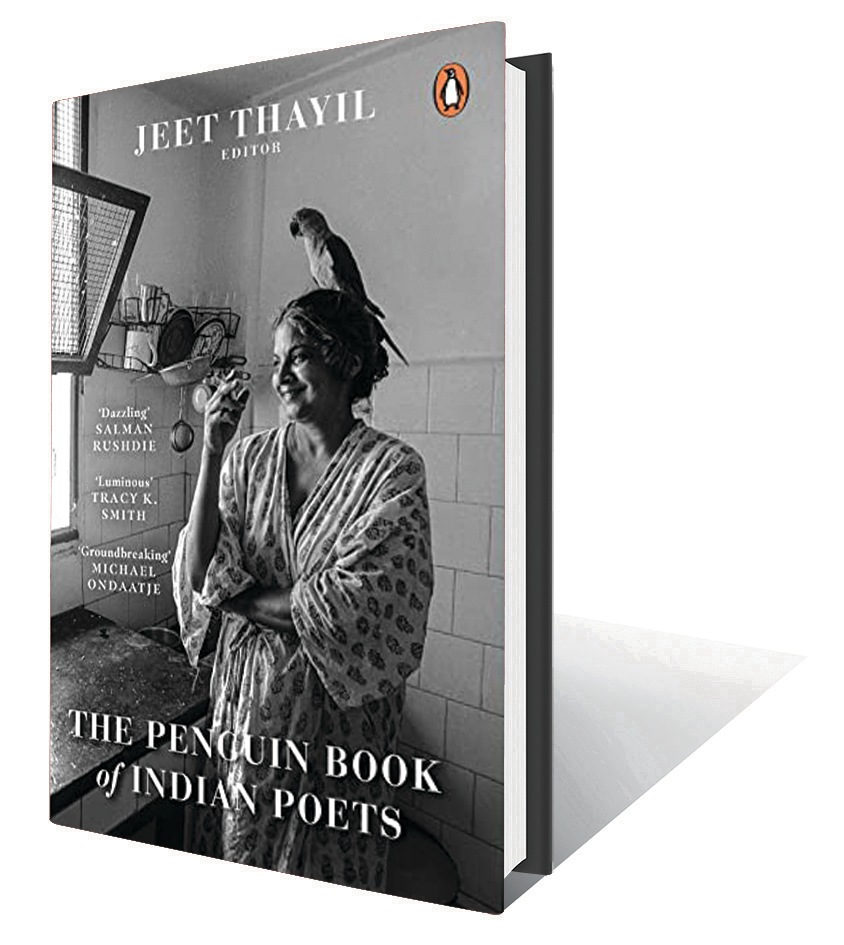
There are 94 poets in this anthology. Three quarters of a century separate the oldest, born in 1924, from the youngest, born in 2001. The dates are bookends to a movement’s unlikely coming of age. To demonstrate the range of and variety of Indian poetry in English after Independence, the anthology includes poets who live in places other than the urban centres of India. It returns forgotten figures to the centre where they belong, and it connects those who have never before shared a stage. If a chronological parade of poets is as arbitrary as the alphabetical, the arrangement in these pages bypasses those systems for the pleasures of verticality; a system of placement, or displacement that gives the reader a deeper understanding of how vast, how riverine is the poetry, and a profound sense of its undercurrents and vitality.*
*All copy from book flap.


