
 E-Paper



HT Picks: The week’s most interesting reads
Recommended reads include an account of India’s politics and culture, a translation of an auteur’s short stories, and an appreciation of the arts of the Deccan


LOOKING FOR THE NATION: TOWARDS ANOTHER IDEA OF INDIA BY MANASH FIRAQ BHATTACHARJEE
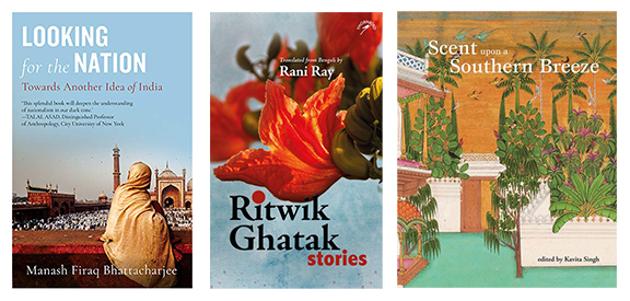
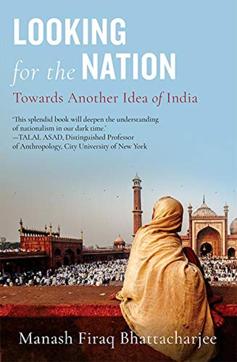
This urgent and compelling book comes at a time when toxic nationalism is causing the violent and systematic exclusion of political, religious, sexual and other minorities. Manash Firaq Bhattacharjee reminds us that the modern nation-state, built on fear and an obsession with territory, is often at odds with democracy, justice and fraternity.
Critically analyzing the ideas of thinkers who laid the political and ethical grounds of India’s modern identity – Nehru, Ambedkar, Gandhi, Tagore and Aurobindo – Bhattacharjee shows how we have strayed from their inclusive, diverse visions. He effortlessly weaves personal and intellectual histories, navigating through vast swathes of scholarship, to sketch a radically ethical imagination against the sound and fury of nationalism. He dips into fascinating anecdotes, recalling Ashok Kumar’s friendship with Manto against the shadow of Partition, Ali Sardar Jafri’s Jnanpith Award acceptance speech, and his own encounter with the Sufi qawwal, Fareed Ayaz, among others. Concluding with an enlightening genealogy of modern politics in the light of its present crisis, he exhorts us towards a new politics of trust.
Brimming with thought-provoking analyses and commentary, Looking for the Nation is an extraordinary and illuminating account of India’s politics and culture.*
RITWIK GHATAK STORIES TRANSLATED FROM BENGALI BY RANI RAY
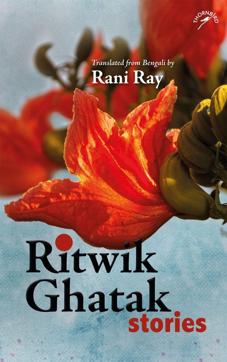
Ritwik Ghatak, the famous filmmaker, is known all over India and abroad for some of the greatest films made in India, which set the scene for future film making. But his short stories, works of miniaturist art in their own right, are less known. The stories collected in this volume speak well for themselves as much as they remind his audience of another facet of his versatility which was eclipsed by the more obvious virtuosity of his filmography. The stories reflect his protest against ‘the wickedness, villainy and oppression’ he saw around him, his romantic nostalgia for a lost El Dorado, his intense feeling for man’s natural environment the land, the sea and the sky. While the stories mirror the ethos of the tumultuous decade of India in the 40s, they go beyond that to reveal a vision of life that encompasses a compassion for human frailties and a deep commitment to humanism.
Deftly crafted, easily rivalling the best in the genre, these stories are not only a living part of his development as a creative artist — as a writer and as a filmmaker — they are also essential for an understanding of the totality of being that went into the making of his films.
The volume claims our attention as an important addition to the Ghatak archive, as a substantial source material for any ongoing research on his films.*
SCENT UPON A SOUTHERN BREEZE; THE SYNAESTHETIC ARTS OF THE DECCAN EDITED BY KAVITA SINGH
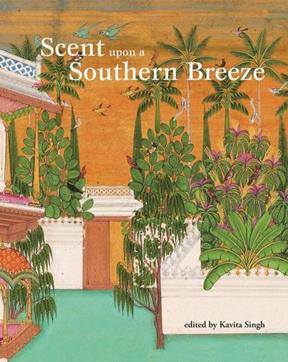
The arts of the Deccan remained understudied for a long while, possibly due to their complex and hybrid nature. This was a coveted region, and many powers fought over its control. What survives of its turbulent history allows us to reconstruct only a fragmentary record of what might have been made in the Deccan. Even in what remains, it is not always easy to put one’s finger on what is “Deccani” in Deccani art. Now, in the wake of global art history and its interest in travelling objects and hybridity, Deccani art is increasingly coming into focus. Scholars are bringing new insights to Deccani objects that bear the marks of mixed styles, trade and even damage and reconstitution.
Drawing from and going beyond the landmark 2015 symposium and exhibition Nauras: The Many Arts of the Deccan held at the National Museum, New Delhi, the essays in this volume explore the sense of wonder, ‘aja’ib, that permeated textile design, manuscript illustration and perfume production in the Deccan. Through Ragamala paintings and treatises on magic, perfumery texts and garden architecture, exquisite bidri ware and kalamkaris, the volume shows the way objects and texts can yield an understanding of how beauty was experienced in the past not just though visual means but though sound and smell as well. The book breaks new ground for a sensory turn in Indian art history. Visual objects become crucibles of synaesthetic experiences, as we look upon them with new eyes, or with more than eyes.*
*All text from book flaps.


