
 E-Paper



HT Picks; New Reads
On the reading list this week, the story of King Marthanda Varma of Travancore, a book on women’s anger as a harbinger of social change, and a masterfully constructed historical mystery set in nineteenth-century Lucknow

 Prefer HTon Google


Defeater of the Dutch

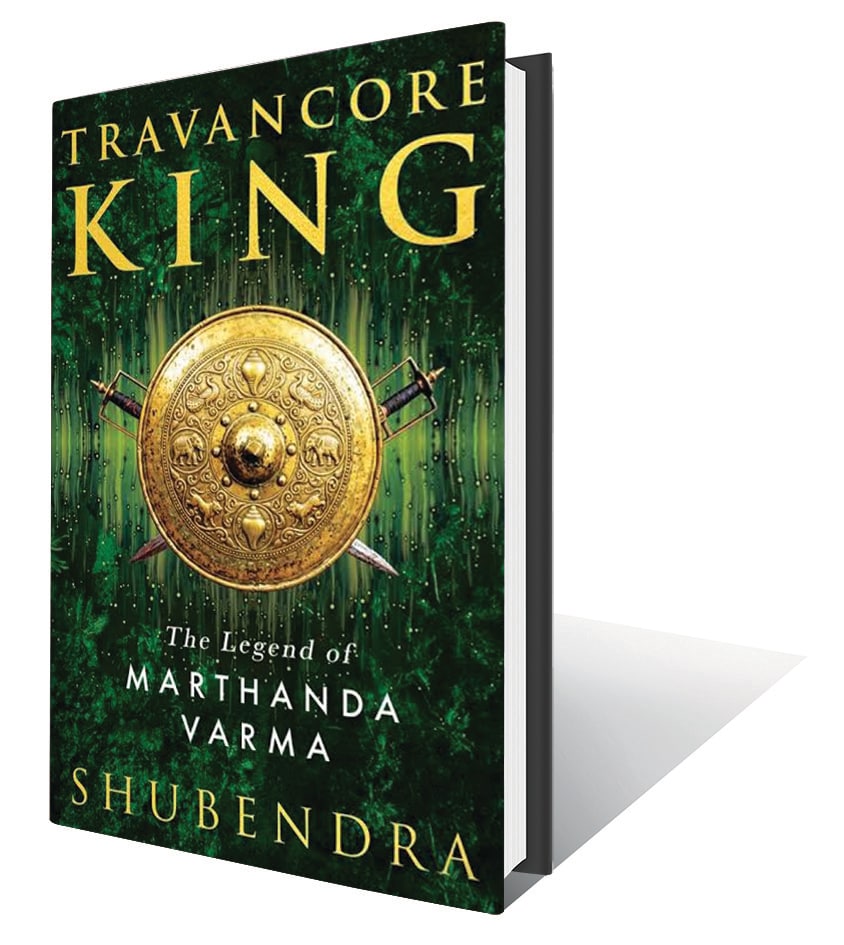
Travancore, Eighteenth Century. Crown Prince Marthanda Varma has been forced to take refuge in the forested outskirts of his kingdom to escape the dogged assassins in pursuit. His realm has been paralysed by a ruthless confederacy of priests and feudal lords as well as the Dutch monopoly on spice, rendering the royal family powerless. Armed with his wit and political acumen and accompanied only by a rag-tag group of mercenaries, Marthanda fights tooth and nail to reclaim his right to rule.After the death of his uncle, the puppet king, Marthanda ascends the throne, determined to rewrite the story of Travancore. With his faithful second-in-command Ramayyan and an enigmatic Dutch general by his side, he builds an army unlike any the kingdom has ever known and triumphs in a series of unwinnable conquests. Using a shrewd combination of military might and diplomacy, he forges a formidable empire – the jewel, and terror, of the Malabar Coast.But power is a potent drug and trust, a rare commodity. Surrounded by duplicitous allies, murderous rivals and the looming danger of English dominance, will the Travancore king’s thirst for glory and vengeance blind him to duty and honour?*
A case for female rage

Women are angrier than men. This is a statistical finding in India as well as elsewhere in the world. Yet, in a system rigged against them, women have historically not been allowed to claim their anger openly. Award-winning author Nilanjana Bhowmick’s Angry Women is a seething, blistering manifesto in favour of the modern woman’s right to anger.Blending biting humour and philosophical depth, Bhowmick shows how women’s anger is different from male anger that often rises out of the need to control, intimidate, and maintain the status quo. Women’s anger, on the other hand, challenges the status quo and is a harbinger of social change.Bhowmick interviews thirteen women from diverse socio-political backgrounds, whose anger has shaped the conscience of the nation. These include Fatima Nafees, the grieving mother of missing JNU student Najeeb; Beena Pallical, a firebrand Dalit activist; Lakshmi Kushwaha, a Jal Saheli who fought for water rights in arid Bundelkhand; Priya Malik, the internet’s darling spoken-word poet; Rachita Taneja, the mind behind the wildly popular Sanitary Panels webcomics, and many more.This book builds a resounding case for those branded ‘too much’ simply for demanding more out of life. It will compel you to re-examine everything you thought you knew about women, anger, and the fight for equality.*
The return of Detective Ghalib

Lucknow, 1829. The glittering capital of Awadh stands at the zenith of its splendour. Its poets are revered, its cuisine is exquisite, and its syncretic culture is the envy of the subcontinent. As the sacred days of Muharram draw to their solemn climax, thousands of mourners are about to gather beneath the soaring minarets of the magnificent Asafi Imambara.Among them is the young Mirza Ghalib, already a poet of renown, travelling home to Delhi. Invited by the great marsiya poet Mir Anees to witness Lucknow’s unparalleled commemorations of the martyrdom of Imam Hussain at Karbala, Ghalib expects an unforgettable encounter with poetry, faith, and history.Instead, he witnesses a man plunge to his death from the summit of the Imambara’s towering minaret.Was it an accident? Or was the dead man a victim of a deep political conspiracy? As Ghalib is drawn into the mystery, he finds himself ensnared in a web of intrigue whose roots run deep into the heart of the Nawabi state. There are powerful men with much to lose, and they will stop at nothing to ensure the truth never comes to light.And the body count keeps on rising.Drawn ever deeper into a labyrinth of intrigue, Ghalib must navigate a city where loyalties shift like shadows and every alleyway conceals another secret. From opulent imambaras and colonial mansions to crowded bazaars and hidden catacombs, his search leads him to the highest echelons of power.And in the midst of it all, the East India Company watches from the margins, waiting to tighten its grip on a kingdom already living on borrowed time.Richly detailed and brilliantly plotted, Murder at the Imambara — the eagerly awaited prequel to Raza Mir’s bestseller, Murder at the Mushaira — is at once a masterfully constructed historical mystery and an immersive portrait of nineteenth-century Lucknow, with the monumental Asafi Imambara looming over its pages as a silent, brooding presence.*
*All copy from book flap.


