
 E-Paper



Interview: Akshaya Mukul, author of Writer, Rebel, Soldier, Lover: The Many Lives of Agyeya
How did this extensive literary biography on Sachchidanand Hirananda Vatsyayan (also known as Agyeya) happen? What drew you to his works and life as a researcher? I have always been fascinated by Agyeya’s life and works

 Prefer HTon Google


How did this extensive literary biography on Sachchidanand Hirananda Vatsyayan (also known as Agyeya) happen? What drew you to his works and life as a researcher?
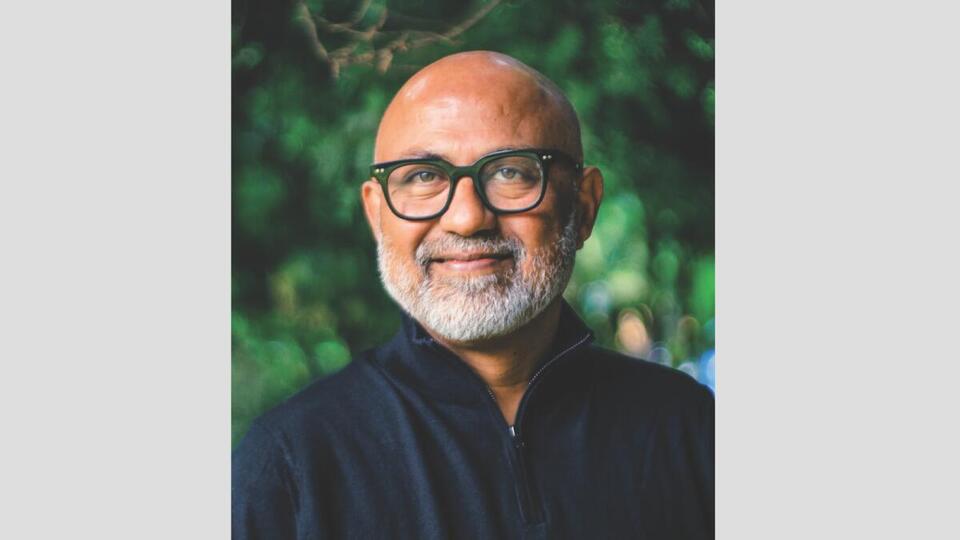
I have always been fascinated by Agyeya’s life and works. I first read him during my intermediate college years in Ranchi. In 2011, I wrote a long piece on him in Crest, a sister publication of the Times of India. I found it intriguing that there was not a single comprehensive biography of Agyeya. There is one in Hindi written during Agyeya’s lifetime. But it has its limitations. The idea of writing his biography came from scholar Vasudha Dalmia. One evening, we were having coffee at the India International Centre discussing Agyeya and his times. I casually asked why there was no biography of Agyeya. Vasudha threw the challenge at me. Things fell in place quickly. By late that evening, she ensured I get access to Agyeya’s massive private papers. Journalist Om Thanvi then took over and helped me get custody of Agyeya’s papers in many trunks. If not for that meeting with Vasudha, I was fully invested in working on a book on Hindu nationalism.
How would you describe the research process for this book? Was it different from your previous or forthcoming projects?
The research process involved going through Agyeya’s private papers first. It took almost a year. His papers are comprehensive but to get the broader picture, I had to do many, many interviews and look at the private papers of Premchand, Nemichandra Jain, Shivdan Singh Chauhan, Jainendra Kumar and a few others. One striking thing about Agyeya’s life is myth-making, both by his detractors and his lovers. His revolutionary years, his army stint and alleged-CIA link is shrouded in many layers of myth. Unravelling it was tough but I found the archival records in Delhi State Archives, National Archives, Congress for Cultural Freedom records in Chicago University, Hoover Institution records in Stanford University and Rockefeller Archives in New York. It was immensely thrilling. Agyeya’s own papers kept throwing new facts at me about, for instance, his secret lover Kripa Sen and his deep relations with Balraj Sahni.
My previous book was a biography of Gita Press, a religious publishing house, at the centre of which stood two remarkable individuals, Hanuman Prasad Poddar and Jaydayal Goyandka. The basic tools of research do not change. I rely only on archival material and secondary sources.
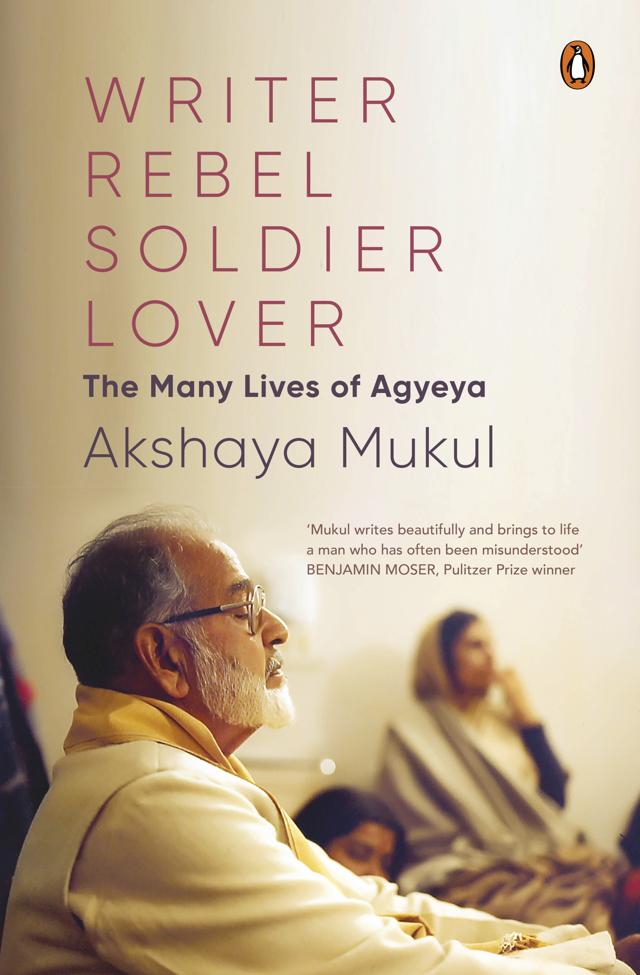
You have mentioned that you drew on diaries, dream journals and many letters for the book. Was there any one particular letter/diary entry that you encountered in your research which stuck with you that you can still vividly recall?
I have been a beneficiary of Agyeya’s meticulousness. He kept almost everything. His diaries have a graphic account of his dreams in jail. They were written on the back of court papers and within minutes of his dream. The dreams ranged from sweet, bitter and graphic to grotesque and scandalous. They were about family, sex, fellow prisoners and his own desperation to come out of jail.
There are many things that stood out which I will remember. Since you asked to name one particular letter, I will talk of Kripa Sen’s letters to Agyeya full of unabashed phrases of love and intense longing. She was an extraordinary woman, ages ahead of her times.
Which part of the writer’s life had you the most excited to research and write about?
There is never a dull moment in Agyeya’s life, right from his childhood. What excited me most were his university years in Lahore, his fascination for Physics, revolutionary and jail years, the process of writing his classic Shekhar: Ek Jeevani and his brief yet significant association with the CIA-funded Congress for Cultural Freedom. His complex relationship with women was a revelation.
You have also called it the “literary history of Hindi from colonial times to Nehruvian India and beyond”. Can you elaborate on this?
Agyeya was born in 1911 and came to the literary limelight in the 1930s, when Premchand first published his short story Amar Vallari in Jagran. With the publication of the first part of Shekhar: Ek Jeevani in the early 1940s, he established himself as the father of modernism in Hindi. This novel also brought him into the cross hairs of the Hindi literary establishment, which saw him as an outsider. The publication of Tar Saptak, the first anthology of modern Hindi poetry heralding nayi kavita, in the first half of 1940s, brought him in further confrontation with the dominant group in Hindi. From the 1940s until his death, Agyeya was at the centre of almost all the squabbles and factionalism of the Hindi world. The Left-led Progressives never liked him. This period encompasses a better part of colonial and Nehruvian India. Agyeya’s life, therefore, is also the literary history of Hindi.
The introduction to the book also mentions that Agyeya’s relationship with women “tended to be extractive”. Please explain.
Agyeya led an extraordinary life when it came to women. Unlike the majority of his peers who came from mofussil towns and kept their relationships under wraps or relegated their wives within the four walls of the house, Agyeya was open about his relationships. But what he did in these relationships tended to be extractive. Almost all the women he was in love with ended up being miserable. They were highly successful women with minds of their own who took care of him, gave up their careers, and did everything to make it work. Yet, Agyeya left them. Two of them, his lover Kripa Sen and second wife Kapila Vatsyayan, could never recover from the rejection. It was as if he was in search of something elusive. Some scholars think Agyeya was in search of a mother figure since he was never close to his mother. Whatever it was, I have great empathy for the women in his life.
In your opinion, which other Indian literary figures from the past are yet to be written about in such great detail? What steps should be taken to encourage more such writing projects?
There are so many Indian literary figures I would like to read about. In Hindi alone, there is a long list. Why do we not have a comprehensive biography of writers/poets like Ramdhari Singh Dinkar, Malyaj, Dharamvir Bharati, Upendra Nath Ashk and many others? Muktibodh, the most iconic poet, can be an ideal subject. There are so many shades in him and he keeps appearing in the private papers of his contemporaries yet we do not have an archive-based work on his life. There is a better tradition of biographies in other Indian languages but they are not available in Hindi or English. Lately, biographies of Hindi writers have started appearing but I think most of them are full of the biographer’s reminiscences of his subject. Also, in India, we tend not to talk ill of the dead and focus only on the good qualities. There is too much deification which makes biographies boring.
Which of Agyeya’s poems was among your favourites as you began writing this book? Did that change in view of the works you may have encountered during the writing process?
There are just too many of his poems that I love. It will be impossible to name one. During the writing process I grew closer to Agyeya’s poems.
The publication of the book was fraught with uncertainty given that it was originally a Westland title. How was the shift to another publishing house for you as a writer and has that shaped the present form of the book?
One fine morning, Amazon closed Westland. The book was all set to go to press. My friends Karthika and Ajitha were heavily invested in Agyeya and had done everything for the book. I am in eternal debt to them. In the uncertainty that followed, I had to take the painful decision of moving it to Penguin. Milee Aishwarya, Elizabeth Kuruvilla and Vineet Gill welcomed Agyeya with great love and care. This book has many makers.
What are you working on currently?
I am working on a biography of Jayaprakash Narayan.
Simar Bhasin is an independent journalist.


