
 E-Paper



Interview: Anees Salim, author of The Odd Book of Baby Names – ‘Humour runs on a parallel track’
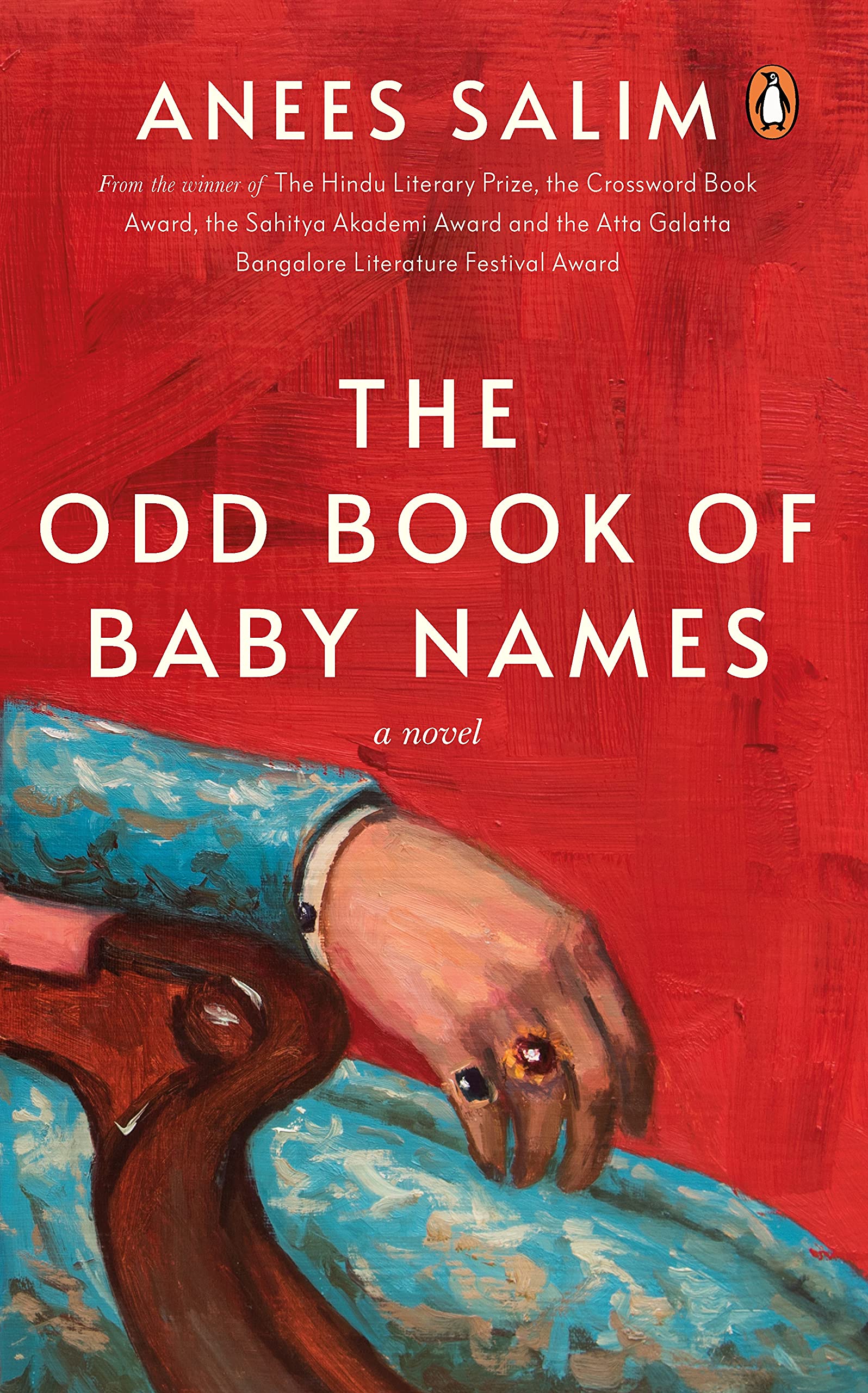
The Odd Book of Baby Names is your most inventive novel

 Prefer HTon Google


The Odd Book of Baby Names is your most inventive novel. The story, set in a big city, is told through the many progeny of a dying king whose kingdom has slipped away. Do you see it as a departure from your previous novels?
The book has been in the making for a long time. Even though I actually started writing it about three years back, it has travelled with me for far longer. Let me share with you the back story. There was a time in my life when I used to travel and wander a lot. I lived in many cities just to write books. Once, I met a taxi driver in a city; I have sprinkled the novel with a lot of clues about the identity of that city, but have not named it, just as I have not named the king — I have left it for the readers to surmise and figure it out for themselves. Living in that city, I was at the edge of penury. I was doing all kinds of odd jobs. I was a bellboy. I used to freelance. I also worked as a shop assistant. It was during this time that I met that taxi driver and made friends with him. He once told me that his father was a king. Initially, I thought he was bragging. But, later, when I started doing some research, I realised that this king in question was a great womaniser. He had 149 children. So, if you browse through history books, you might not find the number there, but he did father a lot of children. This triggered the genesis of the story that has kept growing in me all these years — that’s one reason why I wrote this book.
The second reason is that I have written five somewhat decent books (laughs) and for my sixth, I thought why should I write one more decent book? I thought I could experiment and be a bit more ambitious. I’m not answerable to readers in terms of craft, storyline or how easy the story is; that’s not my job. My job is to write what I feel. I write to calm myself down and I thought of going wild in the new novel. I thought of using multiple voices — it is something that I have always wanted to do. It’s not easy — you have to wear probably eight different pairs of shoes, and step from one person to another. But I want to be myself when I write. So, I didn’t want to do ‘justice’ to history. History can be anything; it can be my own way of writing about somebody. Being a fiction writer, I have the liberty to have my own interpretation of history. I have always been fascinated by the character of the king in the story — his eccentricities, his magnanimities. Probably, he was at once five or six different persons — sometimes kind, sometimes mad and sometimes stingy. He was everything a man could be in his lifetime. If it was a single-person narrative, it would not convey the layers of complexities of this character. So, I used different voices. Also, for the first time, I have got the ghost to do some talking — he is one of the narrators. I wanted my new book to be nothing like any of my previous ones. This story, too, demanded different treatment. Writing about the kings and palaces is something I have never tried before; the story is laced with a bit of fantasy and myth, with both being vital to the narration. Honestly, I decided to tread a different path this time not just for the sake of being different, but because I couldn’t imagine any other way to tell this story. Had I used any other narrative device, I may not have written it with the same conviction.
Are all the members of the king’s brood aware of their royal lineage?Most of them know, except this guy from the village, Zuhab, who doesn’t realise that he is living in his father’s kingdom. Everyone wants some glory from his/her father’s past, everyone is trying to get into that aura except for the two sons, Azam and Moazzam, who don’t like each other. Zuhab is completely in the dark about his father. That’s why, to me, he is one of the strong characters. He is uneducated; he ran away from his village when he was a teenager. A village boy, he has to be drastically different from the other seven people even though their language could be slightly similar as they have the same DNA. Even then, there is a variety. I make one offspring stammer while there is another who is always on the phone, wanting to get into the palace so that he can claim the diamond.
You seem to have retained your preoccupation with fathers and sons, present in your previous books, in this novel, too.
Every story that I have written has something to do with family, with the father being a prominent figure. Sometimes, he is in the backdrop, but he makes his presence felt. My next novel, The Bellboy, which will be published by Penguin Random House India next year, too, has a father figure. Sometimes, I don’t realize it, but it unconsciously creeps into my stories, probably because I had a very difficult relationship with my father. We almost never talked to each other. So, in a nasty way, it’s payback time. Or perhaps through my stories I attempt to mend our relationship, saying sorry to him for what I had done to him — by being disobedient or by being a rebel all the time. Maybe this is at the back of my mind when I write. I don’t think I can write outside the space of my family. All my books revolve around family and I wonder how people write books without family being prominent in it or with it being just in the background. In this novel, I also write about something that I have never experienced — the life of kings and palaces. In all its characters, including those of women, I find a bit of myself: The overwhelming sadness of Humera, the king’s daughter, is probably mine and so is the fondness for poetry of a character called Shahbaz, who pretends to be a poet. I think that’s what I used to do. Just as Humera knows that there are some things that you can never escape and Sardar, also fathered by the king, plays marbles even after he’s dead, I sometimes imagine that even after I die, I will keep writing from the grave. My characters are my reflections and I find myself even in minor and fleeting characters. My fears, my complexities always get translated into the characters I create. Hyder, the son who stammers, has something of me, too: As a child, I feared I would stammer when I grew up.
The deep undercurrent of sadness in your novels is always leavened with humour. How do you work on blending the tragic and the comic?
When I’m struck with sadness, I want to get off that and do something which will make me happy. Nothing makes me happy like writing. Often, when you are in the throes of sadness, you tend to be comical — humour runs on a parallel track. I see sadness and humour in unlikely things. If I am in a sad situation, there’s a smile inside me which I’ll never reveal: I find something really funny in grave situations. And, conversely, when there’s some festivity, I have found myself feeling the rush of a sad streak — even in the glitter, drums or lights I see some sadness trying to get out. This mindset has informed and influenced almost all my characters. In this novel, I have tried to limit the usage of humour. Wherever I have used humour, it is based on real incidents inspired by history.
How do you create such memorable and credible characters?
Characters keep cropping up around me. However, they don’t seem like characters to me when I meet them; they grow inside me. Sometimes, it is a singular image or a moment that proves to be the trigger. The protagonist of The Bellboy, for instance, is born from the image/moment of a guy being dragged away by the police. That’s it. When I started writing it, this was the only thing I had in mind. Then, I was reminded of a lodge in my hometown (Varkala in Kerala) where people used to come and die; they’d check in and commit suicide. It was then that things started to connect and a story was born. So, creating a character or a story is a natural process for me.
However, I still can’t write something that I haven’t experienced. In the city the new novel is set in, there were times when I was jobless and broke. I could see a lot of aspects and elements of the city from close quarters. I remember children begging for food and fighting with their parents; the latter were not bad, only poor and unable to provide for their little ones. These memories are deeply etched in my mind. After 20 years, that experience has helped me — the days of starvation suddenly bounced back and gave me structure. Hunger, incidentally, is one of my worst fears. Since I had to starve in the past, I live with the apprehension that people who are associated with me or dependent on me will have to face this too. There is a fear that someday banks will go kaput and people will be out on the streets, begging. So hunger has always touched me. I reach out to children when I see them without food — not in order to portray myself as a man with a big heart, but because I begin to imagine my kids without food and it makes me nervous and sad. I put my fears and feelings such as these into my characters.
The ideas and philosophies my characters espouse are rooted in my own personal theories about life based on my observations of people and places. I feel that no human being has a constant mind; it is subject to change. One’s mind can take any shape. My own mind takes many shapes. Zuhaab, the village boy who comes to the city, is my favourite character. His conversation is serious, his engagement is serious, but his language is not serious because he doesn’t know how to talk. Probably because he’s breathless, there are no punctuations in his sentences.
Does your next novel, The Bellboy, follow the familiar terrain of your writing?
The storyline of The Bellboy, set in Kerala, is slightly more intriguing, but not as complex as this novel’s. But, yes, it is written in my usual style in terms of the language. Most of my books happen in my head and this one, too, is in that space. Its 17-year-old protagonist lives on an island that is slowly sinking or disappearing and he finds a job on the mainland. He works as a bellboy at the place where people usually come to die. A witness to suicides, he begins to anticipate death in every check-in. Meanwhile, he also becomes a witness to certain crimes and accidentally gets embroiled in them. I loosely based this character on a real-life bellboy, who used to live in my hometown. We are almost of the same age and grew up together. Since I could gauge the depth of his innocence when the incident happened; the kind of crisis he went through was relatable to me. It will get published in the UK in September 2022 and later in India.
How do you look at Indian writing in English today?
I won’t talk about pulp fiction because much of it is vanity publishing. I wouldn’t do it and would never recommend that anyone do it. In literary fiction, good writing is happening now more than ever. When I started writing, people used to laugh at me because I was not from Oxford or Cambridge. I had dropped out of school at 16 and I built a library at home — that was my Oxford and Cambridge. I believe that all you need to become a writer is a good imagination, tenacity and good writing. Dedication is important. I can never imagine myself going to a university to get educated and writing a book. Had I received formal education, I probably would have been working in a bank. I do respect people with education, but education can restrict you, hold you back. Getting a scholarship and going somewhere and writing may be another way of learning to write, but it is something I can never imagine. Maybe that has got to do with my learning disability. At the MNC advertising company I work with, we have training programmes and workshops. After five minutes, I switch off. I fail to understand anything. Too much information, data or research findings confuse me. I tried to educate myself by teaching myself. Maybe that’s not the best way to teach yourself, but I rely on my books.
Nawaid Anjum is an independent journalist, translator and poet. He lives in New Delhi.


