
 E-Paper



Interview: ‘Each pain is relevant, meaningful’ - Adania Shibli
The Palestinian author’s novels delve into the anxieties of the Palestinians, and outline the tragedy, sadness, loneliness and desire experienced by their young women protagonists. Her third novel, Minor Detail, translated by Elisabeth Jaquette, was a finalist of the 2020 National Book Award in the Translated Literature category

 Prefer HTon Google


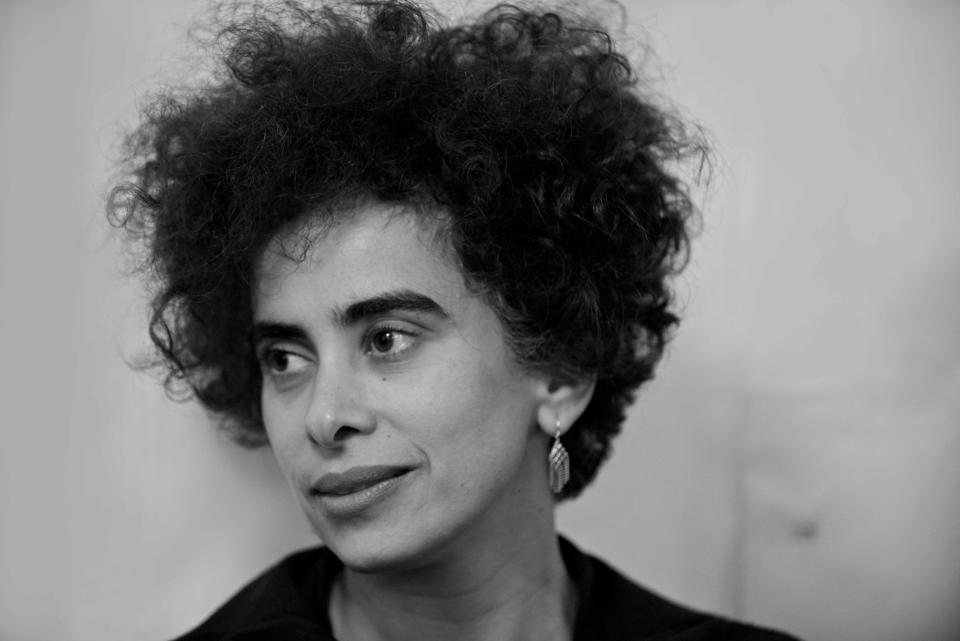
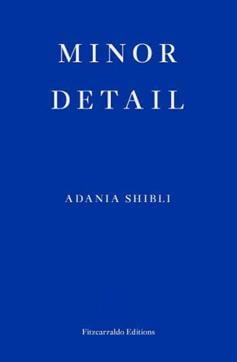
The Palestinian experience of violence, injustice and suffering, as well as its scenic but troubled landscape, form the core of all your novels. Did your third novel Minor Detail also emerge from your engagement with systemic linguistic, geographic and historical erasures?
The major force that brings me to writing is language itself — how our being is formed, influenced and experienced on a linguistic level. This experience unfolds on multiple levels, erasure included, but it is not limited to erasure; the unfolding of the Palestinian condition happens on a linguistic level, but it is not limited to that condition. Rather, it is any experience, (eg violence, injustice and pain, excess, lack of generosity, fear, inability) in any form, once it emerges in Arabic, even if this experience happens in other landscapes, languages, and forms. I am interested in knowing if our being can solely exist in the Arabic language.
Minor Detail — which begins with the rape and murder of a young Bedouin woman by Israeli troops in 1949 and then moves on to the obsession of a Palestinian woman, decades later, to investigate the stain of the crime — shifts between past and present, third person and first person, the real and the imagined, and the borders of past- and present-day Palestine/Israel. What was your thought process behind these shifts?
These ‘shifts’ are, in fact, a concern that is more pressing in the present novel I’m working on, or let’s say the force that brought me to writing it. In Minor Detail, it was more of what lies beyond our abilities, where past and present, third person and first person, the real and the imagined, and the borders of past- and present-day Palestine/Israel manifest that.
Why do you dwell on the quotidian and the mundane? Is it to show the everydayness of the violence that has somehow left the people you write about inured to subjugation?
I do not experience writing as a vehicle to press an idea, but writing arises probably also from the quotidian and the mundane. This I would say is the lived experience of language, as ideas are the conscious linguistic experience of languages, as a sort of indulgence in one’s own reflection. I am still to find a relation to this type of indulgence on the literary level. So far I can only have ideas and write about something in non-fiction; but that I tend to write in English, a language that my relation to has always been instrumental, unlike Arabic. This is probably because it demands an alteration of my position. It almost others me, and with this othering, my practice of writing is also othered.
Your prose stands out for its brevity and precision. Do you consciously work on silences and omissions, on leaving things unsaid, unwritten? How do you arrive at the form in your fiction?
Writing, for me, includes not writing — which words emerge, and which words decide to remain concealed. If we treat language as an entity — that it has its dynamics of collaboration rather than competition — it is only expected that what is written is formed by what is not written. As for the form of any work, this often starts as an inescapable question related to language, to literature, to literary forms, which haunts me and haunts me until it gathers enough words and anecdotes, then brings me to the moment where writing has to start.
You also seem to be fascinated by repetitions of words and recurring motifs. What do you think it helps you achieve?
Maybe this was the case in Minor Detail, but not necessarily always. I was haunted by the ability of the same word to be repeated by the same person in the same context, but with the difference of time, where it comes to mean something else.
Having been born there, what kind of a relationship have you shared with Palestine? How do you approach the ideas of home and family?
I do not see it as a relationship as much as a condition, which is still forming me on an intellectual level, and my literary and non-literary work. The ideas of home and family are ones that I’m not particularly busy with; in fact, I find them in their dynamics of inclusion and exclusion very problematic; the emergence of divisions on a micro level. But if we relate to them as our teachers of intimacy and care that extend beyond their definitions, I find them harmless to our perception of those around us and who are not part of home, of family.
Nakba, or the 1948 Palestinian exodus, has been at the heart of the Palestinian literature — from the poetry of Mahmoud Derwish to the fiction of Susan Abulhawa (Mornings in Jenin) — that is filled with love, loss and a constant longing for home. Do you see contemporary Palestinian literature continuing in that mould?
Maybe it is a naive approach, but I do not tend to form ideas about literature based on national categorisation, but seek intimacy with them through the language they are written in, and how such languages, if they are not Arabic, can have words in Arabic open to new relations with each other.
So, the criteria feels more in relation to what type of language, sentences structures, how they were lived and reached, more than the content. Pain, sadly enough, is something we all share, differently, because it seems pain prefers to materialise itself in our life in a different way each time; so we feel its painfulness more powerfully than before, but every and each pain is relevant, meaningful. Of course, it is not a question of our direct experience of pain, but the pain that reaches us and the ones that we reach.
What are you currently working on?
I normally work on several things at the same time, writing and non-writing. I write everyday; a day when I do not write, feels like a day that I have failed to live. This can be a short story, or a novel, a fiction or non-fiction, or just a line in my small notebook. There’s also work that I do which is non-writing, that relates to my engagement as a person in the world, with those around, with concerns and questions of others or that can be shared with others. This is my life in a form other than writing.
Nawaid Anjum is a freelance feature writer, translator and poet. He lives in Delhi.


