
 E-Paper



Interview: Priya Sarukkai Chabria, author, Sing of Life
Sarukkai Chabria says her ‘revisioning’ of Gitanjali by Rabindranath Tagore into the English-language poetry of her new book is a tribute to Gurudev

 Prefer HTon Google



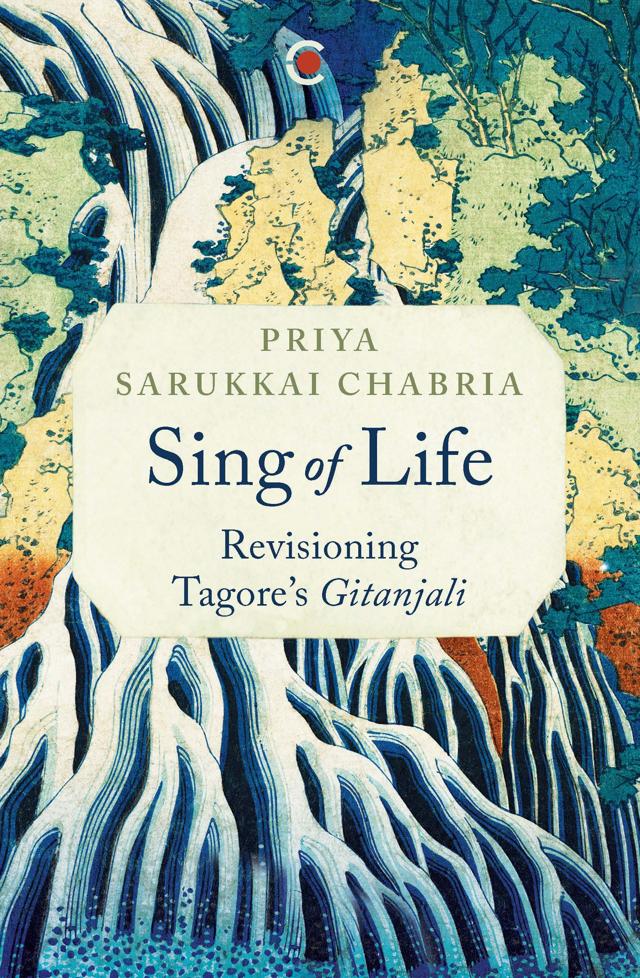
Sing of Life,Sarukkai Chabria’s ‘revisioning’, she says, was a tribute to Tagore that turned the English prose version of Gitanjali into poetry that resonated with her own sensibilities as a writer and poet. She retained the ideas and feelings of the original but pared and updated the language while arranging the words more freely on the page. Arguably, this practice resulted in a work that, besides being itself, also brings into sharp relief the notions of derivation, literary tradition in India, the linkages between poetry and prose and what these involve, and literary sensibility, among other things. Sing of Life also showcases many of Sarukkai Chabria’s traits as a writer: an engagement with Indian aesthetics, meditative attention to craft, and vivid experimentation.
Sing of Life comes after collections of Sarukkai Chabria’s own poems, a co-translation of Andal’s bhakti poetry, and spec-fic novels. Here, she dwells on the notion and practice of ‘revisioning’ Gitanjali.
What is the importance of Tagore’s Gitanjali in your life?
The subcontinent’s tapestry of mystical poetry has long woven through me since I translate bhakti poetry. It asks that we align ourselves with cosmic harmonies and sense the interconnectedness of all life. I situate the Gitanjali as a 20th century extension of such wisdom literature as it sings of the same landscapes of love, loss and longing, despair, beauty and transcendence.
Did your revisioning change the way you look at Tagore?
Of course! Years of one’s life go into each book so it’s bound to change one’s perceptions of existence and, indeed, of the author. Suffice it to say that when I began Sing of Life I was reading Tagore; by the end I was reading Gurudev.
Some Indians who idolize Tagore might not like what you’ve done here. You don’t have to explain yourself, but what would you say to begin a dialogue with them?
Fair enough.
When writing this book the world’s opinion had no place in my consciousness. I was in the Gitanjali’s thrall. The astounding original said: Enter! I did, to sing of life as an overflowing. Only when a fellow poet, who read an early excerpt, congratulated me did the enormity of taking on Gurudev’s Nobel Prize-winning work strike me. My experiment is an act of love; its writing almost became necessity for me. I admire VK Karthika, Publisher, Westland/ Amazon for her clear-eyed courage and vision in supporting me.
In the subcontinent, we are used to multiple versions of sacred texts in simultaneous circulation. I view Sing of life as an offering in this tradition. Besides, every 20 years or so, new translations and interpretations of the classics are written to enrich a new generation’s understanding and appreciation. Other than hymns used in sacred rituals, most world classics continue their spiral through time in this manner, which doesn’t mean that the originals aren’t read! They remain a source of inspiration.
What spurred you on towards revisioning this book?
Rapture.
Is there a Covidocene connection to this experiment?
Sing of Life wasn’t a planned response to the catastrophe. However, perhaps it resounds today with an added resonance and urgency. The Gitanjali rings like a gong struck on a mountain peak which travels through the smoke of pyres and our enormous and unnecessary suffering. It awakens hope, however remote that may currently seem, by presenting to us the parallel and porous universe of enchantment and sanctity. Here’s a poem from Sing of Life:
This is nothing but love
This light theseclouds this breeze
on my forehead Light floods my eyes bends
from above looksdown on my eyes
This is your message
I feel enormously grateful to be able to offer readers this book as a spiritual tool and aesthetic experiment, even if their respite is brief as the dawn cracking open the night sky. Because all of us want to alleviate the surrounding darkness and pain and this is what I can do as a writer: offer words that may give solace.
Tagore translated the Bengali Gitanjali into English prose. Have your experiences as a translator helped you in this re-visioning of prose into poetry? There are parallels. As a translator of bhakti poetry I also attempt to intuit essences that hover within the text or remain unsaid. The process is an act of faith and experiential, imbued by the living presence of the poem at every instance. I sought, similarly, the numinous creative substance of the Gitanjali.
You have unclasped Tagore’s feelings and ideas from their English prose syntax and turned them into poetry of this time, splayed and sprayed and floating on the page. What boundaries, if any, did you set between the revisioned work and Tagore’s original?
‘Revision’ simultaneously suggests two verbs doesn’t it? ‘Revise’ in order to strike a chord in the language of today; and, ‘re-look /re-present’, which is more radical, and indicates a deeper introspection or exploration of the text. Both meanings come into play.
Sing of Life is a tribute, so rigour and minimal intervention was my mantra. I did not add a single word of mine nor change the order of Tagore’s words, though his prose embroidery fell away. In a sense, Sing of Life is an excavation. Archaic pronouns, valid in Tagore’s time, were substituted with the colloquial. I also employ the present tense throughout.
Would you be open to having your work revisioned? Absolutely. I believe a poem that stays with one often serves as a draft or raft for someone else’s poem. Or that is how it should be: A spark or a shift in another’s consciousness.
Suhit Kelkar is an independent journalist. He lives in Mumbai.


