
 E-Paper



Lockdown Diaries: A certain powerlessness by Devapriya Roy
The truth about the life of a writer is that a large part of it is spent in quarantine anyway


Since I returned to teaching this January, trading the constant hum of writerly anxieties I lived with, for the youthful effusions of my undergraduate charges, my days in isolation are surprisingly busy. Our campus is closed but everything has moved online. Four days out of seven, I am in a whirl: I read student essays, send detailed emails, and prepare for class, which is at 11:50 AM on Tuesdays and Thursdays, getting out of my pyjamas into teacherly clothes and spraying perfume on my wrists as a joke. It makes my husband laugh. Afterwards, I speak to a few students who invariably linger on after the others have disconnected, their restlessness and anxieties and private sorrows reminding me of my own youth, quarantine or not.
Later, my colleagues and I have virtual meetings, sharing notes on how to navigate these uncharted waters of online teaching. We keep our cameras off. (During one such meeting, feeling very bohemian and domestic goddess-y, I had propped my laptop on the kitchen counter and prepped for lunch, chopping mushrooms and carrots, when I wasn’t speaking into the mic.). There’s quite a lot of laughter and camaraderie at these meetings too, before we all withdraw into the strange new quiet of our lives.
At home, I have colonized our guest room, setting up a dedicated space for my classroom at one end, upon the long low dresser, with my files and books stacked upon the bed in small piles. All the people in our lives who have claims upon this room, upon this bed – our parents, our friends and relations – are all in isolation, far away from us. Conversations with them are elliptical, mostly about what we are all eating and cooking – “Do you have enough dal and rice? Are you getting vegetables regularly?” My friend Esha called from Leeds: “The supermarkets are empty!” she said. My friend Amanthi called from Colombo: “I got lunch on the table at 4 today.” My friend Aditi calls from Nizamuddin: “There’s this place which delivers great vegetables and cheese. Do you need any?”
And through these conversations about food we communicate to each other the things we really want to say: Are you okay? Please please stay okay because there’s no way I can reach you where you are.
My students are all at home too, scattered across the country. Returning to their parental nests midway through the semester has made them more vulnerable somehow, as though they are strangers to themselves, their sharp college personas set aside for the moment. It is oddly endearing to me. In class hours, we find ourselves reduced to these flickering boxes on the screen, fading in and out, cameras turned off for better connectivity. On Tuesdays and Thursdays, when we meet, they give me all the news, what’s happening where they are: Indore, Jhansi, Mumbai, Rajahmundry, Lucknow, Surat, Chennai. It’s mostly gloomy. (The young have a far greater stomach for gloom, I have come to realize.)
On some days, there is an email from Nidup, the gentlest member of our class, who travelled back home to his native Bhutan as the global crisis thickened. He was placed in compulsory quarantine there, boxed into a room in a school, away from his family. On the days the uncertain internet makes an appearance in that schoolroom overlooking the mountains of Bhutan, Nidup writes a letter, and if there is a missive from him, I begin the proceedings by reading it out to his friends. It is as though we are all characters in a wartime novel. Then, eventually, once I have heard each of their voices at least once, we get down to the business of our writing class, the subject of which is – irony of ironies – the flâneur.
The truth about the lives of writers, of course, is that a large part of it, the actual writing of books, is spent in quarantine anyway. And so, for the writer I live with (my husband, Saurav Jha), who is finishing his magnum opus, very little has changed in this period of Corona-induced isolation. He reads and writes and does his share of household chores – the proportion of which has increased substantially – and worries about the economy, the subject of said book, and those currently crushed under the burden of its inequities. In the afternoon, when he wanders out of the study to look for me – perhaps, class has gone on longer than usual or I am speaking to someone on the phone, pacing up and down the hall – and I see him appearing, bearing a distant look in his eyes, it feels as though this is every other day in our life.
And so, in writing class, I tell the kids about the writing of books: it’s like a lockdown, guys. You have to get from one day to the next, and the uncertainty will be mind-numbing. There will be all these other things happening in the distance, but you will feel a certain powerlessness about it all. You will stay in and save yourself. You will finish the book.
They murmur politely at the other end.
*
In addition to class, where we last read Manto, on certain afternoons I have office hours with students. Sitting on the guest bed, I speak to them on the phone or on Google Hangouts, about their assignments. We have run into a predictable complication. What with the lockdown, they have no access to the streets or marketplaces or crowds, the spaces where, from Baudelaire’s time, the flâneur has thrived.
And so, in lieu of the actual thing, we read, we learn to go deeper – to rely on memory to recreate familiar worlds in prose – and we learn to improvise, turning the monumental disadvantage to an advantage. How about they ask their parents or grandparents, the people they are in lockdown with, about their flâneric tendencies? About the towns and cities where they grew up, of which they have specific memories? Why not bring in oral history?

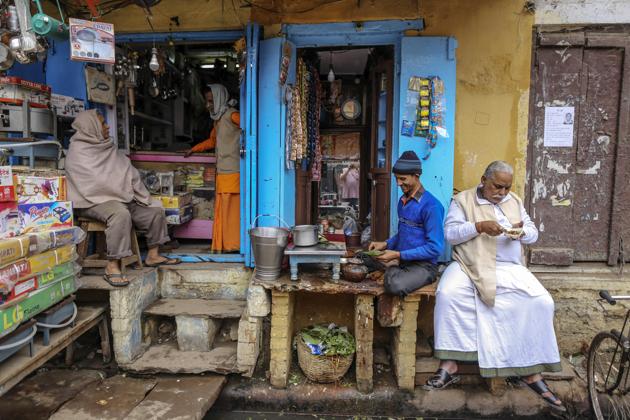
They dismiss the idea at first with the millennial horror of letting their personal and collegial lives come together any more than it already has – what, no! – and then, slowly but surely, they circle back to it. And so, at the end, our classroom comes alive with the specificity of epiphany – a record store in old Delhi, a paan wallah in Gurgaon, a photo studio in pre-Partition Mymensingh, a stationery story in Sadar Bazaar where a sixteen-year-old begins to work at his father’s shop. The past and the present come together; it is a portal to a parallel Covid-free world.
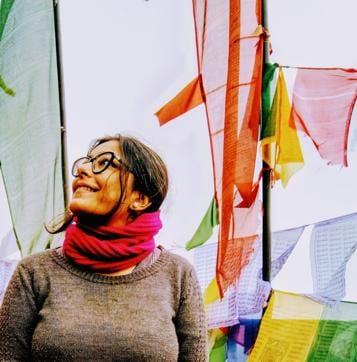
Devapriya Roy is the author of Friends from College and The Vague Woman’s Handbook.


