
 E-Paper



Lockdown Diaries: Standing still by Kunal Basu
The author attempts something he had never dreamt of doing before

 Prefer HTon Google


Silent mornings unsettle me. A million light bulbs go off inside the brain all at once, making it hard to focus. Once upon a time there was noise: the familiar cacophony of the street. Strangely, it was chaos that settled my mind, made it easier to listen to the master inside. Blanking out the non-essential, that voice told me to switch off the lights and leave just the lamp of authorship burning. Thus, the morning set out my daily routine of reading, researching, editing and writing. The master inside calmed my mind without fail. The lockdown has silenced the master.
Like others, I too fear freedom from routine. It carries risks, foremost the risk of wastage, makes me want to scramble and fill up my time. There is, of course, the fallback option of doing even more of the same, revving up the engine to be ready when the world regains its rhythm. Squirrel away a new idea, finish a first draft! – I have heard my own advice. But then, the lockdown would become trivial, I’ve argued back; it’d blend into the humdrum of life. Perhaps there is a way of making it special, fatten a permanent file in my very own archive. Could I let my quarantined self be adventurous, bold enough to craft a new history even? I have wondered.
The past is indelible, we’re told. But how about blurring the stains of a mistake? Like a failed friendship, soured by vanity or temporary blindness? Might the lockdown be turned vivid by a spectacular reunion? Names flashed through my mind, as I fiddled with the phone, then fiddled some more. With one such (ex) friend it’d be hard to slip back into our familiar stream, I knew. This had been the silliest of all partings, hence the most challenging to repair. I could hear the phone ringing even before I’d made the call, sounding off quite a few alarms. Predictably, we spoke at length about the lockdown, once we’d got over an awkward few minutes. About food and fuel, medicine and mistakes – not our own but of the state. Our civility stood in the way of coming within a mile of the bridge let alone crossing it. And thus, my experiment with the “past” failed as the lockdown remained in place.
Fiddling around with the present would be easier, I told myself, like steeling the mind to drop a bad habit. Authors are notorious for anxiety and paranoia, and publication of a new book brings out the worst in us as we shudder over imaginary enemies out in force to quash our love child. And so, we google, steel ourselves against prickly reviewers or the insolent gaze of a high-and-mighty editor. “You must learn to separate yourself from your creation” – a veteran author had once advised me. “That way you’ll enjoy your parenthood, happy in the knowledge that destiny henceforth shall care for your offspring.” Needless to say, I’d paid no attention to such new age mumbo-jumbo. Locked up at home, I thought this might just be the right moment to trust in mumbo-jumbo. For a whole week I practised restraint, got out of my poor publicist’s hair, refused to fret, raised my salute to destiny. It felt awful, I must confess – like a parent waiting indefinitely for the child to come home from a school trip. The lockdown made me realize the depth of my bad habit, as I sadly but surely lapsed back into unnecessary parenting.
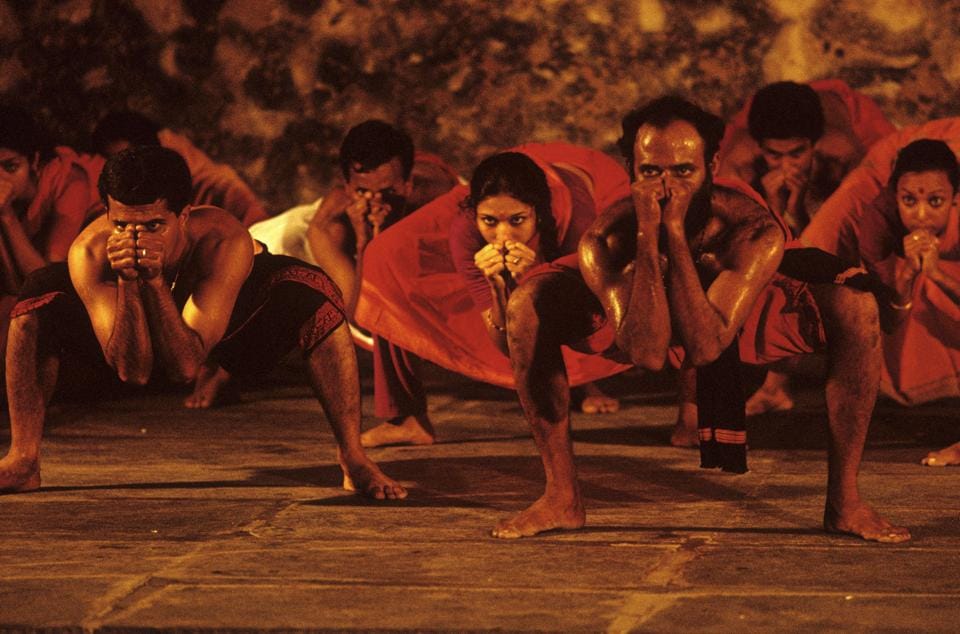
Somehow the future seemed more innocent than the past or the present, and the right canvas to paint the picture of a freshly reinvigorated self. Perhaps I might surprise others and myself by learning to do something during this lockdown that I’d never dreamt of doing before. Like the Bharatanatyam, perhaps? With trepidation, I approached Quora for an answer: “Is it possible for an adult to learn the Bharatanatyam remotely from home?” It didn’t take long for replies to come pouring in. “You can learn anything online,” replied one, “but to learn it well, you need to regularly visit a guru.” There were other cogent answers encouraging me to read books on the subject, like the Natyashastra and Abhinaya Darpanam. I didn’t wish to read more books, and turned to the most encouraging of the lot that led me to a site with a teacher who seemed to be waiting for just a neophyte like me. Offering a pleasant smile, she asked me to close my eyes in preparation for our first session. This was encouraging! Then, she asked me to stand still on my heels. Still on my heels! Is that even possible? Suddenly, I was aware of curious eyes on neighbouring rooftops – locked down creatures prowling about and turned overnight into raging voyeurs. Drawing the curtains, I resumed my posture and heard her lecturing on the 55 mudras and the 49 bhavas. My heels were aching, and reminded me of the freak injury I’d suffered some years back. The shooting pain also reminded me of the other danger: remembering the lockdown for precisely the wrong reason – pain.
The world will remember the lockdown – once it passes – for a myriad of reasons. Like a sailor lost at sea or a bunkered down victim of war, I searched for my personal remembrance. What an utter wastage it’d be, if I passed through these weeks (months?) like a revolving door, remaining the same before and after. Maybe I need to hold myself in lockdown even longer than the world, reconsider past, present and future as I stand still.


