
 E-Paper



Merve Emre – “Things should be read in as many different ways as possible”
At the Jaipur Literature Festival, the author of Paraliterary; The Making of Bad Readers in Postwar America spoke about the idea of the “bad reader”, the internationalism of the post-war period, fake news, and the role of the literary critic

 Prefer HTon Google


What was the driving force behind Paraliterary; the Making of Bad Readers in Postwar America?
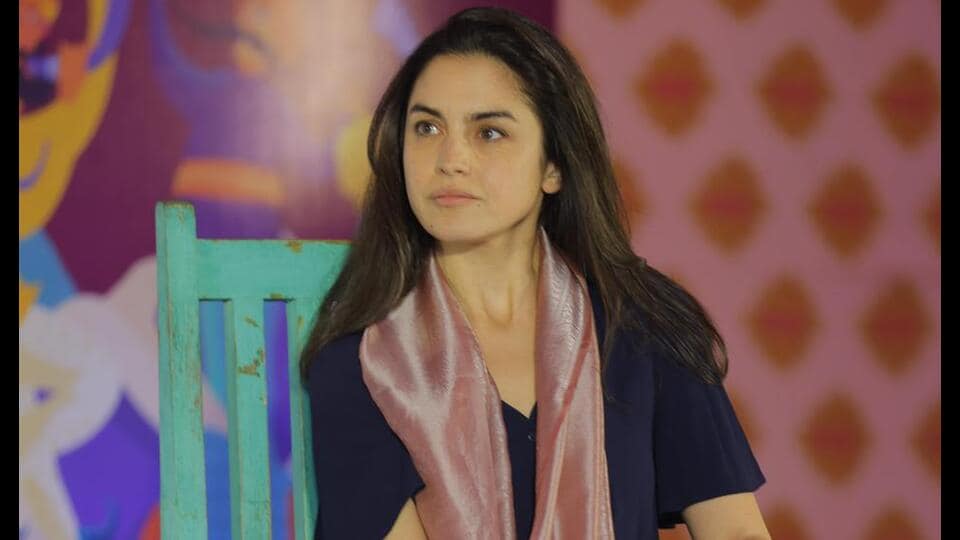
The book was my PhD dissertation. Which means it took a total of about five years to get from dissertation prospectus to book. The driving force behind it was a desire to understand how literature, specifically American literature, moved throughout the world and what kind of liberal imagination attached to that literature, particularly during the Cold War.
Through the book, you wished to highlight the conceptual category of ‘bad readers’ as paraliterary readers while simultaneously drawing into the conversation certain institutions of ‘literacy cultivation’ in postwar America. Can you explain this in detail?
So the term “bad readers” is used a little bit tongue-in-cheek. The argument of the book is that people, particularly within literature departments, have a certain image of “the good reader”, the close reader, the reader who reads in order to write an argumentative essay, the reader who reads dispassionately and without making strong aesthetic or emotional or ethical judgments of the work that they are reading. The idea of ‘the bad reader’ is the idea of a reader who reads with an entirely different horizon of subjectivity and by cultivating an entirely different kind of relationship with the literary object, which emerges as a mechanism for teaching readers how to speak in particular ways, how to feel in particular ways, how to consume in particular ways, how to build organizations in particular ways. So the idea of the bad reader not only inverts the way that we think about good reading within literature departments, but it also wants us to think carefully about how we could invert the relationship between life and literature, where literature actually allows us to cultivate different ways of being in the world. And those ways of being in the world then produce more literature that registers that cultivation.
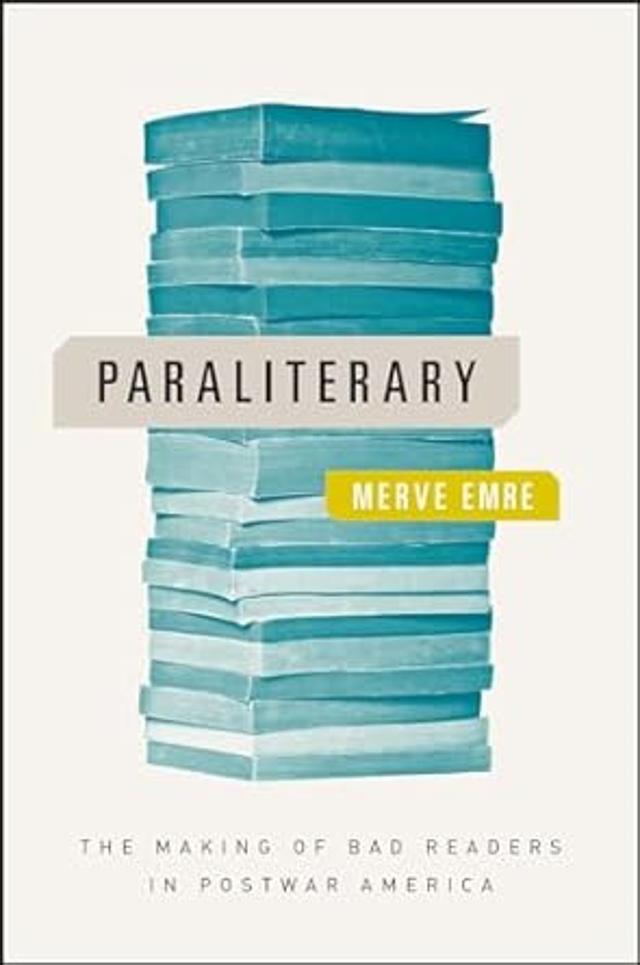
In your book you also lay out these paraliterary works as literary texts or documents that were “meant to be read as factual, historically accurate narratives”. How would you place these texts and their readers in the narrativization of the ongoing Israel-Palestine conflict? How can you connect that to how paraliterary texts are now constructing a certain version of what is going on?
I think maybe the better way to phrase that question wouldn’t necessarily be about Israel-Palestine. It might be more about the category of misinformation or fake news that has a much larger political orbit than just the current conflict in the Middle East. I think what’s interesting about the category of fake news or misinformation is that it fundamentally confuses the distinctions we tend to draw between fact and fiction. How do we determine what is a fact? How do we determine what is an illusion? What even is a fact? And to what extent are the realities that we believe we have in common parts of large narrative projects to get us to believe in the objectivity of certain things in the world? So I think that’s how the book speaks to this larger political moment that we’re in where all of a sudden it seems like we can’t really anchor ourselves to stable concepts of fact. It seems like anything can be fiction. And it’s a particularly postmodern dilemma, where everything is image and there’s never anything original that begat the image. And that’s a really interesting literary kind of question because that’s what so much postmodern literature is interested in. It’s interested in these characters that end up in these infinitely receding halls of mirrors where they can’t seem to find their original image. And that’s very much the media ecology in which we live now. So fiction gives us good ways to read that media ecology that perhaps the existing media tools that we have don’t.
This “literary socialization” which leads to the making of “a properly internationalized subject”, do you feel has also led to the acceptance of non inclusive terms such as ‘globalization’ or ‘cosmopolitanism’ which help to naturalize the hierarchies of the neo-imperial world order?
That’s interesting. No, I think the book is actually at a moment prior to the naturalization of globalization and neoliberalism because internationalism is different from globalization. Internationalism still recognizes the separateness of nations but understands the international subject as someone who’s capable of inhabiting both of those spaces without necessarily leveling the differences between them. Globalization or neoliberalism imagines a fundamental flatness that gets rid of the distinction that the international is really keen to draw.
And that’s why I think this is a book about the post-war period as opposed to the contemporary period because the contemporary period is marked by globalization, neoliberalism, by that flatness that I just mentioned. The post-war period is marked by internationalism and that’s a very different beast.
What are your thoughts on the ‘affective’ turn in literary criticism and do you feel this may destabilise the good/bad reader binary with its institutionalisation within literary studies?
Yeah, that’s a great question. I mean, like I said, I think the good reader-bad reader binary is a joke. It’s used in a tongue-in-cheek way because at least one of the chapters in the book talks about reading for feeling, reading for love. And it shows that the people who are reading for feeling, particularly in the mid-century, were some of the most respected literary critics of our time. Alfred Kazin, FO Matheson, Sylvia Plath. And the “affective turn” actually authorizes within the academy what people outside of the academy have been embracing and doing forever. So it’s interesting the way it tries to make academic something that is really quite democratic and something that is really quite popular. So the Affective turn has always interested me for this reason. Why does it have to be a ‘turn’? That’s such an academic phrase, isn’t it? Why isn’t this just the way that people read? What is happening when we import it into literary studies as a kind of paradigm? And why do we desire that paradigm? It means that we don’t feel good about what we’re doing, such that we want to be doing something different. I think ultimately what we don’t really want to admit is that the only reason literary objects exist is to give us pleasure. They only exist for pleasure. Everything else anyone claims they can get from literature, they can get from something else. But the reason that a novel is written is to give people pleasure. And because it’s often a source of pleasure for the writer to write it. And I think the Affective turn is kind of smuggling pleasure back in, but in this hyper-intellectualized language.
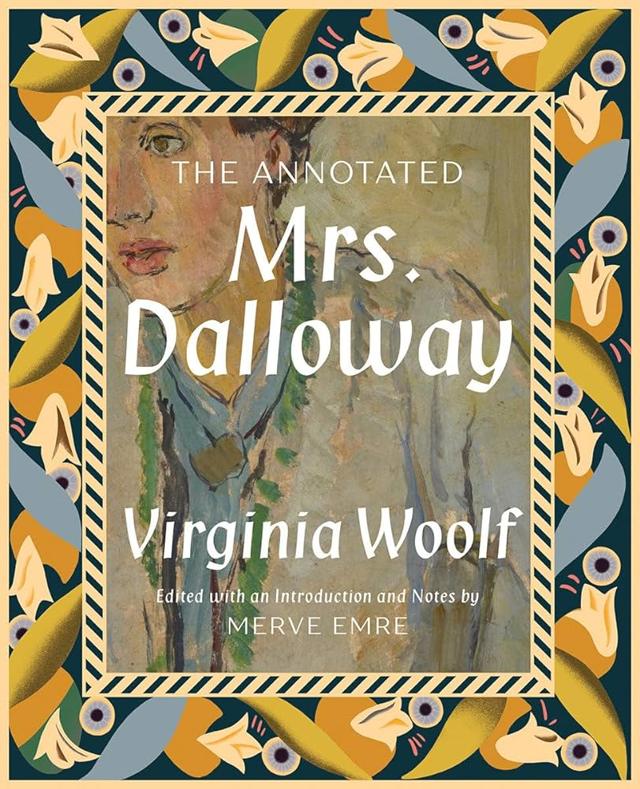
As an editor of an annotated edition for Virginia Woolf’s work Mrs Dalloway, what insights as an academic would you say you have gained about the act of reading?
Well, annotation is always an act of re-reading. So I think that what I have realized is that we can’t really think about reading separate from re-reading. And I have yet to articulate, and I have yet to read anybody who has articulated properly, what the relationship, or what happens when we read iteratively. We read once, we read twice, we read the same thing three times, we read it four times. What happens in our minds? What happens to the relationship between reading and pleasure? What happens to the relationship between reading and knowledge? For me, annotating Mrs Dalloway was the first time I felt like I actually understood how to be a reader. And I think it was because I was constantly re-reading and re-reading in so many different ways that all coexisted at the same time. That was what made me suspicious of any of these terms, which would seem to suggest that there is one way, one paradigm, one method through which certain things ought to be read. But of course that isn’t true. Things should be read in the most panoramic way possible, in as many different ways as possible. And all those different ways should coexist within us, in our minds, in our bodies, at the same time.
Your criticism and praise both have received attention from writers and readers alike. One writer in particular for whom you have expressed your admiration is Mary Gaitskill. What is it about her writing that draws you?
Oh, I love Gaitskill’s personal essays because they have an incredible sense of restraint. Her tone is quite cool. But that coolness comes bearing a tremendous amount of pain and a tremendous amount of vulnerability. And I think the way that she gives you this surface level coolness or hardness while also letting you know that underneath it is something raw and animal and violent and painful is absolutely extraordinary. There are very few writers who could do that the way that she does.
Any other contemporary writers who, in your opinion, deserve more literary attention?
I think the next Nobel Prize winner should be Gerald Murnane, who is an Australian novelist and is utterly, utterly brilliant. There is a fantastic English writer named Lars Iyer who is a genius, I think, and writes these fantastic academic satires. Brilliant. Very, very, very funny. So many academic satires tend to be set at Harvard or Yale or Oxford or Cambridge or whatever, but his are set in these kind of third tier universities in the UK that are full of kind of buffoonish students and have no money but want to understand what promise there can be to philosophy, to literature, to history in a situation that has none of the rarefied dressings of the elite Anglophone universities. And I think he’s brilliantly, brilliantly funny and brilliantly satirical at the same time. He’s wonderful.
What role do you envisage for literary criticism in the era of late capitalism where language itself has become deeply amenable to be used as an ideological tool for consent building through literature?
Well, I think that one of the greatest things a literary critic can do is to teach people how to draw distinctions between things. What is the difference between a first person and a third person narrator? What is the difference between a novel with a very large character system and a novel with only two characters haunting one another? What is the difference between a novel written in English that comes from Australia versus a novel written in English that comes from South Africa versus a novel written in English that comes from America versus Canada versus England versus et cetera, et cetera, et cetera? So the distinctions that the literary critic can teach people to draw can be formal. They can be aesthetic, the difference between a novel that pleases you, that gives you pleasure, and one that does not. They can be national, historical, contextual. And I think the challenge of literary criticism and the way that it avoids becoming an ideological tool of consensus building is that it keeps all of these different ways of making distinctions alive. And it never, never, never rests.
What writing projects are you currently working on?
I’m finishing a book called Love and Other Useless Pursuits. It’s a long literary history of love and specifically the relationship between love and learning. The argument of the book is that there is actually a canon of love that is also a canon of aesthetic education, a canon that teaches us how to find pleasure in literary works by analogizing the finding of that pleasure to the act of falling in love with a person. So that’s what I’m working on.
Simar Bhasin is an independent journalist.


