
 E-Paper



Exclusive | Agsy: Their is alot of misogyny in DHH, Female rappers have to work twice as hard to earn the same respect
Agsy critiques the sexism in Desi hip hop, emphasizing women's challenges in gaining respect

 Prefer HTon Google


Seven years after making her debut on Hustle, rapper Agsy returns to the music reality show this year as a Squad Boss. In these years in between, she has seen Desi hip hop (DHH) become a larger part of the Indian music conversation. Yet, the growth has not necessarily meant an equal playing field for women. “There is a lot of misogyny in DHH. That is a fact,” she says, pointing to the different standards female rappers are subjected to. “Female rappers have to work twice as hard and still not be as respected as the men out there.”
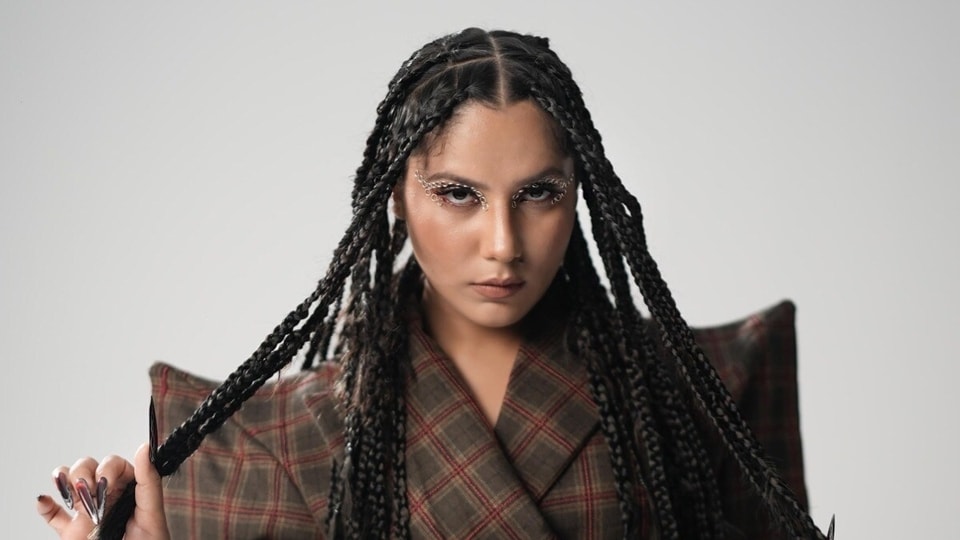
For Agsy, the problem is not a lack of female talent, but the expectations. “A male rapper can often be allowed to make mistakes, experiment or take time to find his sound, while a woman can find herself being judged much more quickly, not just for the music, but for her appearance, personality and the way she chooses to conduct herself,” says the 28-year-old, known for songs like Khal and VAN GOGH. She adds, “In any community, scrutiny is seen. Every action is noticed. That’s why they say that you have to work twice as hard and still not be as respected as the men out there,” she explains, adding, “There is a lot of misogyny in DHH. That is a fact. I had to work twice as hard. In so much detail, my audio, video, masters, quality of work, creating my own standard,” she shares. She believes the pressure extends to the way women are expected to establish their credibility. “It shouldn’t be that a female rapper has to prove herself ten times before people say, ‘Okay, she’s good,’” she says.
For Agsy, being a woman in DHH should not determine the kind of music she makes, and she wants the work to ultimately speak for itself. “I consider myself one of the best rappers in the country. No gender. And lyrically, the kind of songs that I have personally written previously, I feel that they are right there, up to the mark. But still people would not give me the same respect as they would to a male artist,” explains Agsy.
“The kind of songs male rappers have released and set precedence with, there has been a lot of objectification. So a taste has developed in DHH per se,” says Agsy, pointing to the way women have been represented in rap music. She elaborates further: “Already the kind of songs male rappers have released and set precedence, there has been a lot of objectification as well. So a taste has developed in DHH per se,” she says. This comes at a time when mainstream music has itself faced renewed scrutiny over the portrayal of women, with Guru Randhawa’s Fine Shyt drawing backlash for its lyrics and visuals, while Badshah’s Tateeree also faced criticism over its allegedly objectionable lyrics and representation of women.
With her return to Hustle as a Squad Boss, a show where it all began for her, Agsy says she sees it as an opportunity to pass on not just technical knowledge, but the confidence to stand their ground. “I would like to remove patriarchy. There is a lot in the desi hip hop culture. That’s a change I wish to see. Away from the male gaze, people can actually see the talent, which they ignore. They are like women are judged first on the basis of their looks and they are automatically mostly called cringe for even the smallest things that we do.”
With her journey, Agsy wants to challenge that narrative. “My core agenda coming into this industry is to change that narrative, to write songs that females can relate to, that they can grow up to, and be just their own unapologetic selves,” she elaborates adding that she hopes the next generation of female rappers can enter the space without feeling that they have to fit a particular mould to be accepted. “My agenda coming into this industry is to change the narrative write songs that females can relate to and just be their own unapologetic selves. I want to move away from the male gaze and remove the patriarchy in the DHH culture,” she says.


