
 E-Paper



Movies as endless commercials
Films are no longer just a catalyst to sell pre-existing product lines. Instead, as Barbie, Air and Flamin’ Hot show, they have become obsessed with mythifying the product itself

 Prefer HTon Google


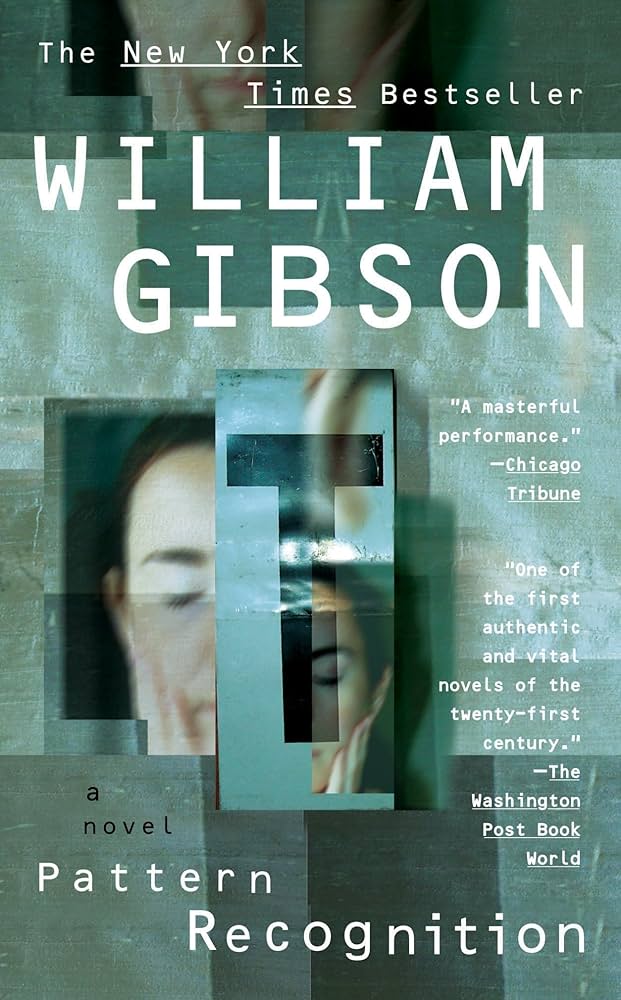
In William Gibson’s 2003 novel Pattern Recognition, the protagonist Cayce Pollard suffers from a curious allergy: to brands. So intense is her “morbid and sometimes violent reactivity to the semiotics of the marketplace” that she breaks out in hives at the sight of the Michelin Man. A Louis Vuitton bag triggers a panic attack. Tommy Hilfiger brings on fits of nausea. To manage such an acute sensitivity, Cayce rips off the labels and sands off the logos of whatever she owns. The irony is she happens to make a living as something of a brand whisperer. Or as Gibson calls it, a “cool-hunter,” who can find “a group behaviour pattern around a particular class of objects.” Meaning Cayce has an intuitive ability for predicting trends and determining if a brand has what it takes to be successful. In Marxist terms: if the brand can make customers believe it has intrinsic value in and of itself.
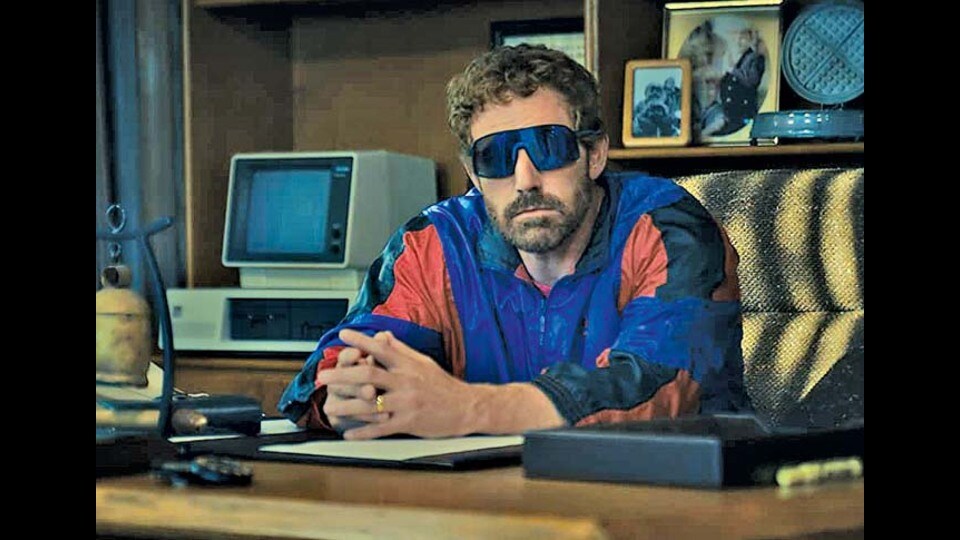
Now imagine if the book were set not in the early 2000s but today, where commodity fetishism has reached such extremes that our movies have become an endless reel of commercials. Imagine If Cayce had witnessed the marketing overkill for Barbie, a movie about a doll blown up to the dimensions of a billion-dollar blockbuster, she would have had a full-blown seizure. It is enough to make any of us physically ill. Barbies, Air Jordans, Beanie Babies and Flamin’ Hot Cheetos have all got brand extensions in the form of movies. Soon, Pop Tarts will get its own. From a cultural standpoint, it is as disturbing as consumer phenomena come.
Superheroes have had their moment in the sun for long enough. Now super brands get their own origin stories and get to luxuriate in mythic rhetoric. Poor old corporations, disenfranchised and villainised for so long, have arrived at the next stage of their empowerment: from corporate personhood to corporate stardom. No longer are actors the linchpin that ensures movies are marketable as commodities. While social media has democratised fame, corporations have monopolised entertainment. As a result, the bankability of movie stars has been superseded by the franchisability of IP. Consumers, by and large, have become less loyal to a movie star, more to a cinematic universe, a studio or a streaming service. Speaking of which, the disruptions of Netflix and Co have caused the creative industry of filmmaking to become so clouded that content and capital are elevated over craft. Storylines and product lines are merged for the sake of bottom lines. Actors have lost their lustre to brands.
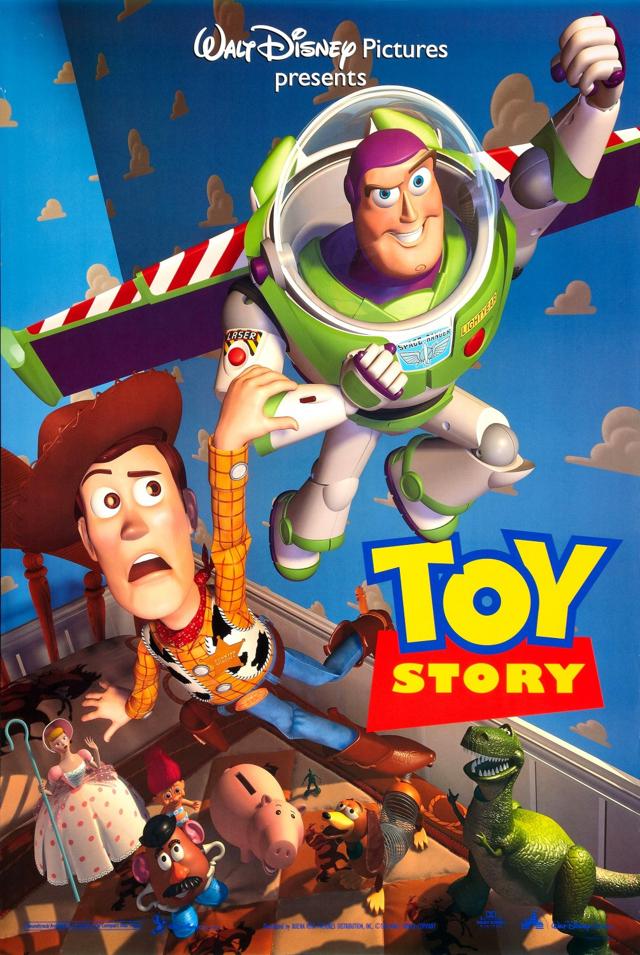
Not too long ago, movies came first, merchandise second. Children bought action figures of Woody and Buzz Lightyear, wishing to take home a material embodiment of their immaterial connection to Toy Story (1995). However, the cultural rethink of brands as stars has emboldened companies to change course. After all, product placement can only do so much. But what if the movie was not only a catalyst to sell a pre-existing product line, but a product in itself? Then, companies could expand their portfolio and their market with it. By venturing into film production with the Transformers movies, Hasbro was able to unlock a whole new revenue stream by attracting customers who may never have purchased their toys. Lego, in partnership with Warner Bros, was similarly able to tap into a whole new market beyond their built-in and pre-sold audiences. The box-office success of the Transformers and the Lego movies bolstered Mattel to create a new division aimed at developing movies based on their own brands. Now that Barbie has allowed the toy maker to break into Hollywood, much like the rivals it once lagged behind, Mattel is doubling down on its strategy with movies on Hot Wheels, Polly Pocket and Uno soon to come.
Exploiting nostalgia — whether misplaced or for a time you have never even known — has proven to be an effective marketing gimmick to reach out to the fabled inner child in every consumer. Never mind if a lot of these brand movies lull viewers into longing for a past through a lens that is way too flattering to be considered in any way truthful. Nostalgia fetishism is here to stay. As with any flavour of commodity fetishism, the ascription of “phantom-like” qualities to a doll or a shoe leads to an estrangement between the consumer and the human labour that produced it. The Ben Affleck-directed Air tells the story about how Nike managed to woo NBA rookie Michael Jordan to sign the sponsorship deal that launched the iconic Air Jordan line. Jordan (Damian Young), the marketing executive (Matt Damon) who signed him, the Nike CEO (Affleck) and the designer (Matthew Maher) of the Air Jordan 1 silhouette, are all turned into mythical figures. But the film makes no mention of the underpaid workers, mostly from South Asian countries, who went on to produce the actual shoes, often under hazardous working conditions. By hiding the conditions of the capitalist production, the film only further alienates the worker, assigning the value of the shoes instead to celebrity endorsement and symbols (the Swoosh and Jumpman logos). The only way to defetishise commodities is to encourage consumers to think about the social conditions involved in the creation of what they consume, and thereby, bridge the gap between them and the means of production. But it may be too much to ask of a movie produced by Amazon.

Guy Debord once wrote, “It is not just that the relationship to commodities is now plain to see — commodities are now all that there is to see; the world we see is the world of the commodity.” Nowhere was this plainer to see than in the marketing campaign for Greta Gerwig’s Barbie. For weeks ahead and into its release, it was an avalanche of pink. Barbie was everywhere: on toothbrushes, XBoxes, luggage, apparel, and all kinds of accessories. Burger King launched a pink burger. AirBnB recreated and rented out Barbie’s Dreamhouse in Malibu. Reports estimated the marketing campaign cost $150 million — that is at least $5 million more than its production budget. The film wears the mask of feminism to hide its true face of corporate-sanctioned revisionism. Gerwig anticipates and co-opts potential criticism of the doll into the film, enabling Mattel to profit off of its doll’s image overhaul. Like a doll coming into her own consciousness, the film is a plastic paradox: a bubblegum pink blockbuster from an indie filmmaker eager to abide by her feminist ideals while trying to get people to buy a doll criticised for perpetuating unrealistic ideals of femininity. The entire venture smacks of self-mythologising in service of brand rehabilitation, as if Mattel were ultimately a big-hearted cult, a force of good and nothing more.
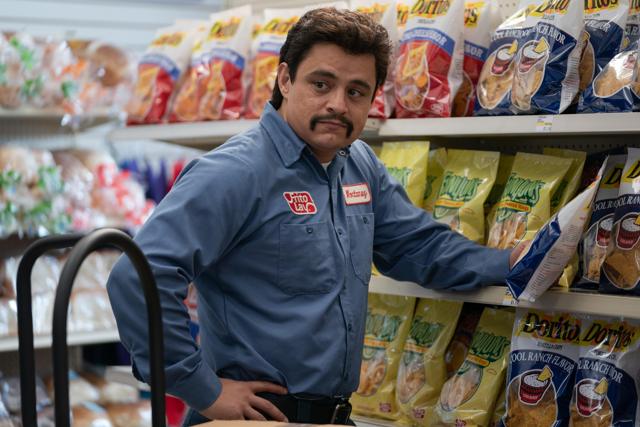
Where films like Barbie use the brand as a springboard for original visions, others like Air foreground the brand’s origin story. The latter kind tends to add bells and whistles to the story so as to make it sound feature-worthy to the audiences. Air is a “moving story” about an “unbelievable game-changing partnership”; Tetris is “the incredible story of the most popular video game”; Flamin’ Hot is “the inspiring true story of Richard Montañez, the Frito Lay janitor who channelled his Mexican American heritage and upbringing to turn the iconic Flamin’ Hot Cheetos into a snack that disrupted the food industry and became a global pop culture phenomenon.” Only, Montañez’s story was found to be untrue and full of glaring inconsistencies by a LA Times investigation, five years before its release. Ostensibly, the truth doesn’t matter when what you are selling is not only corn puffs, but the founding American myths of bootstrapping and meritocracy. The corporate drama of a man making a rags-to-riches career jump from janitor to marketing executive is framed like an underdog sports movie. The same goes for Air, where we are expected to cheer for a company getting a whole lot richer in the climax like the Jordan-led Chicago Bulls had won six NBA championships. At the end of the film, the ‘where are they now?’ epilogue reads, more or less, like one long business report: Air Jordan made $162 million in sales the first year and brings in over $3 billion today; Michael Jordan makes $400 million a year from the deal; Nike co-founder Phil Knight has donated over $2 billion to charities. Not a word about its sweatshops and environmental footprint as you might expect.
Behind these brands are hero-entrepreneurs with big ideas to change the course of the world. Behind Ferrari was Enzo – the subject of the forthcoming Michael Mann movie. Behind McDonald’s was a savvy but sleazy man named Ray Kroc, who swindled two brothers out of their hamburger restaurant and turned it into an American institution. Kroc was the subject of the 2016 movie The Founder, which does one better than Flamin’ Hot by confronting its supposed creator’s embellishments, but stops short of reckoning with the subsequent costs. The result is not too different from eating at McDonald’s: all empty calories. On the flip side are cautionary stories like The Dropout and WeCrashed. Both series dismantle the cult of tech founders (Elizabeth Holmes of Theranos and Adam Neumann of WeWork) whose narcissism, greed and overarching ambition deluded them into thinking they could get away with anything.
Focalising Silicon Valley’s founding myths through its mythmakers is not a new trend. The Social Network (2010) painted anything but a flattering portrait of Mark Zuckerberg, a poster child for ruthless, uncaring capitalism. Steve Jobs (2015) did likewise to the eponymous cult leader in the guise of a tech genius. What separates the two films from the rest is the uncompromising scrutiny of their subjects who left quite a bit of wreckage behind the scenes. Acts of Shakespearean betrayal, parental abandonment, and sheer assholery were overlooked because we are so keen to enable geniuses. But both films ensured their celebrated geniuses’ professional triumphs didn’t hide their personal failings.
Before Jobs ushered in a tech revolution with the iPhone, another company had already gotten there first with the Blackberry — whose spectacular rise and fall got the tragicomic treatment in a recent film of the same name. The story of BlackBerry is a reverse shot of all the companies left behind and all the technologies rendered obsolete in a rapidly evolving industry. One day, you are the opening chapter in the book on smartphones. The next, you are a footnote: “the thing people used before they used the iPhone.” When Matt Johnson’s film begins, the office of Research in Motion (RIM) resembles a college dormitory of geeks who love Star Wars and play video games all day. Until hard-nosed businessman Jim Balsillie (Glenn Howerton) bullies RIM co-founders Mike Lazaridis (Jay Baruchel) and Douglas Fregin (Johnson himself) into taking over their company, making a prototype phone and hardselling it to the top of the world’s smartphone market. Success brings out the pathological egotist in Mike. But even as the suits start flooding in, Doug keeps his bandana on, embodying the hippier, dorkier tech subculture with its conscience still intact. When he needles Mike and Jim to acknowledge people beside themselves, he seems to suggest you can sell your vision without selling your soul.

To join the corporate establishment was once considered taboo. There was hue and cry over the compromise. But, as labour writer Hamilton Nolan noted a decade ago, “There is no longer a penalty for selling out. There is no longer a public censure that accompanies it. There is no longer an outcry within an artistic subculture when one of its members is fully subsumed by corporate America. The idea that an artist should preserve the sanctity of their work — that they should not allow it to be manipulated by commerce—is no longer considered a mainstream opinion. It is regarded as utopian, dreamy, unserious. The sell outs have lost their critics.” Selling out has indeed been rebranded as cashing in. Admittedly, when art has become product, movies have become commercials, brands have become stars, what we need is not more public shaming — we have enough of that as it is — but a cultural reset.
Prahlad Srihari is a film and pop culture writer based in Bangalore.


