
 E-Paper



Narayani Basu: “History is about real people and where they came from”
The historian on her biography of KM Panikkar that’s on the longlist for the 9th annual Kamaladevi Chattopadhyay NIF Book Prize 2026

 Prefer HTon Google


Of KM Panikkar, K Iswara Dutt noted that he was “one of the impossible men”. But he didn’t write a doorstopper of a book like you did, though you feel the same way about the man. Why is that so?
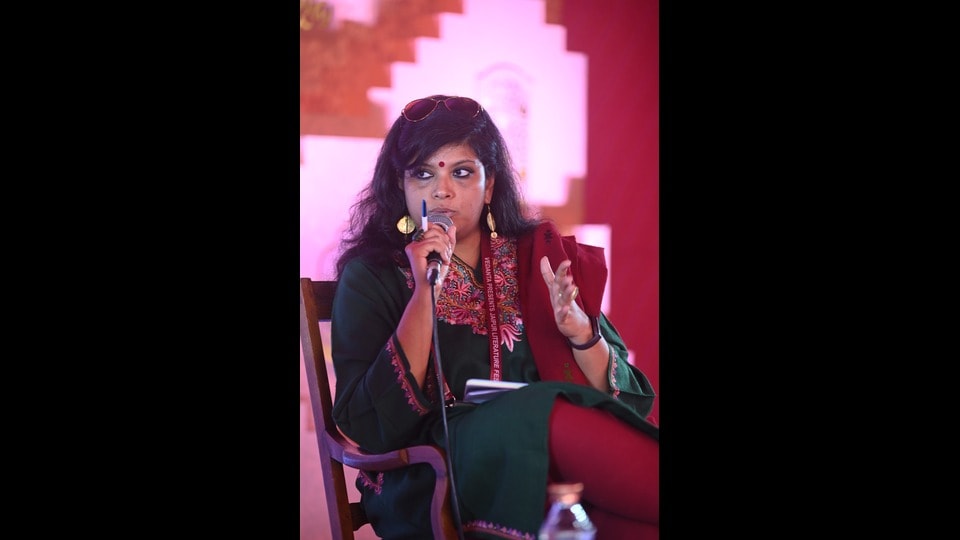
Because KM Panikkar is really hard to pin down. I’ve often been asked how Panikkar saw himself, whether as a scholar, writer, lawyer, or historian. I hate to answer for my subjects, but evidence tells me that he thought of himself as a thinker and scholar. From his Oxford university days until the end of his life, he was thinking about the country’s trajectory and what it means to be an Indian, and these questions remained central to all of his writing throughout his life.
By the time he was at university, he was reading obsessively. He ended up learning about unheard of models of governance — was that Bulgaria? Yet, you’ve noted that he thought he felt “inadequate” in understanding the gamut of things before him.
It was Hungary, not Bulgaria.
This admission was one of the touching things I read about when I was writing this book. Panikkar wrote this in his memoir, and that was in 1955, so he’s a grown man by now. Still, he looked back at the moment and thought of putting it down. That’s such a vulnerable moment. As a biographer, that’s what I seek, what’s at the heart of this person’s biography, which is also true of and is at the heart of history — human nature.
It’s at university that he not only begins to be encouraged to think but also to put that thinking into action. He came from a family where education was at a premium; he was privileged and had the best education you could get at the time. His household was an open one where intellectuals, writers and journalists gathered and talked about the freedom movement. But when he goes to Oxford, he discovers that there’s a world outside Trivandrum that’s influencing the national movement. Then, he finds people reading literature he’d never heard of, so it’s his intellectual inadequacies he begins to struggle with.
But that’s what I really admire about him, he always went back to the roots of things. After having admitted that he doesn’t know enough, he goes back to researching and reading, which he continued to do his whole life. He never stopped engaging with the past because he felt that it influenced the present a great deal.
As a biographer, you’re revisiting the past, highlighting significant historical events and associating your subject with them. Tell us more about this.
I had to be aware of the fact that Panikkar was growing up in a world that was fluid. Even his country. Nothing was set in stone at that point. Unlike now, it wasn’t clear who was left or who was right, and that’s despite the presence of the Hindu Mahasabha, the Communist Party, everybody, because it wasn’t clear what it meant to be Indian yet. The whole world is at a war, and your home country is seeking freedom, so there’s this ebbing and flowing as we move through the years that Panikkar lived, which is to say that he wasn’t functioning in a vacuum.
Just to keep things in perspective: he grew up in Kerala, finished his schooling in Trivandrum, went to Oxford, then came back to teach history in Aligarh. After that, he moved to the Hindustan Times as its founding editor; spends a couple of years in Europe, and in Paris, which was really the hub of dissidents across the empire. So, he had gained a variety of transnational ideas to push back against the empire. His varied experiences made him realise that India is set against a very wide canvas that would definitely influence the nation in the future. He was conscious of how these ideas can be braided together to represent the idea of what a modern India should be vis-à-vis the world.
Because it was a vast sea of ideas in which Panikkar was operating, I had to paint a picture for my readers to understand not only the national but also the international context. It wasn’t to overwhelm them with information, but contextualise things for them. Had I not done that, his story would have been colourless. I wanted readers to understand why he was thinking what he was thinking.
The introductory pages of the book read almost like a novel. This is unlike most history books.
My idea of history is to tell a story. I don’t believe in history being a list of random events, with all the dates one must memorise.
History is made up of small things; of jealousies, rivalries, egos, broken hearts, anything, everything. It’s not made by just wars and governments’ decisions. In order to write history, you have to bring the past alive so the reader can imagine it well, because history is about real people and where they came from.
With KM Panikkar, it wasn’t any different. If you read all of his fictional works, Kerala has a huge presence. He loved the state; it was very dear to him all his life. He was very proud to be from Travancore. One can conjure a few images of Kerala of that time from reading Panikkar’s memoirs, in which he writes about going on a journey with his brother to Trivandrum on a boat through the backwaters — that scene is vivid in his memory after so many years, so it signalled to me that it meant a great deal to him. So, I had to describe and begin his story the same way.
At a debate at Oxford, Panikkar presented India as a largely Hindu nation. You note also that he was a supporter of the Zionist cause. But, as you say, these ideas were half-formulated at that time as opposed to now, when Panikkar would have been cancelled.
Cancelling someone is very easy; it’s easy to slot people into binaries. The 20th century was a fluid time; it was a time of great ideological ferment, with the idea of nationalism evolving. Panikkar’s works have to be read in that context.
Having said that, the idea of India as a Hindu country continues to persist throughout Panikkar’s writings. That, in itself, is an interesting trajectory, for he’s clear about India’s cultural and spiritual dominance over South-east Asia in particular. But it is not a territorial domination; it’s not muscular Hindutva. As India moves towards independence, he changes his terminology from ‘greater India’ to ‘farther India’, and this becomes problematic because, by then, the world is dominated by (a) the Cold War and (b) by colonisation. These terminologies are then insular and chauvinist. However, there’s a difference between chauvinism and supremacism. Panikkar was definitely a chauvinist, and I’ve said that in the book, but I’d say that his idea of Hinduism was inclusive; for him, it’s not an exclusive, homogenous monolith. I think that can be easily taken out of context today.
It was harder to write about the Zionist movement. His support for the Zionist movement was something that I found very difficult to understand. He became a supporter of the Zionist cause in the mid-1920s. We’re moving towards the Balfour Declaration then, and it’s not a flirtatious engagement with the cause; he was a secret supporter of the movement. He was having secretive negotiations constantly with the Jewish agencies throughout, even in the 1940s, even in the run-up to the transfer of power, and after that, when we are an independent nation and when Israel is being recognised, it appears that this was his secret agenda of sorts. I have written about that extremely factually because that’s what he did.
It’s interesting how Nehru stood by him despite differences.
That’s remarkable because both Nehru and Panikkar knew each other from the 1920s. They had a long association. Nehru appreciated Panikkar for his intellect and perspective with regard to foreign policy.
What I found interesting is, despite what happened in China, or with the States Reorganisation Commission, and the many problematic public statements on language and religion that Panikkar made, the Prime Minister was still willing to (a) give him the benefit of the doubt, (b) engage with him intellectually and with civility, and (c) still send him on important public postings.
In the archives, you can find Nehru being clearly annoyed and irritated when he recollects these negotiations with Panikkar, but that never showed in his dealings with him. That’s something that we don’t see nowadays -- disagreeing on positions yet being appreciative of someone’s intellect.
Imagine Panikkar got swayed by communist China. He even had lyrical things to say about Mao and Zhou Enlai. For Enlai, he says that his fingers were tender green onion shoots. It’s weird to be reading a sitting ambassador writing this way about the communist leadership of the time. He made grave errors in China that continued to haunt him for the rest of his life. Yet, in 1959, when there was this whole Lok Sabha debate about how Panikkar’s actions impacted bilateral relations, you had Nehru standing up to defend Panikkar. There was no question in Nehru’s mind to throw him under the bus. That kind of professionalism and accountability that Nehru showed are missing today.
On nationalism, Panikkar’s views are on par with Tagore’s. However, the former’s ideas don’t inspire much purchase among his own people. Why is that so?
With the passage of time, public recollection has fractured. Panikkar is remembered in parts: foreign policy and services will remember him as an ambassador; politics would remember him as one who led the States Organisation Commission; history will remember him as a historian, an advisor to three princely states; lawyers will remember him for his contribution to constitutional reforms. There’s no one image of Panikkar.
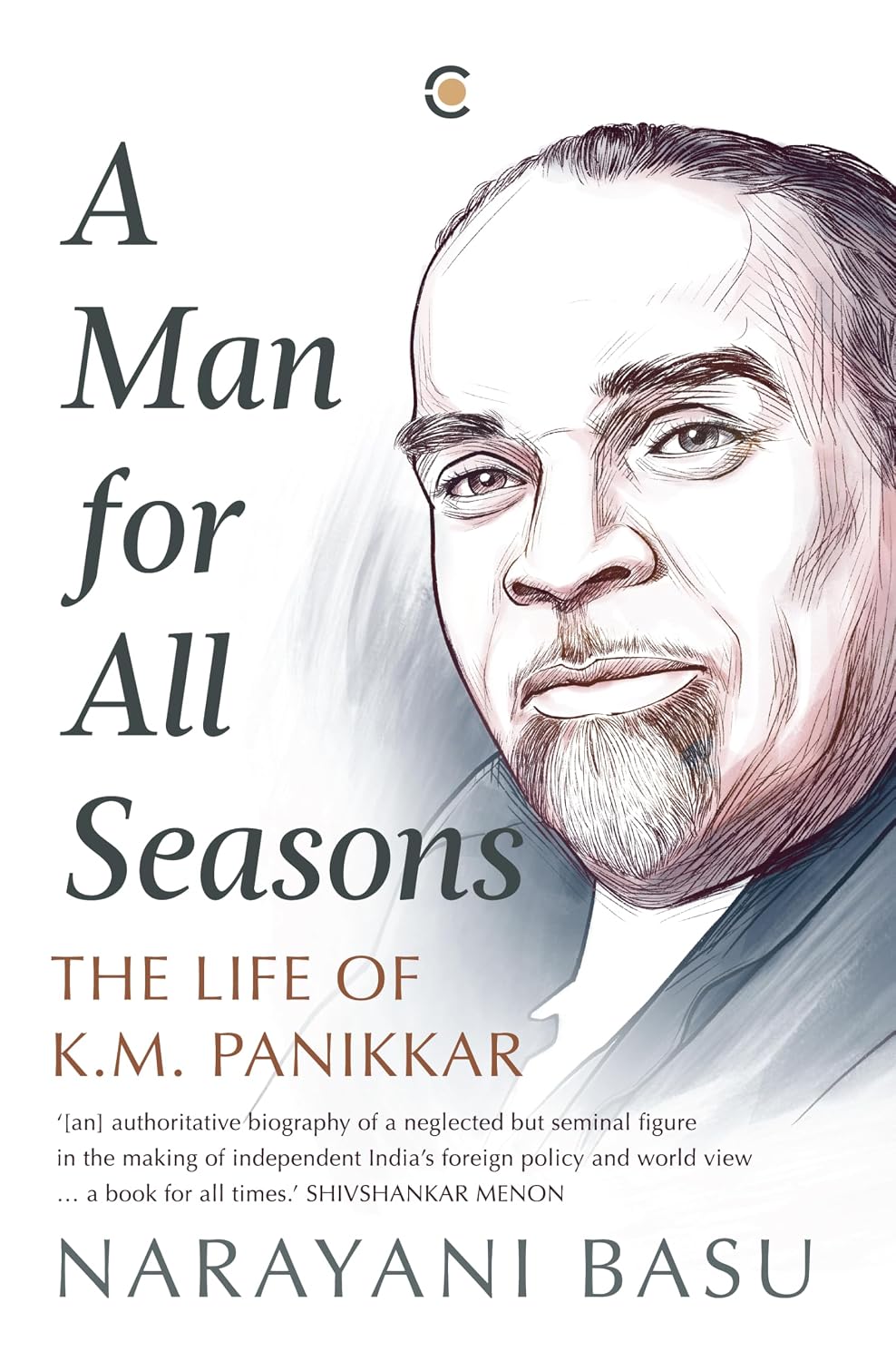
I don’t mean to say that mine is the definitive biography but it is true that no earlier book pulled together all of Panikkar’s works from his myriad roles, then distilled them, and put it all in one volume. That’s why I call him A Man for All Seasons, with the hope that my book will rectify that gap.
Saurabh Sharma (they) is a nonbinary, queer writer, essayist, and culture critic. On X: @writerly_life; Instagram: @writerlylife.


