
 E-Paper



Review: American Democratic Socialism by Gary Dorrien
This voluminous epistemological survey of American Democratic Socialism argues that democratic socialist activism is now surging as a new form of protest against global capitalism

 Prefer HTon Google


For many years right-libertarianism was too powerful in American life to let democratic socialism prevail, setting freedom against democratic equality. Braving all this, democratic socialists “founded the industrial unions and many trade unions, pulled the Progressive movement to the left, played leading roles in founding the National Association for the Advancement of Colored People (NAACP), founded the first black trade union, proposed every plank of what became the New Deal, and led the civil rights movement of the 1950s and 1960s.”

In American Democratic Socialism - History, Politics, Religion, and Theory, author Gary Dorrien argues that democratic socialist activism is now surging as a new form of protest against global capitalism that serves a minority even as it drives the planet to an “eco-apocalypse”.
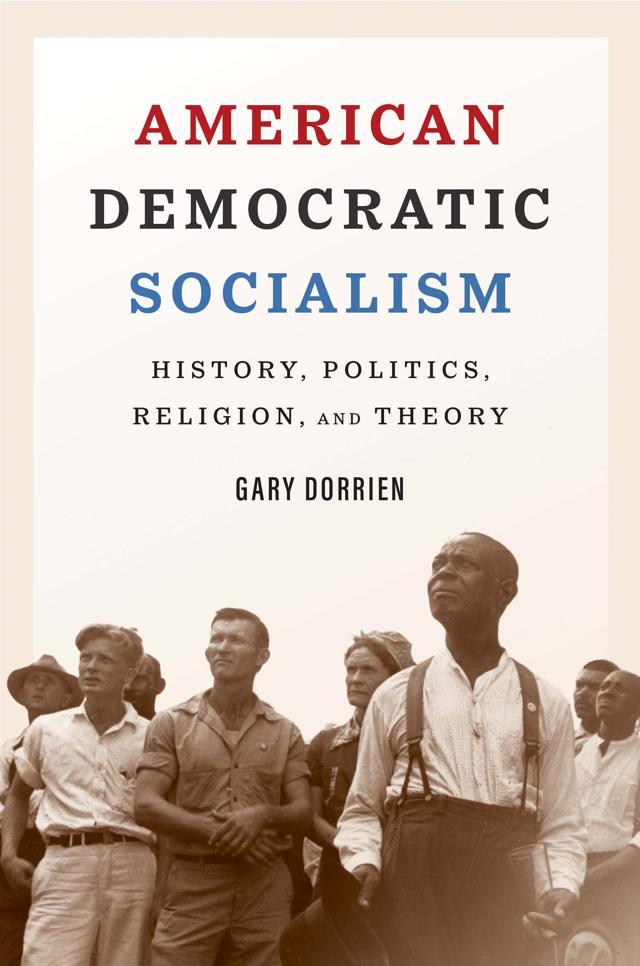
Indeed, American Democratic Socialism has been witnessing a revival, thanks to the electoral success of Bernie Sanders and Alexandria Ocasio-Cortez coinciding with the transformation of institutions like the Democratic Socialists of America from a 6,000 member entity with an average age of 68 in the mid-2010s to a 94,915-strong group with an average age of 33 in 2021.
An epistemological survey of the democratic strain of American socialism, this book attempts to negate the imposed perception that Democratic Socialism is hopelessly un-American. The author points out that Democratic Socialism in Europe has “created mixed-economy welfare states that extend the rights of political democracy to the social and economic realms” and has led to the state delivering health care for all and free higher education despite a lopsided wage system leading to economic inequality.
The American Democratic Socialist tradition, which is pluralistic, seeks to “Americanise Democratic Socialism by speaking the language of individual liberty, trying to build a coalition party of the democratic left, and grappling with American racism, cultural diversity, exceptionalist mythology, and activist religion”. Until the advent of Sanders’ libertarian socialism, religious socialism was a dominant trend. But the original socialist movement progressed alongside. The logic against severe inequality and the ecological destruction of the planet is unassailable. Dorrien argues with sociologist Max Weber’s words that no ethic of ideal ends belongs in politics, where only a realistic ethic of responsibility is appropriate.

A theologian who taught social ethics at Union Theological Seminary and Columbia University, Dorrien put in four decades of research into the diverse streams of democratic socialism in the USA. “Christian Socialism has been far more important in American Democratic Socialism than previous books on this subject convey,” he says adding that the project of Americanising Democratic Socialism waded through “religious, black freedom, and feminist movements lacking much history in Continental traditions of democratic socialism”. Despite his theological background, Dorrien is glued to the secular focus of American Democratic Socialism while aiming at the reversal of cultural denigration and exclusion, and the building of a peaceable and ecological society. “Democratic Socialists always opposed the ruling party-states of those societies, just as we oppose the ruling classes of capitalist societies,” he notes.
American socialists were indeed the harshest critics of authoritarian Communist states not only for their bureaucratic elites but for their denial of democracy, which was a feature of Bolshevik rule from 7 November 1917 to 31 December 1991. Dorrien quotes Morris Hillquit in the early years of the Stalin era: “The Soviet government has been the greatest disaster and calamity that has occurred in the Socialist movement. There were American Communists who could hardly build an identity.” Hillquit erroneously believed that if the Soviet government fell, American Communism would vanish. “Let us dissociate ourselves from the Soviet government and thereby make clear that the Social Democrats have no connection with it, bear no relation to it,” he prescribed.
Dorrien correctly points out that freedom was suppressed by Lenin who defended dictatorship under the Bolshevik party which was completely different from Marx’s “dictatorship of the proletariat”.

The author endorses Gramsci, albeit relatively (in contrast to Lenin, aside from Stalin) particularly on the role of intellectuals and the dichotomy between traditional and organic strands. “Traditional intellectuals legitimise the structures, myths, and norms of the dominant order even as they affect a certain interclass aura in the interstices of society. Organic intellectuals are radical thinkers who identify with the working class, know what working people feel and think, and criticise the bourgeois conventions of capitalist culture,” he states.
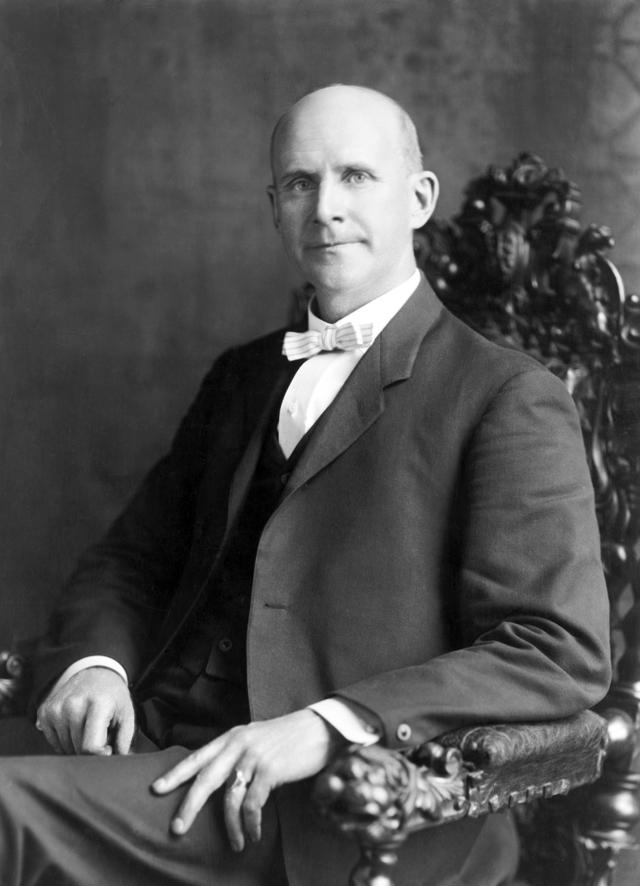
An industrial worker, Eugene Debs, who contested as presidential candidate for the Socialist Party in 1912 and got 6% votes was the harbinger of the fundamental Americanism of Democratic Socialism. Dorrien believes Debs’ romanticised view ignored the capitalist motives of those who established the frontier. Cornel West who comes much after Debs grew up in “a totally segregated world, very happily, absorbing the music, ethos, and rhetoric of black culture”. The Panthers taught him that politics should combine the best available theory with concrete strategies. Capitalist culture, West stresses, “bombards its youthful consumers with titillating images designed to stimulate self-preoccupation, materialism, and antisocial attitudes, corrupts them, and leaves most of them untethered, snapping fingers at profit-hungry corporations that overburden parents, bombarded by the market values - all ill-equipped to live lives of spiritual and cultural quality.” Capitalist postmodernity, he charges, is deeply nihilistic.
This voluminous 745-page book has chapters on radical democracy, Jewish universalism and social democracy, social gospel socialism, Communist trauma and Norman Thomas Socialism, cultural leftism, and one titled Breaking the Oligarchy: Bernie Sanders, Alexandria Ocasio-Cortez, and the Next Left, among others. It is a rewarding read that provides fresh insights into American Democratic Socialism.
Sankar Ray is a writer and commentator on Left politics and history, and environmental issues. He lives in Kolkata.
The views expressed are personal


