
 E-Paper



Review: Courtesans Don’t Read Newspapers by Anil Yadav
Written with wit and great moral clarity, this collection of five stories and a novella, translated from the original Hindi by Vaibhav Sharma, offers a crucial commentary on contemporary social fault lines

 Prefer HTon Google


Novellas and short stories have been around longer than novels and are known for their brevity and intensity. Novels, however, allow writers to explore the multiple complex dimensions of story, plot, subplot, and character. In this form, it is often difficult to make a character completely bad or entirely good; characters have to exhibit shades of grey. Though not a necessary precondition, the expansive scope of a novel encourages authors to think in this manner and to also offer sharp socio-political commentary.

Novellas and short stories present sharper moral clarity. They offer an emotional and intellectual continuum of experience, and can be read in a single sitting. Perhaps that’s why authors choose the novella when they have something pressing to present. Franz Kafka’s Metamorphosis, Joseph Conrad’s Heart of Darkness, Ernest Hemingway’s The Old Man and the Sea and, in Hindi, Bhisham Sahni’s Tamas and Uday Prakash’s Mohandas are all novellas. Courtesans Don’t Read Newspapers, the titular novella that is part of a short story collection by Anil Yadav is one more example.
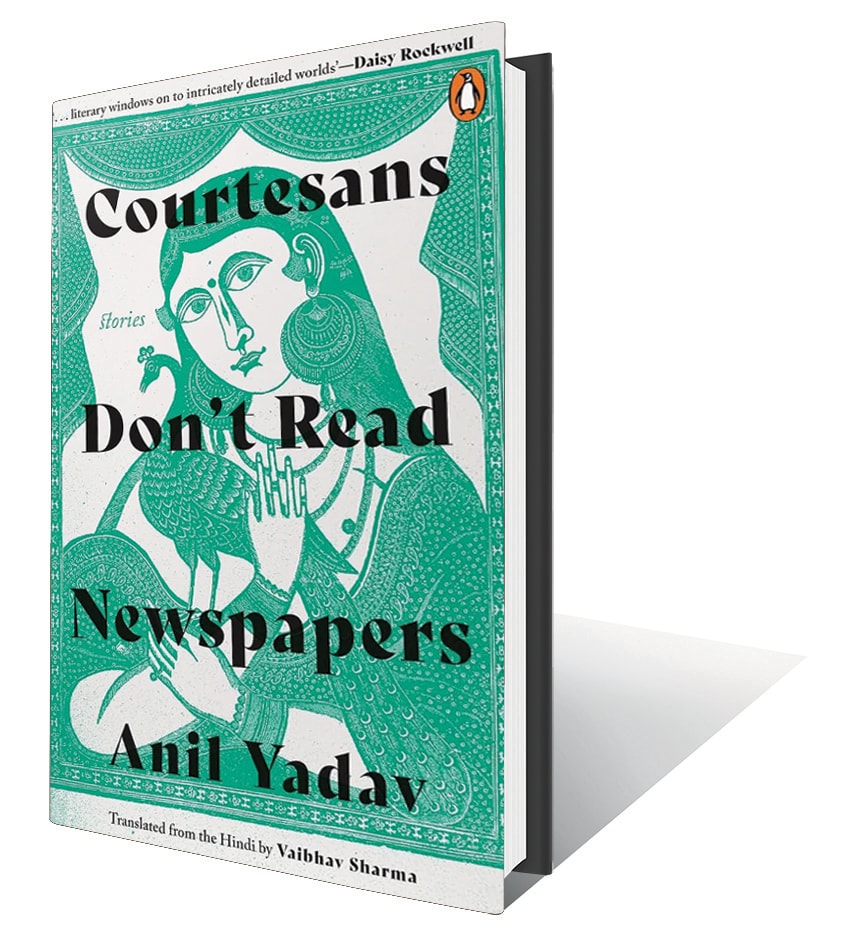
The author’s sharp style draws clear lines between right and wrong and his political sensibility and background in reporting find creative expression here. Through the lens of photojournalist Prakash and his girlfriend Chavi, Courtesans Don’t Read Newspapers tells the story of the courtesans of Manduadih in Varanasi. Rogue DIG Ramashankar Tripathi, infamous for allegedly killing his socialite wife Lovely, decides to salvage his public image by driving out sex workers from the city. Prakash sets out to tell the story of the sex workers and to question the shallow protests against them. But even though he gathers documents and has a major scoop on his hands, his story is rejected, as it threatens the newspaper’s interests.
Written with wit, the book not only offers a crucial commentary on the state of Indian journalism, it also looks at social fault lines. In one acute paragraph, Yadav writes: “A reporter’s blood and sweat mostly goes into the regular news items which help keep the paper running; the big news comes to newspapers and news channels on its own. Big news items fly about like sparks, born of friction between mutually opposing self-interests, and then proceed to die out on their own.”
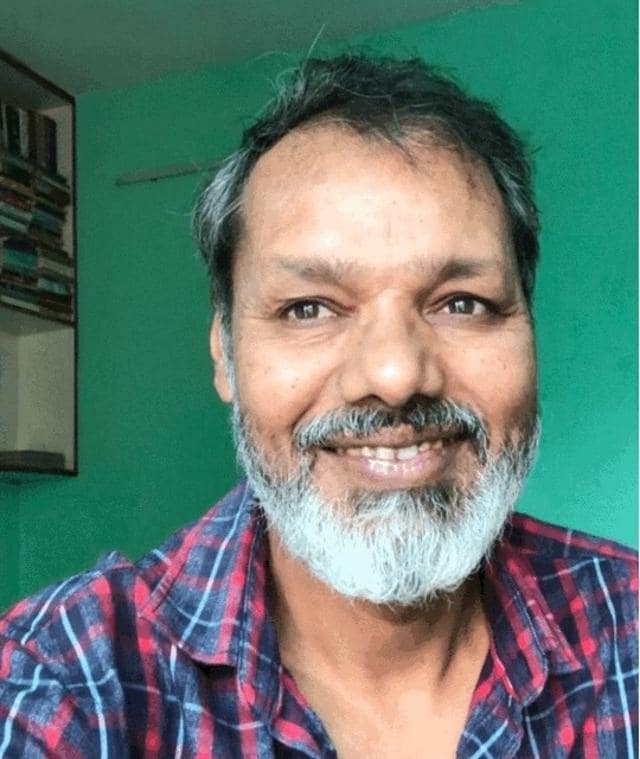
The collection includes five other stories. Another striking work that showcases Yadav’s understanding of the sociopolitical landscape of north India is The Folk Singer’s Swan Song, which follows Janam, a Birha singer once ridiculed for his voice, who later rises to political prominence. The author deftly delineates his character’s struggles with the growing influence of Bollywood songs, changing trends in Birha, and the duplicity of his caste fellows.
Lord Almighty, Grant Us Riots! is about the suffering of poor Muslim weavers in Mominpur, a Varanasi ghetto. The monsoon flooding, and the administration’s apathy makes them realise that the only way to draw attention to their lot is by rioting!
The Road to the Other World, which is about loss, childhood memories, grief, and affection is also exemplary. Translator Vaibhav Sharma has done a fine job of rendering Yadav’s writing in English, which could not have been an easy task considering it contains many regional references and words.
After Premchand’s Seva Sadan and Chatursen’s Vaishali ki Nagarbadhu, there have not been any significant pieces of Hindi fiction featuring courtesans. Earlier portrayals in literature and popular culture, especially those propagated by Bollywood, mostly focused on the demeanour of tawaifs, the respect they were accorded, and the social space that they once occupied. Writing on their current state was long overdue and Yadav does a great job of showing their impoverished lives.
In the Hindi literary sphere, the author is also known for his activism, and his outspoken persona. His rebellious streak and his bohemian lifestyle make him an impressive travel and fiction writer. It will be interesting to see if Yadav attempts a novel that explores characters that are morally grey, even when they are on the “right” side of the story. This is an intense and brilliantly written collection shot through with humour that makes readers devour it in a single sitting. Those who can read the original must do so. Yadav’s writing is even more impressive in Hindi.
Mayank Jain Parichha is an independent bilingual journalist. He writes about the environment, wildlife, culture, literature, and politics.


