
 E-Paper



Review: Fossil Free by Sumant Sinha
Our eventual freedom from fossil fuels will depend on the lightness of the carbon footprint of developing countries

 Prefer HTon Google


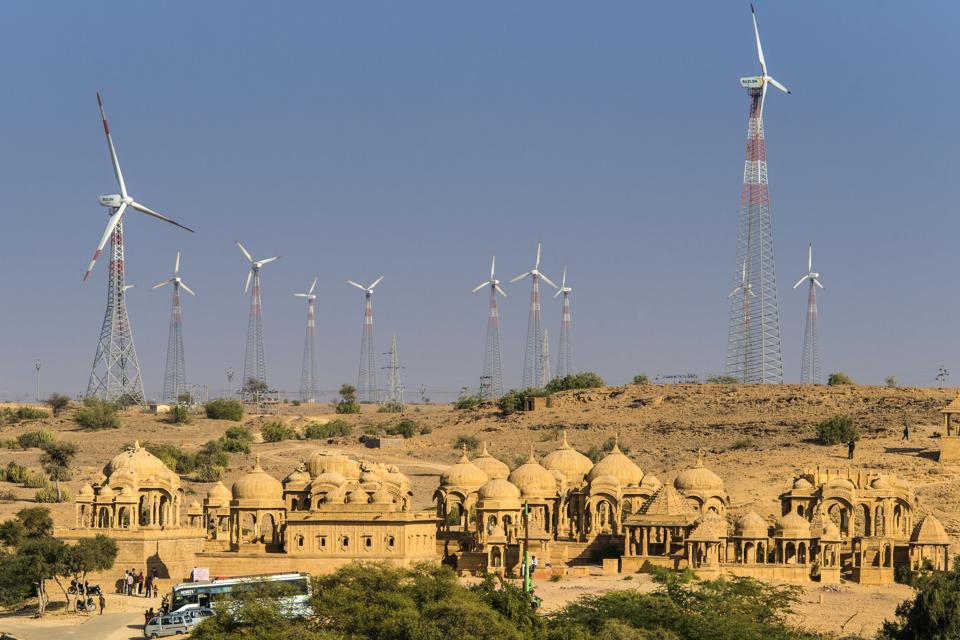
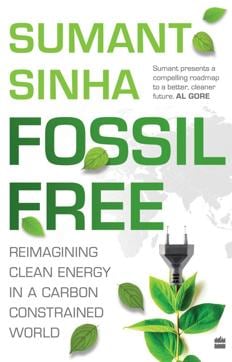
Within a decade, India has emerged as one of the world’s leading renewable energy powerhouses — and it can do a lot more. This is the main message of Fossil Free: Reimagining Clean Energy in a Carbon Constrained World. India had less than 20 megawatts of solar in 2010; today it has more than 90,000 MW of solar and wind installed. The message comes from Sumant Sinha, a renewable energy entrepreneur, who earned his stripes during this decade of transformation. Despite his significant contributions, Sinha tells the story objectively and makes the case dispassionately.
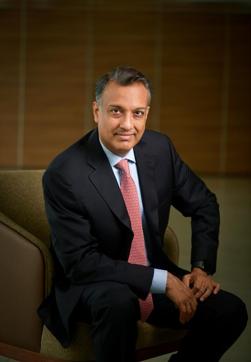
Sinha’s journey with renewables began in 2008 when he joined Suzlon. Two years later, he founded ReNew Power with equity backing from Goldman Sachs and Abu Dhabi’s sovereign wealth fund, among others. That year, India launched its National Solar Mission. With $5 billion in equity and debt, ReNew is deploying 10 gigawatts of capacity (5.5 GW already operational), the biggest wind and solar company in emerging markets (ex-China). Sinha intimately knows what he writes.
He traces a journey through energy and civilisation, lucidly describing three energy transitions. Two — the use of coal that ushered in the industrial revolution, and the use of oil that transformed transportation — were responsible for the climate crisis. Energy drives economic growth and our (unsustainable) lifestyles: Energy consumption in just the last 20 years has jumped 55%, even though the world population has risen only 25%. For India, where per capita energy use is still one-third the world average, energy demand will grow 70% by 2050, driving global energy growth.
This is why the third transition to renewable energy is critical to meeting the twin needs of energy access and fighting climate change. Sinha demonstrates why the sustainable development goal on energy has the strongest synergies with 16 other SDGs. There is no bombast in his exposition. He recognises the enormity of the task: it would take the world 26 years to displace coal and meet new energy demand with a renewables capacity of 15000 GW, two-and-a-half times the total global power capacity today!
The book’s strength lies in the vision of a “carbon-light future”. That might seem contrary to the title. Yet, seen from the perspective of an emerging economy, it introduces realism: eventual freedom from fossil fuels globally will depend on the lightness of the carbon footprint of developing countries in the near term. India shows the way. Although coal will remain part of its energy mix for some time, the brakes are pressing on coal power expansion. Even with transmission and intermittency management, renewables are now out-competing thermal power. Older plants are being shut down; India’s pre-construction coal power pipeline has precipitously dropped from 218 GW in 2018 to 36 GW now.
Steep change in the pace of renewables growth is needed. Big policy announcements (India now aims for a whopping 450 GW of renewables) and dramatic declines in tariffs based on reverse auctions (the lowest now is ₹2.36/kWh) are successes, but challenges persist: financial health of distribution companies, extension of transmission lines, grid stability, policy certainty (he assails tariff caps), and cost of finance (India will need $500 billion for renewables until 2030).
Moreover, solving for legacy issues in the power sector should not distract attention from four underexploited areas of innovation and growth. First, distributed renewable energy is a massive market (120 GW of solar rooftop is possible). Sinha bluntly blames discoms, which stall customers from selling excess power back to the grid. But, as CEEW researchers have demonstrated (in collaboration with discoms), there is positive economic value for discoms to enter the distributed energy market. This is a transformation waiting to happen.
Secondly, carbon-light growth would be impossible without cleaner industrial processes. Solar thermal could provide industrial heating energy up to a quarter of India’s current needs, he claims, creating a $6 billion domestic manufacturing market. Sinha calls for policy targets, capital cost subsidies and stronger pollution regulation to kickstart this market.
Thirdly, invest in energy storage. India will suffer gravely if it does not manage the “messy geopolitics” of critical minerals and counter China’s dominance in battery manufacturing (75% of all lithium-ion batteries). Sinha demands “rapid, proactive steps” to meet domestic demand of 50-100 gigawatt-hours of batteries by 2030 in India.
In the fourth area, he despairs “…we have missed the manufacturing boat” but is hopeful that, given India’s marketsize, there is still a chance. He rightly warns against the misguided use of import tariffs, which would protect inefficient industries. Direct subsidies for local manufacturers would be preferable to safeguard duties. Given his technologically-inclined mind, I would have liked more detail on the types of tech bets we could pursue for the next generation of manufacturing.
Sinha’s understanding of the energy sector comes through best when he combines his entrepreneurial experience with a professorial pedagogy. He explains in detail the microeconomics of batteries, the engineering of electric vehicles, or transmission losses in our grids.
But his passion lies in the entrepreneurial energy of firms like his, hoping that “once companies in India are successful, they could look to branch out in other markets…” This is, indeed, the potential and the dream. Fossil Free shows how India’s soft power could grow on the back of hard investments in a cleaner development pathway and in backing its clean tech entrepreneurs. Policymakers would do well to heed this thinker and doer’s advice.
Arunabha Ghosh is CEO, Council on Energy, Environment and Water (http://ceew.in). Follow @GhoshArunabha@CEEWIndia


