
 E-Paper



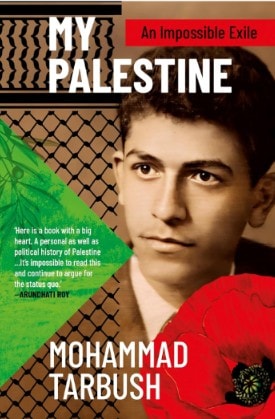
Review: My Palestine; An Impossible Exile by Mohammad Tarbush
A compelling memoir that counters the assertion that Palestine was once a desolate desert

 Prefer HTon Google


For over a year now, we have been witnessing the savagery and atrocities in Palestine, often recorded by gloating perpetrators. Palestinians are not only at the receiving end of the violence, but are also frequently compared to animals to dehumanise them and legitimise their annihilation.
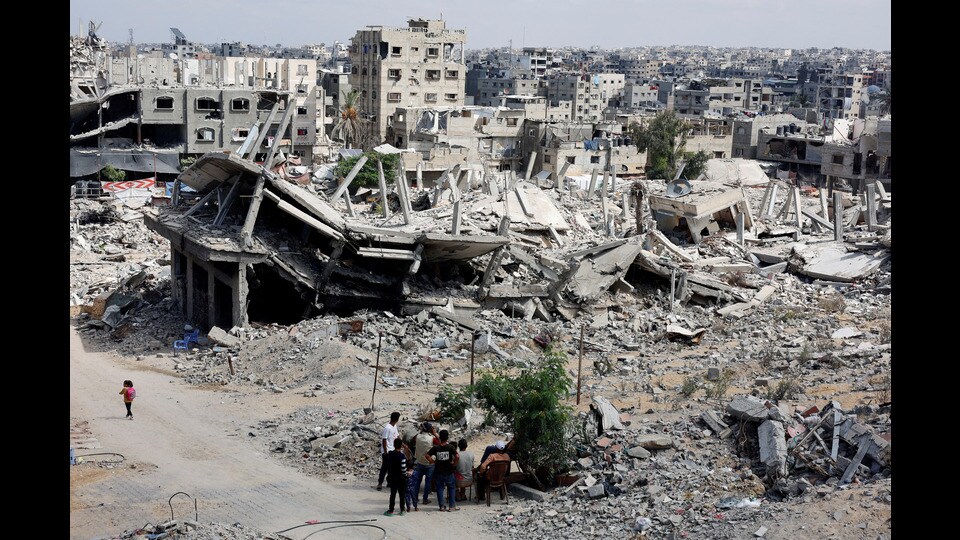
But along with the videos live streaming the attacks, there are media of another kind. A girl shares beloved recipes with the meagre resources in her makeshift shelter. A man showcases his fitness routine, as explosions reverberate in the background. Teenagers display their parkour chops amid debris, as the risky sport becomes less dangerous than simply existing in their homeland. For an unarmed, destitute population, telling their stories is their only recourse against their constant dehumanisation and the military might of their aggressors.
Mohammad Tarbush’s memoir My Palestine: An Impossible Exile is one such compelling story of a Palestinian who was born and lived in exile. In 1948, his family fled Beit Nattif, the village they had called home for centuries, after the establishment of Israel. He grew up in refugee camps in Bethlehem and Jericho. But his family was one of the luckier ones — many in his village did not survive the Zionist attacks.
Tarbush’s life is remarkable in many ways. He relates striking examples of how he overcame his straitened circumstances and charted a life for himself with grit and ingenuity. As a kid, he made toy cars and bicycles with wire salvaged from abandoned fences, which he sold for pocket money. He faked an accident to get acquainted with tourists visiting Jericho. Among them was a Swiss couple, who inspired a journey that changed the course of his life. As a teenager, he picked up various skills and jobs to earn money: delivery, dry-cleaning, and fruit-picking, among others.
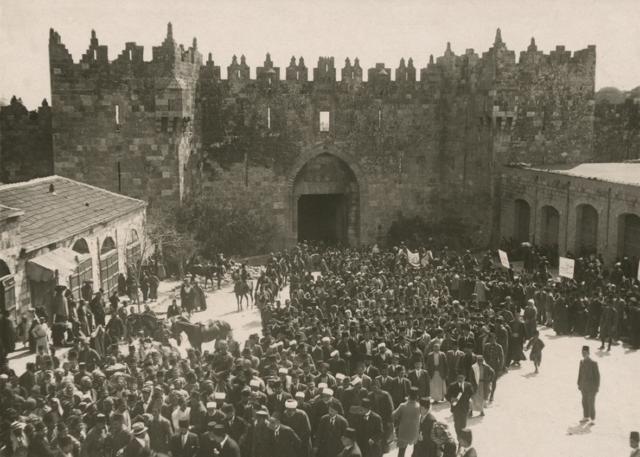
Along with the boyhood antics and formative memories, there is also grief and resentment as he learns more about the plight of Palestinians. He wonders about the circumstances of their displacement, “how all this could have been allowed to happen”, and if they would ever be able to return home.
After learning about hitchhiking from an American tourist, he reached out to the Swiss couple and decided to go to Europe to work and study. He crossed multiple land borders, often without a visa, worked in a hostel in Italy to finance the remainder of his journey, and finally, as a janitor at a cultural centre in Switzerland.
He completed his schooling and university in the United Kingdom, where he ingeniously funded his studies. He became a hairdresser to his fellow students, worked in a cigarette factory, and learnt to drive a bulldozer for a job at a road construction site. When the Saudi Arabian king was visiting London, he unfurled a banner in Arabic to welcome him and on being granted a meeting, requested for a scholarship. Tarbush also wrote to other Arab royals and diplomats, who funded his studies. He eventually pursued a career in banking despite his initial hesitation about “such a capitalist institution”.
It is a delight to read the myriad ways he overcame the obstacles that fate threw his way. They would fit right into a self-help, inspirational book about the powers of persistence and making the most of one’s circumstances. However, Tarbush’s story is more than just that of an exemplary individual. It is also a reminder of how many Palestinians might have had similar potential, but could not realise it due to the dispossession, brutality, and untimely deaths they have been facing for generations now.
Even as Tarbush lived in Europe, his Palestinian identity remained at the forefront. He wrote prolifically and presented the Palestinian viewpoint at a time when there were few Arab voices in the Western media. The same resourcefulness of his younger days, along with his network and banking experiences, helped him raise funds for several causes, such as helping a hospital in Jerusalem buy equipment worth $1.2 million. Tarbush also assisted the acclaimed director Costa-Gavras in securing funding for a film on Palestine. He set up and worked with various organisations devoted to the Palestinian cause, most notably the United Palestine Appeal.
Tarbush focuses extensively on establishing his lineage and strong roots in Palestine. He marshals evidence to counter the oft-repeated assertions that Palestine was a desolate desert, which Israel made bloom. In doing so, he highlights some of the propaganda techniques that Zionists use to invalidate the Palestinian identity. One such method is blatantly repeating lies until they don a veil of truth, leading even Palestinians to question their memories and experiences.
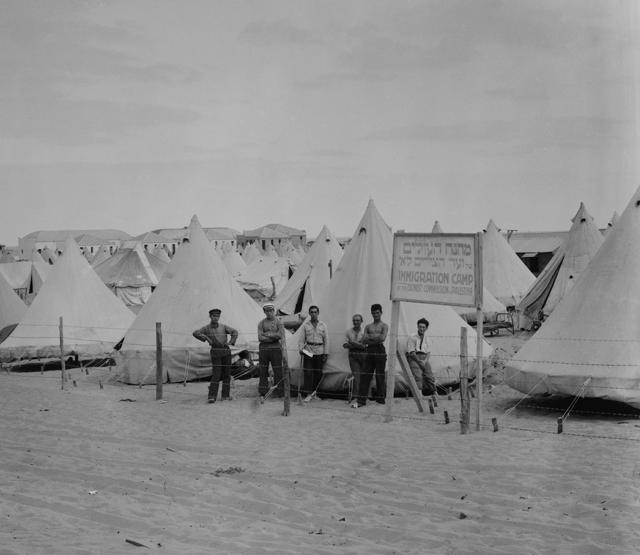
Tarbush cites the example of an Israeli journalist who cherry-picked quotes from Mark Twain to demonstrate that Palestine was an arid, inhospitable land, implying that Israel was justified in colonising it. However, as Tarbush points out, Twain also called Palestine a paradise. He further contextualises the American author’s seemingly disparaging observations — in the 19th century, Palestinians bore the brunt of heavy taxation and feudalism under the declining Ottoman empire.
Regardless of history’s ups and downs, there was another Palestine before Israel annexed their land. It had lush landscapes, cosmopolitan cities, and indigenous Muslims, Christians, and Jews living in harmony. That is why Tarbush makes a distinction between Judaism, a religion, and Zionism, “a colonial force masquerading under the front of religious aspirations”. He cites the example of Jewish luminaries who criticised Zionism — Albert Einstein, Sigmund Freud, and Hannah Arendt, among others — to underline this difference.
Tarbush emphasises that anti-Semitism historically was a European phenomenon. At various points in history across continents, when Jews were persecuted by European Christians, they lived peacefully with their Arab and Muslim neighbours. Rather than addressing their problem of anti-Semitism, Western nations created an additional one by carving the state of Israel on Palestinian land.

Regardless, Tarbush is keen on moving beyond past wrongs. His sorrow is palpable throughout the memoir, but there is no bitterness in his voice. According to him, the two-state solution, long held as the lodestar of Palestinian liberation, is no longer feasible. Instead, he calls for a one-state solution — a secular, democratic state with equal rights for all citizens, irrespective of religion or ethnicity. He cites the end of Apartheid in South Africa to claim that “even previously hostile communities can live in peace”. “Nothing can guarantee the security of Palestinian Arabs and Israeli Jews better,” he concludes, “than having them build their lives together.”
Syed Saad Ahmed is a Boston Congress of Public Health Thought Leadership Fellow 2024. He speaks five languages and has taught English in France.


